
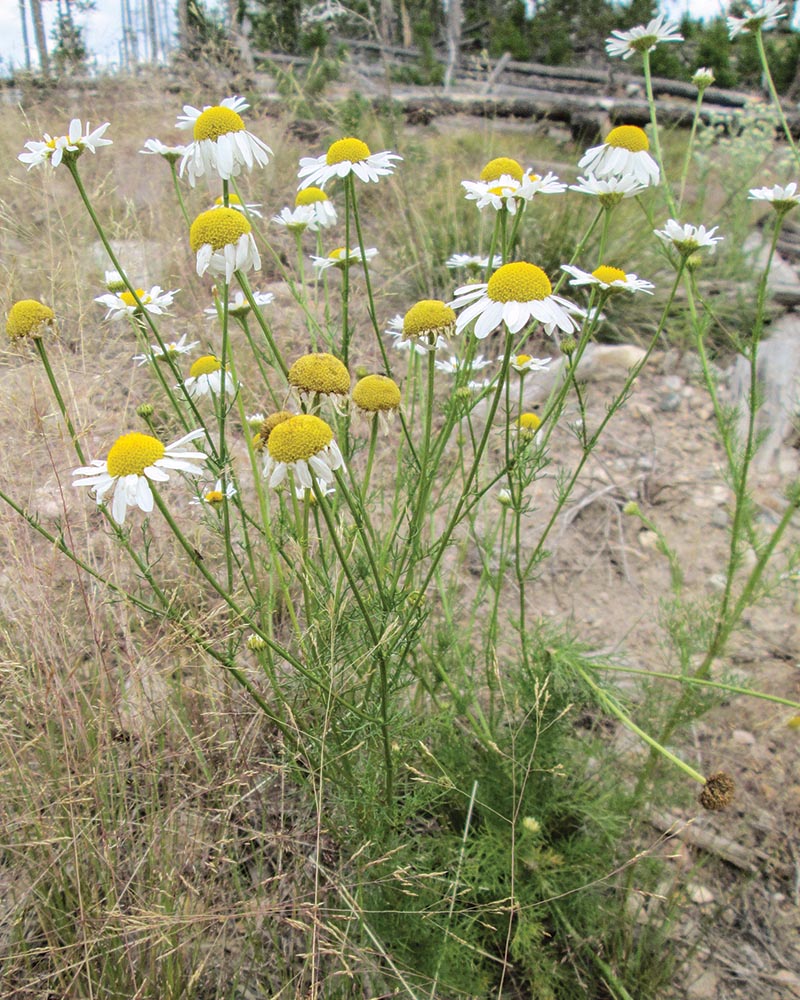
Chamomile (Matricaria recutita)
These delightful, delicate little flowers grow easily and spread by re-seeding themselves each year, so if you plant them, you’ll need to learn to love them everywhere. Looking like tiny daisies, the flowers create an infusion that is reminiscent of honey and apple. Used for centuries to alleviate stress, reduce anxiety, and aid in healthy sleep, most people love the familiar flavor of this little flower. Less known is chamomile’s ability to function as an effective anti-inflammatory, used either internally as a tea or externally as a compress. A member of the Asteraceae family (daisy), the leaves tend to be delicate and fernlike, and all parts of the above-ground plant are used for tea. If you really want to be luxurious, carefully harvest only the flower at the peak of its bloom. The flowers are best dried in brown paper bags with holes poked in the bottom using a sewing pin. Leave the top of the bag open, and every day, shake the bag a bit to move the flowers around until they are fully dry.




Tea from the garden always has this calming, ritualistic quality, but I’ve noticed that sourcing or trying new beverage brands can be tricky — some taste amazing, others fall short, and sometimes customer service makes all the difference. That’s why I ended up checking https://www.pissedconsumer.com/company/sound/customer-service.html Reading real stories about how the company handled delivery issues, product concerns, and refunds gave me a much better sense of what to expect. It’s nice to know there’s a place where people share honest experiences, especially when trying new drinks that promise quality and flavor.
What a lovely guide! I’ve always enjoyed experimenting with herbal teas, and your tips on growing herbs like mint and harvesting them at the right time are really helpful. For anyone looking to explore more healthy and flavorful infusions, this guide on herbal teas and garden herbs
offers some great ideas and practical advice.