
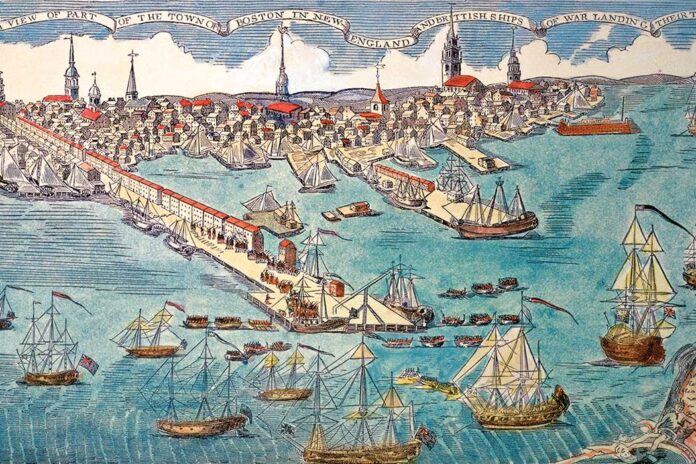
Text by and Images Courtesy of Bruce Richardson
Events in Boston this December 16 will commemorate the 250th anniversary of the most iconic tea party in American history. Here is the story we might have missed in history class.
The ladies of colonial Boston and New York were addicted to their tea ritual in much the same manner as their cousins back in London and Amsterdam. Chinese tea was drunk in the morning at home and socially in the afternoon or early evening. Benjamin Franklin states, “At least a Million Americans drink Tea twice a Day.”
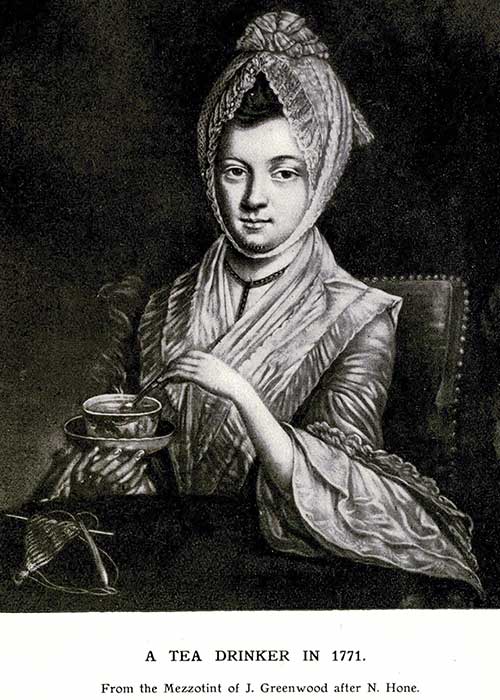
America’s taste for tea and other British goods caught the attention of cash-strapped Parliament as they looked for ways to pay for England’s involvement in the Seven Years War.
In 1765, Parliament enacted the Stamp Act. This scheme required all printed materials to be produced on material bearing an official stamp to show it had been duly taxed. Throughout the American colonies, resistance to this “taxation without representation” ran high, and angry protests were carried out. Consequently, sales of British goods in the colonies plummeted.
Parliament did away with the unpopular tax in March 1768, but the damage had been done. British tea was avoided, and secret groups of men in numerous American towns formed to resist the “tyranny” of British rule. Those societies took on the common name “Sons of Liberty.” Harvard graduate Samuel Adams led Boston’s men.
As Dutch tea was smuggled into the colonies and sales of British tea ground to a near halt, the British East India Company continued to stockpile Chinese tea in its London warehouses, filling them to capacity. Alas, the stored tea would not last indefinitely; some approached five years of age. Without the American market, the mighty East India Company was headed toward failure.
Under pressure caused by an American boycott of all British imports, Parliament eventually repealed all their governing acts—save the 3-pence-per-pound tax on tea, which was retained as a symbol of Parliament’s authority over their American subjects. It was a small amount, but colonists found it hard to swallow.
Resentment toward King George III continued to boil until 300 Bostonian women, many of high standing, put their anger to pen in February 1770, signing an agreement not to drink any tea until the remaining tax was repealed.
The boycott had a chilling effect. By the spring of 1773, the East India Company faced a surplus of 17 million pounds of tea in their London warehouses—more than all of England would drink in a year. It was potentially worth over £2 million, but now years old and sinking in value every day.
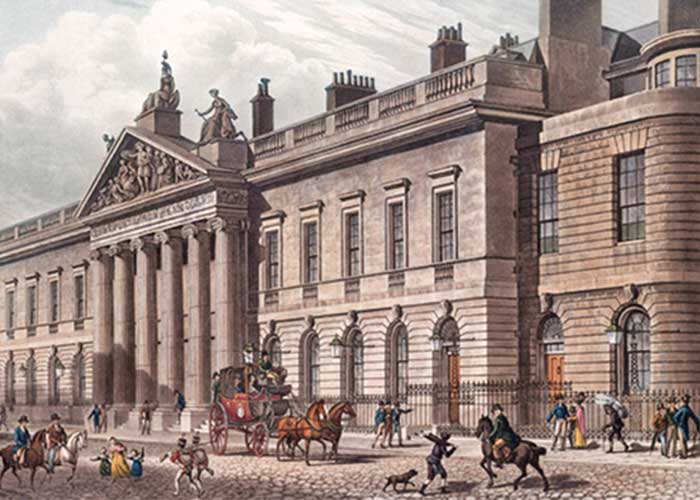
By summer, the East India Company’s debts were mounting, and the Bank of England refused them any loans. Total debt soon rose to a staggering £1.3 million, and dividends to stockholders were suspended. It was enough to get Parliament’s full attention. If the East India Company collapsed, the banks would fail, the British treasury would follow, and the government would collapse.
The East India Company had become the first company deemed too big to fail.
Parliament bailed out the company to the tune of a £1.4 million loan, and the accompanying Tea Act of 1773 paved the way for the East India Company to unload its surplus tea at America’s expense. One opposition member in Parliament wisely cautioned, “If you don’t take off the duty, the Americans won’t take the tea.” He had no idea how correct his prediction would be.
The Tea Act, a scheme to sell stale tea to unsuspecting colonists, infuriated the Americans, who did not want their colonies being used as a profit center for the world’s largest multinational corporation. They resented that their businesses were being forced to pay these higher taxes without having any vote in the matter. The cry of “No taxation without representation!” was heard in the coffee houses of Boston and cities up and down the Atlantic Seaboard.