The Tapestry Room
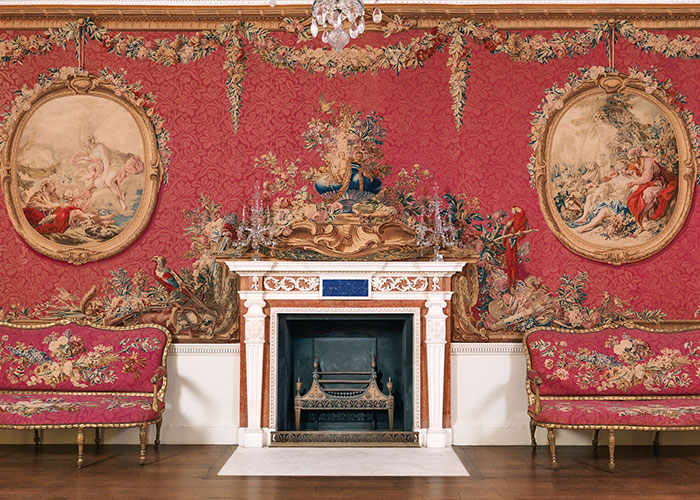
Nine sets of medallion tapestries were woven by the Royal Gobelins Manufactory in Paris before the French Revolution; five of them went to England, where they adorned the walls of Croome Court’s Tapestry Room. The French practice of covering large wall areas with tapestry became fashionable among wealthy British families, including George Coventry, the 6th Earl, who inherited the Worcestershire estate in 1751. The vibrant tapestries survived in good condition because the room, when not in use, was protected from the light by paper case hangings. Both George III and Queen Victoria
took tea in this room, the favorite at Croome until 1902, when the ninth earl of Coventry sold the tapestries and furniture to a dealer in Paris.
Tea and Slavery
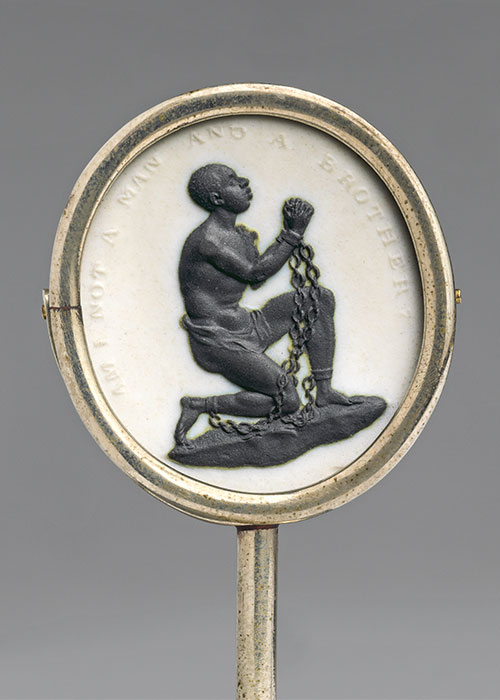
More than a feast for the eyes, the Tea, Trade, and Empire Gallery causes us to pause and consider both the beauty of these pieces and the pain of the slave trade that supported the tea and sugar market in 17th- and 18th-century England. This uneasy alliance comes into view with Josiah Wedgwood’s famous antislavery medallion (circa 1787), showing a kneeling African slave in chains beneath the motto AM I NOT A MAN AND A BROTHER.
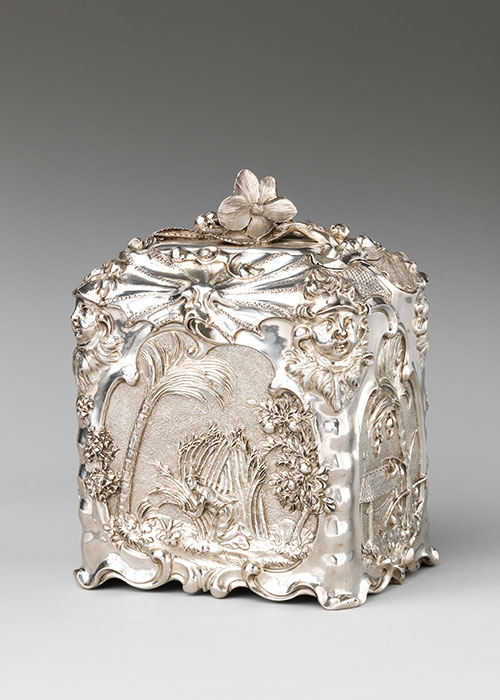
Also, Paul de Lamerie’s 1774 silver sugar box decorated with a scene of a native man harvesting sugar cane illustrates that the exploitation of human beings sadly underpinned the tea habits that were synonymous with British gentility. The box reminds us that the rise of imported slave-made sugar mirrored the consumption of tea in Britain for 200 years.
Tea was a commodity that deeply influenced British life even as it fueled the essential economic engine that built an empire that eventually spanned the globe. The love of tea motivated manufacturers to supply novel objects, such as teapots, caddies, and furnishings that assisted their consumption. The Met’s re-imagined exhibition helps explain how tea became an affordable luxury for the masses and answers the mystery of how Britain became a nation of tea drinkers.
Contributing editor Bruce Richardson is the Master Blender at Elmwood Inn Fine Teas and co-author with Jane Pettigrew of A Social History of Tea, published by Benjamin Press and available at elmwoodinn.com.