Caddies
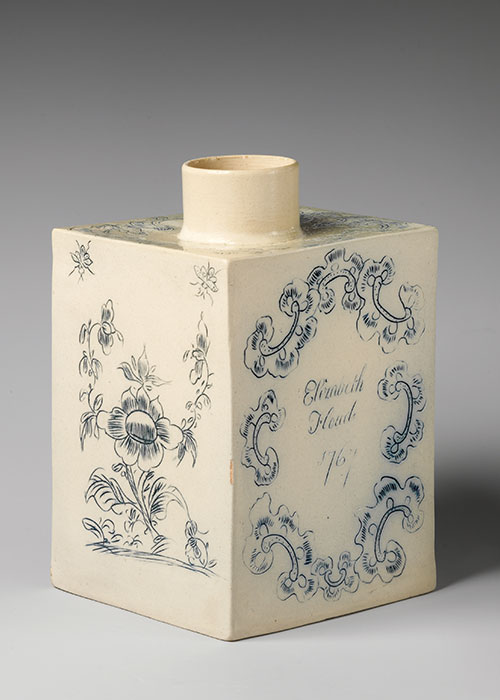
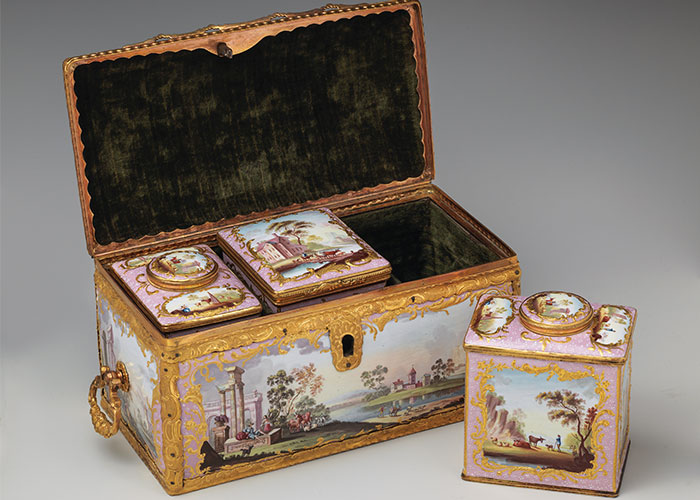
Tea was a precious commodity when it first arrived in wealthy British households. In the early 1700s, tea was stored in silver or porcelain canisters modeled after Chinese tea storage containers. Later, cabinetmakers capitalized on the market for tea accessories and made lockable wooden chests that held multiple caddies made for green tea, black tea, or sugar. These symbols of wealth were placed in the public parlors of fine homes or apartments.
1724 Silver Tea Kettle and Stand
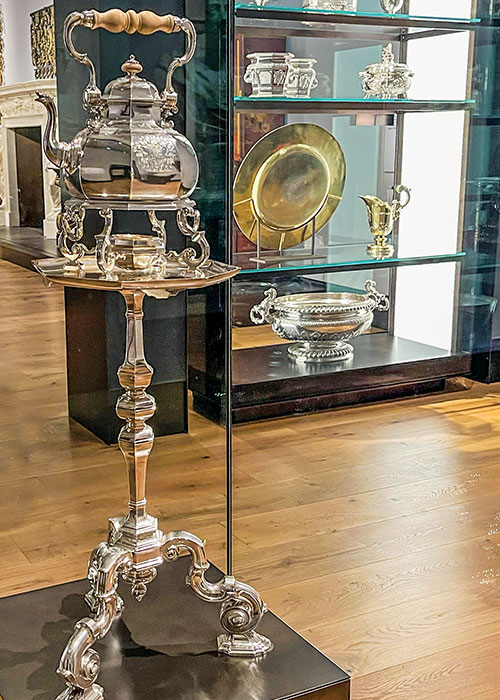
This impressive masterpiece is the most important surviving example of the work of Huguenot silversmith Simon Pantin I. It was made for George Bowes—newly rich from his father’s coal fortune—and his already immensely wealthy wife, Eleanor Verney. Pantin enjoyed the patronage of many influential clients, including
the king, and showed real ingenuity in his designs. For example, the tabletop can be unscrewed from the stand and used as a tray. The shape of the feet, the octagonal forms of the tabletop with its upwardly curving rim, and the octagonal plan of the kettle itself derive from Chinese forms that were becoming familiar in London.
Whimsy
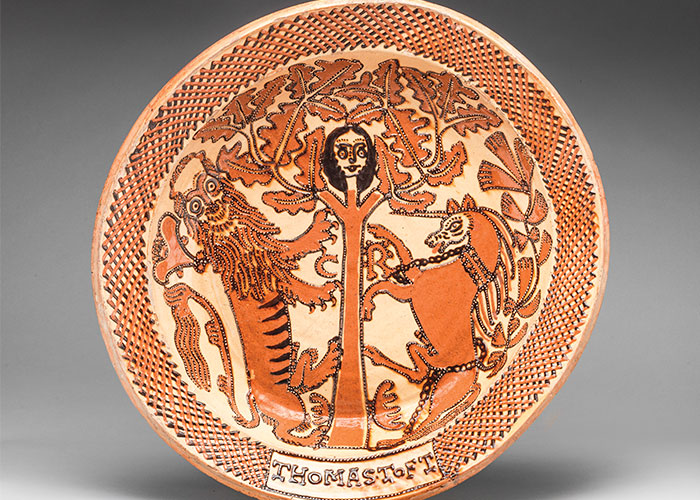
The North Staffordshire potter Thomas Toft used traditional pottery techniques but more ambitiously than any potter up to that time. A whimsical plate depicts a young Charles II, flanked by a lion and unicorn, symbols of his coat of arms, hiding in a tree. The scene refers to a popular story that Charles II told to Samuel Pepys in 1680. After his defeat at the battle of Worcester in 1651, Charles climbed into an oak tree to escape Oliver Cromwell’s soldiers. Eleven years later, Charles married the Portuguese princess Catherine of Braganza, the first British queen to drink tea.