Punch Pots
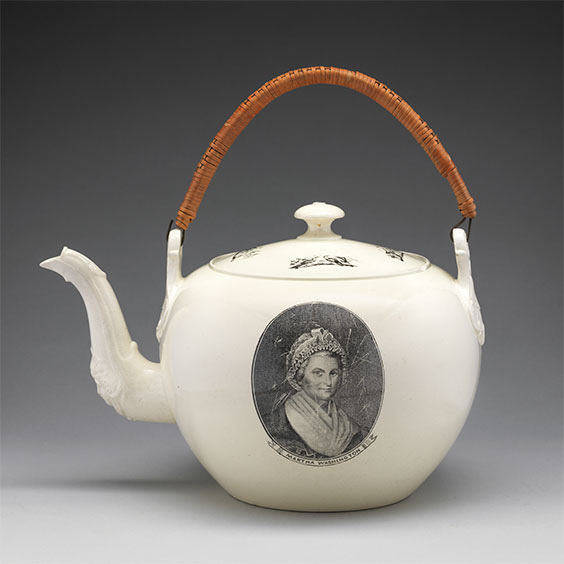
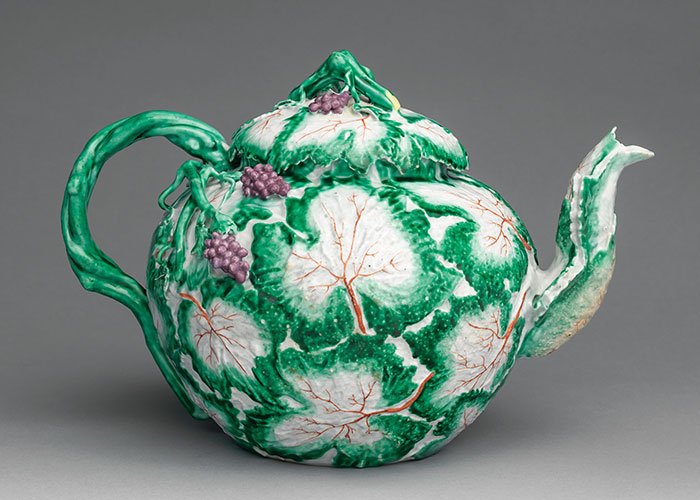
The Washington vessels are both punch pots intended for serving an alcoholic punch. One colorful example on display is decorated with overlapping vine leaves and small bunches of grapes that suggest the pot’s contents. It was made in 1775 at the Longton Hall factory in Staffordshire, which frequently used low-relief motifs drawn from nature as the primary decoration of its wares.
Agateware
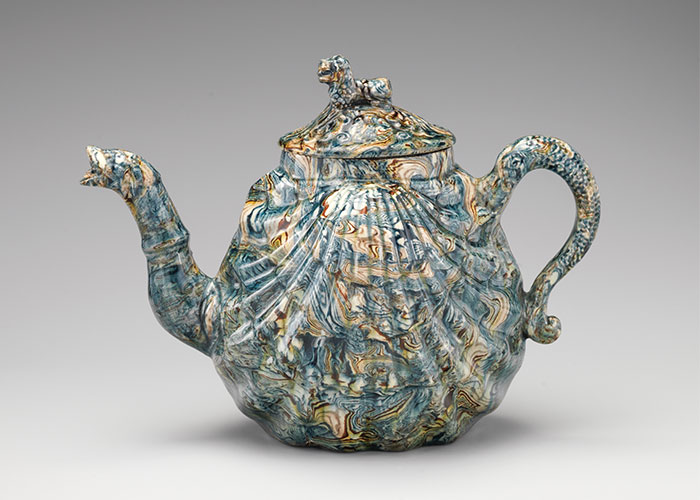
The simplicity of creamware gave way to the colorful creation of agateware, which combined different colored clays before firing. Multicolored clay slabs were rolled and sliced like pastry before being pressed into a mold. The richly patterned surface imitates agate, a hard stone used in precious vessels since antiquity. Different shapes and sizes of agateware teapots, including a shell-shaped one made in Staffordshire around 1760, showcase the creative minds of some of the best potters of the day.
Exotica

Global commerce brought exotic varieties of produce to the 18th-century British table. Thomas Whieldon again led the way by fashioning his glazed earthenware teapots, called “exotica,” into the shapes of pineapples and cauliflowers—foreign crops recognizable by their unusual textures, colors, and patterns.