Tea Tells a Story at The Met’s New British Galleries
Stoneware
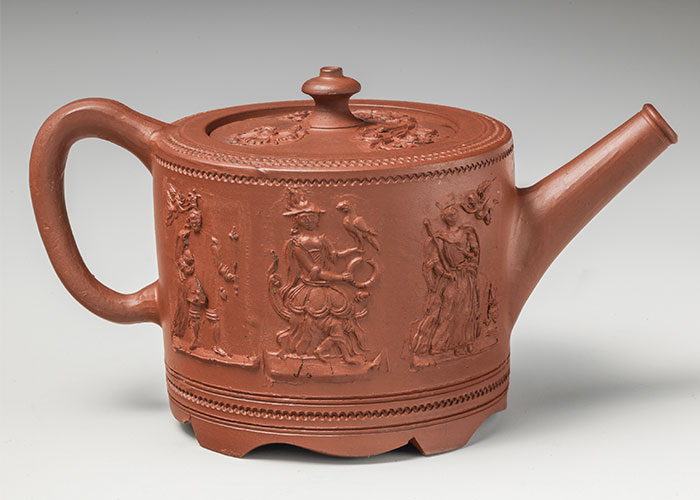
Images of British royals have long inspired teapot design, as shown in a red stoneware teapot made in Staffordshire in 1761. This early tea souvenir was made in commemoration of the marriage of King George III and Queen Charlotte. Twelve years later, Bostonians would defy the taxes imposed by this monarch by dumping three shiploads of Chinese tea into Boston Harbor.
Staffordshire became a center of ceramic production in the early 17th century due to the local availability of clay, salt, lead, and coal. One of the most successful early potters was Thomas Whieldon, who took a 24-year-old Josiah Wedgwood under his wing. Several teapots in the gallery are labeled as Whieldon or Whieldon-type.
A Seemingly Modern Teapot
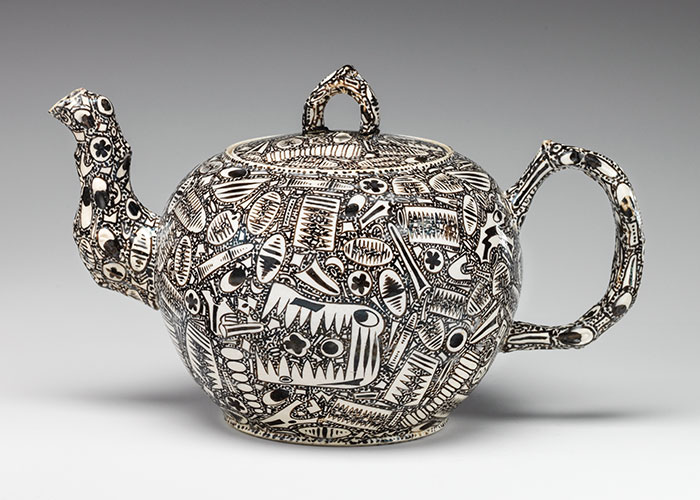
This 1760 Staffordshire salt-glazed stoneware teapot, decorated with fossils, defies the period. It would be at home down the street at The Museum of Modern Art, where the curious vessel would blend well with works by the 1980s pop artist Keith Haring. One can only imagine the startling reactions it stirred in the minds of pre-Jane Austen tea drinkers.
Creamware
Although China had been making porcelain for centuries, Europeans struggled throughout the 18th century to learn the secret to making durable bone china. As
a result, creamware was developed in the 1730s to compete with inexpensive Chinese exports that flooded the market. Variations of creamware were sometimes known as “Whieldon ware” because they were developed by Thomas Whieldon. It was often made in the same fashionable and refined styles as Chinese porcelain. Later, potters updated old stock by applying new designs through transfer printing to keep up with fashion.
Then, taking advantage of America’s allegiance to its homegrown heroes, British factories exported goods to the newly independent United States, sometimes bearing the images of Martha and George Washington.