Lisa See
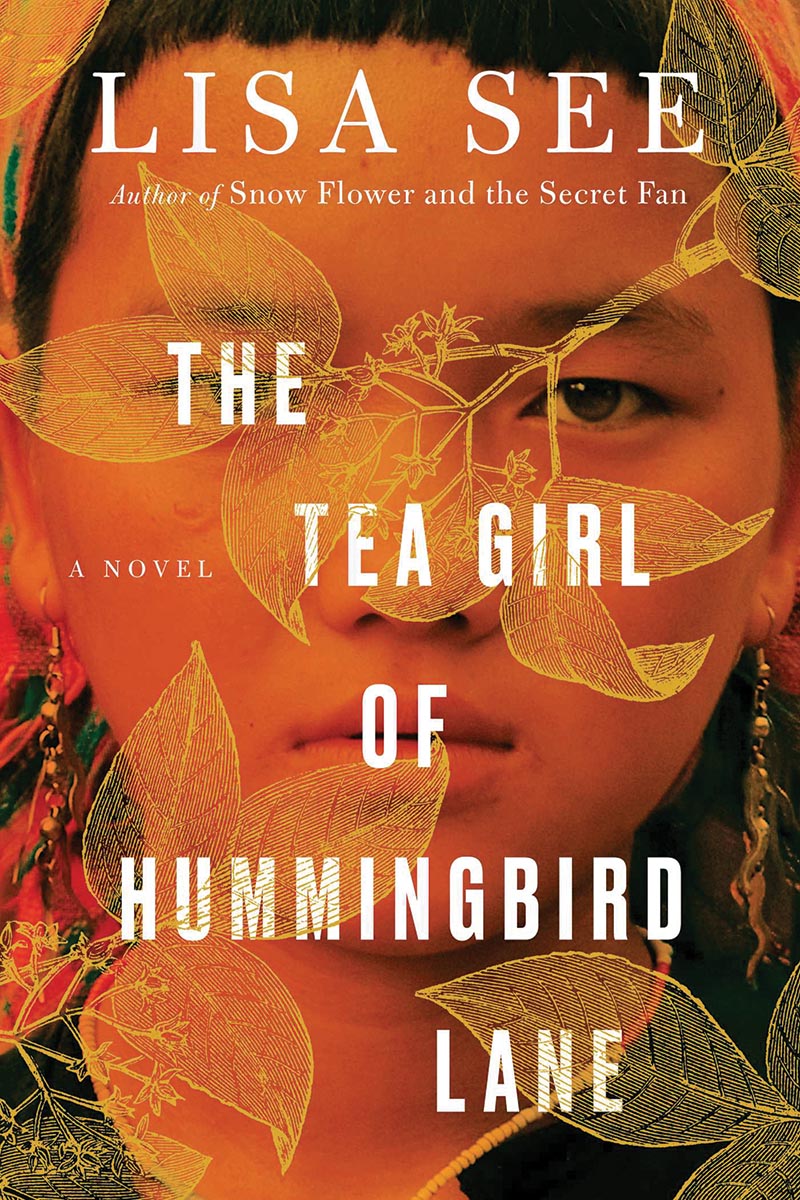
The tea motif did not end after the deaths of Austen, Dickens, Carroll, and James. No modern novel has entirely caught the attention of devoted tea drinkers as has Lisa See’s 2017 novel The Tea Girl of Hummingbird Lane. The Chinese-American writer grew up in Los Angeles but yearned to visit the land of her ancestors. Part of her three-year process of writing The Tea Girl of Hummingbird Lane was researching the Akha people and the ancient Pu’er tea by going to a very remote area of Yunnan, China, the setting for her novel. She also attended one of my lectures on tea history at World Tea Expo 15 years ago.
Her character Li-yan and her family live according to the precise rituals of their people. Then, one day, the market economy, in the form of a businessman seeking a rare tea, arrives at their remote village and changes the community forever. As Li-yan’s family adapts to the incursion of the outside world, she falls in love with a boy whom her mother believes is an inauspicious match. When she bears his child, she leaves her baby wrapped in a blanket, with a cake of Pu’er tea tucked in the folds, on the steps of an orphanage instead of hewing to the tradition that would have her kill the little girl.
Through hard work, education, and an appreciation for Pu’er, her people’s special tea, Li-yan eventually makes a life for herself in the world outside her village. Yet, even as she finds a business and a husband that she loves, she never stops thinking about her lost child.
The book is filled with tea-making details such as this: “I slowly move between the tightly packed rows of bushes, scanning the outermost branches for the bud and two, maybe three, leaves that begin to unfurl as the sun’s rays warm them, and then gently nip the tiny cluster between my thumbnail and the side of my forefinger above the first joint. I’ve picked tea every spring since I was five, so my thumbnail is stained and the little pad of flesh calloused. I’m already marked as a tea picker.”
“If you don’t love tea, you can’t make good tea,” our heroine quotes her teacher, Tea Master Sun. It follows that if you don’t love tea and the people who make it, you can’t write about it convincingly. It is clear that Lisa See loves Pu’er, cherishes the bonds between mothers and daughters, and treasures her heritage. Her writing pays perfect homage to China, to America, to family, and to the tea that binds us all together.
Contributing editor Bruce Richardson is the Master Tea Blender at Elmwood Inn Fine Teas and co-author of The New Tea Companion and A Social History of Tea, available at elmwoodinn.com.