Charles Dickens
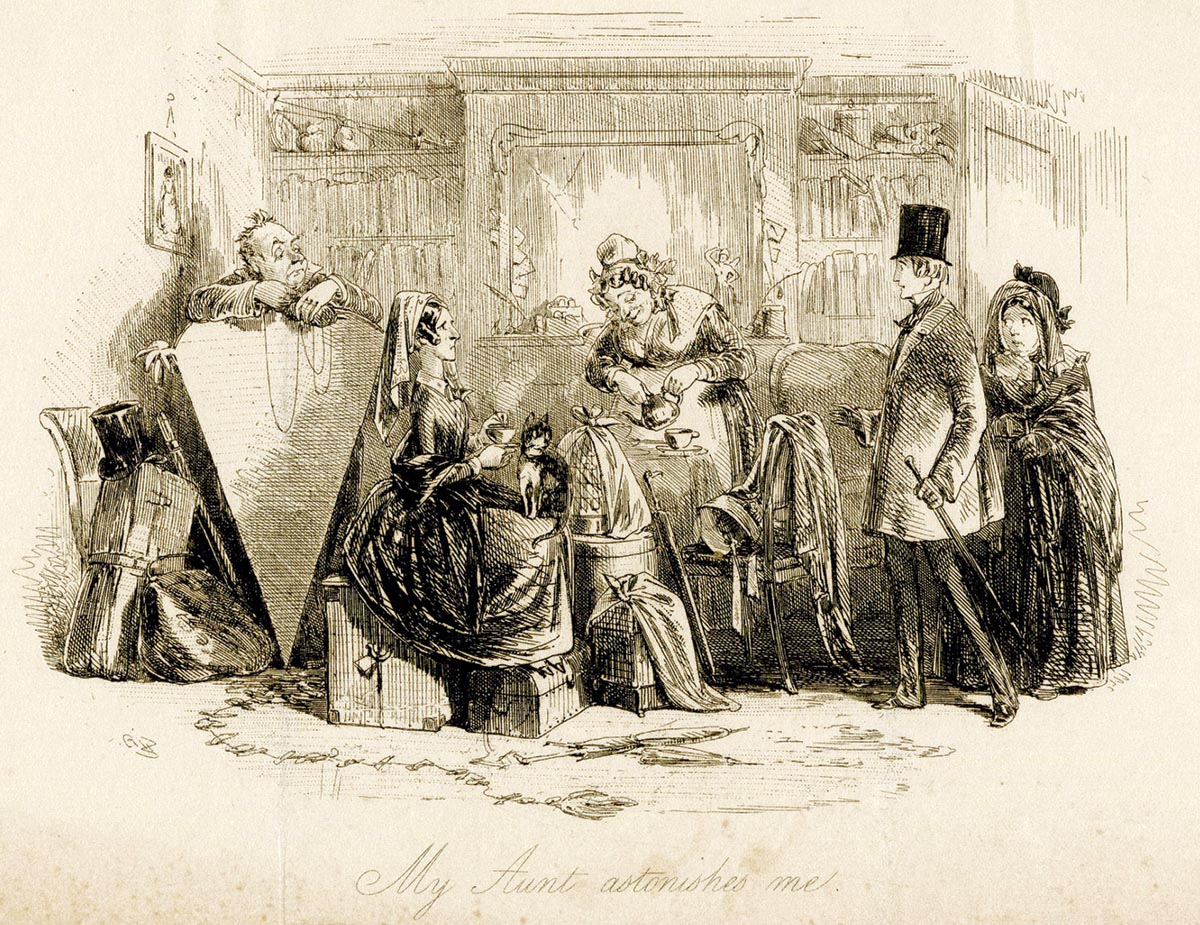
Tea plays a small but mighty part in Charles Dickens’s 1850 novel David Copperfield in the same way tea was important in Austen’s fiction: it represents the crossing of the gender boundary within the domestic and social spheres. In Dickens’s novel, David only drinks tea when he is with a group of women. David associates his love for Dora with tea: “I was steeped in Dora. I was not merely over head and ears in love with her, but I was saturated through and through.”
Dickens, however, recognizes tea beyond its role in social functions. An old tea-lover in the story is indignant “at the impiety of mariners and others, who had the presumption to go ‘meandering’ about the world. It was futile to represent to her that some conveniences, tea included, resulted from this objectionable practice.” Yet Dickens argues that the Englishness of comfort and snugness at home can only be the result of such “meandering.”
It takes travel and work to produce the comforts of an English home; tea, after all, is the product of far-off nations and world travelers, even as it is determined the most English of commodities. To be English is to recognize the importance of the rest of the world, and nothing represents that better than tea, the beverage that built an empire.