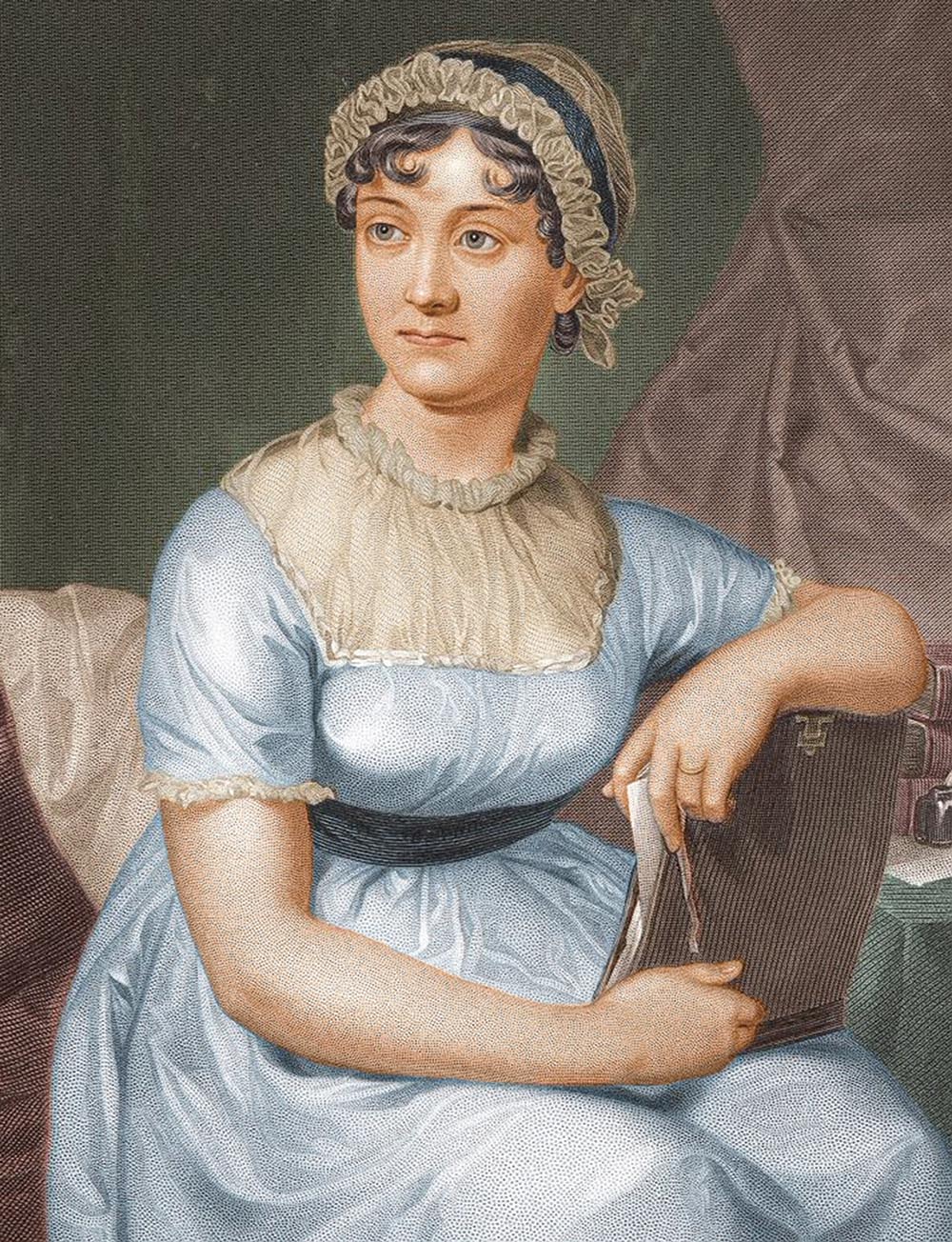
Jane Austen
Tea, a recurring motif in Jane Austen’s stories, reflects the Chinese beverage’s significant role in the Regency period and the shifting mealtimes in late Georgian and Regency England. Austen’s fondness for the term “tea things” and her preference for unadulterated leaves from the Twinings shop in London illustrate her attention to detail. In an 1814 letter to her sister Cassandra, she mentions: “I am sorry to hear that there has been a rise in tea. I do not mean to pay Twining til later in the day, when we may order a fresh supply.”
A character’s knowledge of the tea ritual indicates their knowledge of society and, by implication, their understanding of good and right. Anyone who does not take tea is considered backward and unenlightened, lacking social graces and, therefore, unworthy of conversation, friendship, or even marriage.
Stylish cities like Bath always included an intermission for tea drinking after a dance, which Austen wrote about in Northanger Abbey (1818). But at home, tea provided a reason to see neighbors. In Sense and Sensibility (1811): “Sir John never came to the Dashwoods without inviting them to dine at the Park the next day, or to drink tea with them that evening.” On one occasion, “he wishes to engage them for both. ‘You must drink tea with us tonight,’ he said, ‘for we shall be quite alone—and tomorrow you must absolutely dine with us, for we shall be a large party.’ ”
Tea was seen as a comforting, refreshing, recuperative beverage. In Mansfield Park (1814), Mrs. Price welcomes Fanny and William: “Poor dears! How tired you must both be! And now what will you have?. . . I could not tell whether you would be for some meat, or only a dish of tea after your journey. . .” Later: “The next opening of the door brought something more welcome; it was for the tea-things, which [Fanny] had begun almost to despair of seeing that evening. . . . Susan . . . ‘had been into the kitchen,’ she said, ‘to hurry Sally and help make the toast, and spread the bread and butter, or she did not know when they should have got tea and she was sure her sister must want something after her journey.’ Fanny was very thankful. She could not but own that she should be very glad of a little tea.”
Tea meant rest and pleasure; its absence would be a severe disappointment or, worst of all, an indication that a scorned guest was not worthy of the host’s expensive beverage and time.
Austen’s writing furthermore gives insight into the time of day tea was served. Dinner became more of an evening meal rather than the midday or early-afternoon repast at the turn of the 19th century. In Emma (1816), Austen writes of a “regular four o’clock dinner,” and references in several books show that dinner was not particularly late, and tea was still served afterward. Also, in Emma, “Mr. Woodhouse was soon ready for his tea; and when he had drank his tea, he was quite ready to go home; and it was as much as his three companions could do, to entertain away his notice of the lateness of the hours before the other gentlemen appeared.”
In Pride and Prejudice (1813), after dinner: “The gentlemen came . . . the ladies crowded round the table where Miss Bennett was making tea. . . .” In Mansfield Park: “Dinner was soon followed by tea and coffee. . . .”
There are many similar references to tea being served in the drawing room once dinner in the dining room was over. Yet there is a hint of a shift in the timing of dinner and tea drinking. In Austen’s unfinished novel, The Watsons, begun in 1803, Tom Musgrove visits the Watsons and, before “going home to an eight o’clock dinner,” is surprised to be shown into the best parlor, where “he beheld a circle of smart people . . . arranged with all the honours of visiting round the fire, and Miss Watson seated at the best Pembroke table, with the best tea-things before her.”
Afternoon tea became more common in the 1840s and was well-established by the 1860s, allowing writers of the time to feature it prominently.