
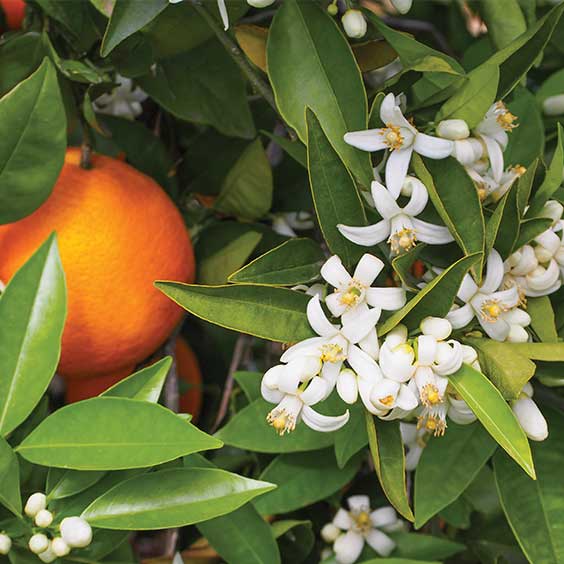
Orange Blossom (Citrus sinensis)
Orange blossom can be hard to find because most times the flowers are allowed to mature into the beloved fruit. But the blossom itself is a complex, aromatic treasure that is often used as an important ingredient for making perfume. Because the white flower is linked to good fortune, it is a popular addition to bridal wreaths and bouquets. The essential oil of the orange blossom is called Neroli and is highly valued for scent. Used as an ingredient for tea, orange blossom is high in Vitamin C, flavonoids, and carotene, which can help to alleviate anxiety and promote peace. It’s believed to relax both the mind and the body with an almost hypnotic effect. The flavor is especially mild and smooth and is often blended with high-quality oolongs.
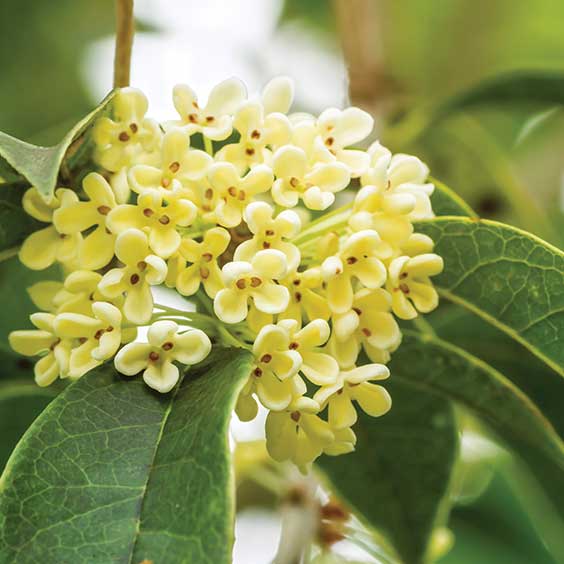
Osmanthus (Osmanthus spp)
Osmanthus is an evergreen shrub native to Asia with flowers of approximately one centimeter in diameter. These flowers have a strong fragrance and have been used in scenting and flavoring tea in China for hundreds of years. The flavor is delicate and comparable to apricot or peach, with floral aromatics slightly resembling jasmine. The fragrant blossoms are said to help curb the appetite, and their aroma is considered a mild sedative. Osmanthus is rich in both vitamins and antioxidants, which may increase longevity and reduce the risk of heart disease. It is also used in making of beer and wine.
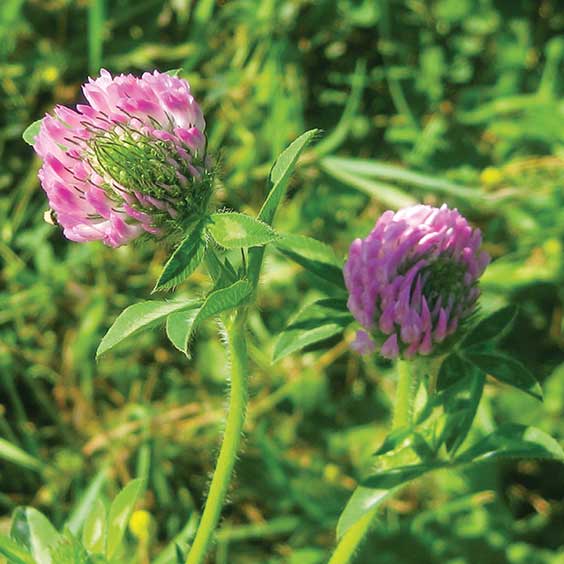
Red Clover (Trifolium pratense)
Red clover is a humble field flower with a host of medicinal qualities. Freshly dried red clover maintains its beautiful fuchsia coloring. If the flower looks brown, it is probably OK to use, but it does not have the visual impact of the beautiful red blossom. Red clover is full of health-boosting properties, including its ability to nourish and cleanse the blood while stimulating the flow of lymph. It reduces inflammation and enhances circulation in the body. Often used in formulas for cold, flu, and coughs, it helps the body fight against illness and has a high mineral content. With a pleasant, honey-like flavor, it is a favorite, especially of honey bees!
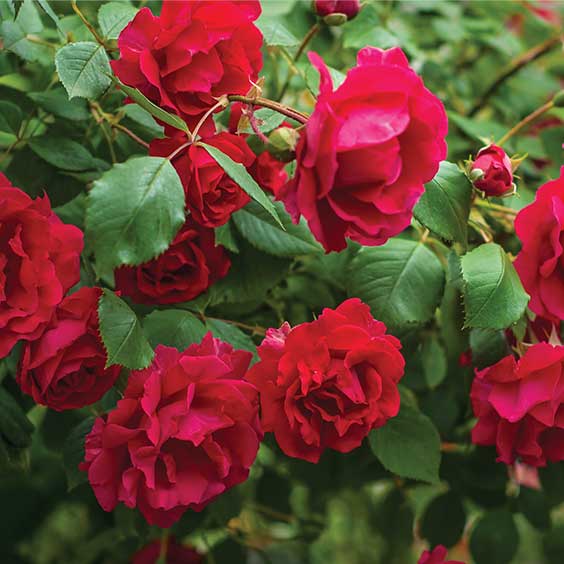
Rose (Rosa spp)
Rose is history’s most beloved and fabled flower. Long considered the premier symbol of love and romance, rose petals are among the most often used for creat- ing tea. Rose petals impart a delicate floral rose aroma and flavor and should be used with restraint to keep the blend from becoming too perfumed. In addition to the delightful flavor, rose petals tend to blend well with all styles of tea, whether black, white, oolong, green, or herbal. Be sure to choose organic roses when using the petals for tea or for cooking, as commercial roses are often heavily sprayed with inedible chemicals.
The rose hips, which are the fruit of the rose, also make an excellent, delicious, and nutritious tea. With a tart, citrus-like flavor, they are high in Vitamin C and can impart a bit of fruity sweetness to a blend.
With this wide range of delightful flowers, you can craft teas that are tasty, healthy, and beautiful. Enjoy the process!
Sara Stewart Martinelli, owner of The Boulder Tea Company and Boulder Dushanbe Teahouse, is a certified herbalist who has been blending teas and herbs professionally since 1998.
Discover more seasonal recipes, table settings, and teatime inspiration by ordering your TeaTime subscription today!



Lovely photos Sara , and interesting information. Nice article.
great