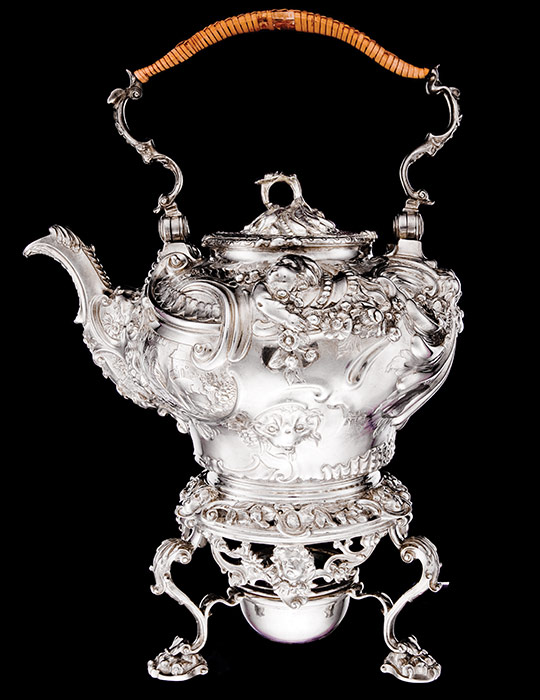
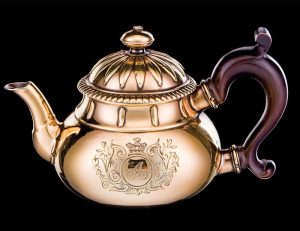
Such pots were used for coffee and chocolate, and no doubt Lord Berkeley decided it was also a suitable shape for the teapot he wished to offer to the committee of the East India Company. But 17th-century silversmiths gradually developed designs that were based on the small round shape of Chinese teapots, and fashioned kettles as slightly larger versions of the same. It goes without saying that those who could afford to drink tea at this time in Europe, America, and England could also afford silver pots. Although porcelain delighted tea lovers with its translucency and charming Oriental designs, silver added an element of ceremony and elegance to the tea-drinking ritual. Soon, gold- and silversmiths were making a range of items required as part of the tea equipage.