The Silver Vaults
David S Shure & Co, Vault 1
For visitors who love scouring antiques shops, fairs, and websites in anticipation of finding some exquisite tea silverwares, this vault is a must. In 2007, the fourth generation of the Shure family decided to retire, and so the Vault, with its amazing array of incredible silver teatime essentials, was taken over by I. Franks, whose shop is in Vaults 9 and 11. It is clear from the display of gleaming tea-related silver laid out in the cabinets around the room that there is a real affection here for all the tablewares required for the presentation of a traditional, elegant afternoon tea. There are caddies with their keys still in the locks, caddy spoons, delicate mote spoons (also called strainer spoons), strainers with their stands, milk and cream jugs, sugar bowls with and without lids, samovar-style urns, teapots, box sets of six teaspoons with sugar nippers, pastry forks, jam and honey pots, and tea sets laid out on matching trays and consisting of a kettle with its own stand and burner, a teapot, a milk jug or creamer, and a sugar basin. There is also a large selection of more recent additions to the tea table, such as toast racks, toasting forks (with long handles and used for toasting crumpets and English muffins over an open fire), butter dishes, cake stands, and muffin dishes, which apparently are often purchased today as serving dishes for caviar instead of warm buttered muffins and crumpets.
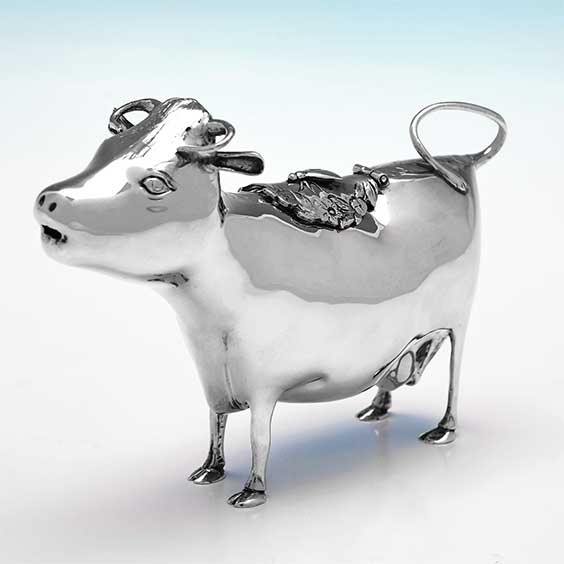
The shop often has pieces by Paul Storr (1770 to 1844), England’s most famous goldsmith and silversmith in the early 19th century and whose pieces were purchased by King George III, the king who suffered from bouts of madness and famously lost Britain’s American colonies, and his son, King George IV, who commissioned the construction of the eccentric Brighton Pavilion as his seaside pleasure palace. Also to be found amongst the wonderful selection of teawares are pieces by Hester Bateman and her family. Hester was famous for her ornamental silverwares and flatware (knives, forks, and spoons) She registered her own silvermark, HB, at London’s Goldsmith Hall in 1761. When she died in 1794, her sons, daughter-in-law, grandson, and great- grandson continued the family business. In 1959, David Shure wrote Hester’s biography, Hester Bateman— Queen of English Silversmiths, and he is recognised as the authority on Bateman silver.