Text by Jane Pettigrew
London’s best-kept secret
Ask most Londoners if they have ever been to the Silver Vaults on Chancery Lane in the City of London, and the response is a quizzical, “Silver vaults? I’ve never heard of them!” But antiques dealers who buy and sell silverwares know that this subterranean cache of treasures is probably the largest single collection of silver in the world.
The Vaults opened in May 1885 as The Chancery Lane Safe Deposit Company, which leased safety deposit boxes and secure strong rooms for the “safekeeping of plate, jewels, bonds, etc.” It was the second company in Britain to provide secure storage facilities; the first was The National Safe Deposit Company, which had opened in 1872 on Queen Victoria Street, also within the square mile of London’s ancient city. An 1880s advertisement in The Illustrated London News told readers that the vaults of The Chancery Lane Safe Deposit Company, “are built on columns, and are entirely isolated, having patrols or corridors around, over and under them, making it utterly impossible for anyone to approach unobserved. Night watchmen have revolvers.” An 1887 advert in the same publication stated that the company offered 6,000 safes and strong rooms that were guarded day and night by a military patrol and were absolutely fireproof and burglar-proof. In 1893, the company was so confident about its burglarproof facilities and wished their clients to rest assured that their deposits were always completely safe, that it advertised for “a burglar or two” to try their skills! It’s not known if anyone applied for the job.
The underground network of tunnels in which the safe deposits were housed was not originally intended for such a purpose. It was instead part of the early construction of an underground railway (already known as “the tube”), running from west to east underneath the north end of Chancery Lane, with the purpose of rapidly delivering mail from one part of London to another.
The tunnel and the little carriages carrying letters and parcels proved unreliable, and in 1874, the project was abandoned. A group of enterprising businessmen seized the opportunity and purchased a section of the tunnel with the intention of converting it into The Chancery Lane Safe Deposit Company. The provision of telephone lines, telephone rooms, and totally reliable security appealed to a growing number of local businesses who had shops or offices nearby and needed secure storage. By the beginning of the 20th century, the Vaults were storing valuables such as jewellery, deeds, silverwares, gold ingots, diamonds, and legal papers. More and more collectors and antiques hunters got to know about the Vaults, and there have been times when the security guard has had to ask visitors to wait on the entry floor until others had left.
Researching the history of the Vaults opens up a fascinating web of connections to other important historic sites nearby. Chancery Lane, which marks the western boundary of London’s ancient city, takes its name from the time of Ralph Neville who was Lord Chancellor of England in the 13th century under King Henry III. The king gave Neville land to build a palace here, and Chancery Lane is a variation of Chancellor or Chancelar Lane. Anyone wishing to buy a diamond ring or necklace need only take a short stroll from Chancery Lane to Hatton Garden, which, with its neighboring area, has been at the center of the UK’s diamond and jewellery trade since the Middle Ages. The street is named after Sir Christopher Hatton, a London politician and a favourite of Queen Elizabeth I. On and around Hatton Garden today, there are some 300 shops selling highly valuable bijouterie, and the nearby Silver Vaults have provided the secure storage that some of those businesses require. And for a while, Charles Dickens lived in Hatton Garden and included it in Little Dorrit and Oliver Twist (Number 54 Hatton Garden was the police courthouse mentioned in that story). Several important law courts and Inns of Court (professional associations that provide accommodation and education for barristers in England and Wales) are located to the south and west of Chancery Lane. This ancient legal profession and the work of the courts generate vast quantities of legal documents, which must not be destroyed but need to be stored securely. What could be safer than the subterranean vaults beneath Chancery Lane?
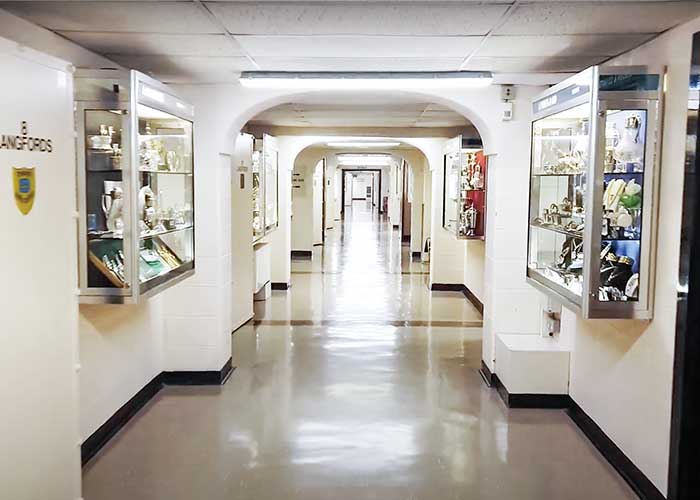
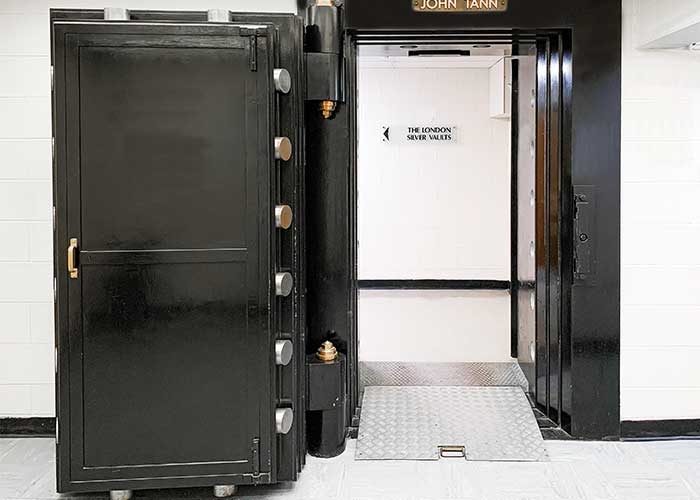
During World War II, on 7th September 1940, the first night of the Blitz, two incendiary bombs fell on the street above the Vaults and caused severe damage to the entrance at street level. But the Vaults, with their 4-feet-thick, steel-lined walls of reinforced concrete, were unharmed. However, on 25th September of the same year, another bomb made a direct hit on the building, causing a good deal of damage to the safe deposits and strong rooms. Once the war was over, a new building and entrance above the Vaults were constructed, and extensive repair work was carried out underground so The Chancery Lane Safe Deposit Company and Silver Vaults could once again guarantee total security to their clients. Since reopening in 1953, the Vaults, with their lock-up units in a warren of underground corridors, have served not just as secure storage space but as shops where more than 30 antiques traders buy and sell their valuable stock of silverwares and know that everything is completely safe. The subterranean entrance into the network of passageways and individual vaults is guarded by a timed, 7-tonne door that is only open during trading hours from 9:00 a.m. to 5:00 p.m. Monday through Friday and from 9:00 a.m. to 1:00 p.m. on Saturdays.
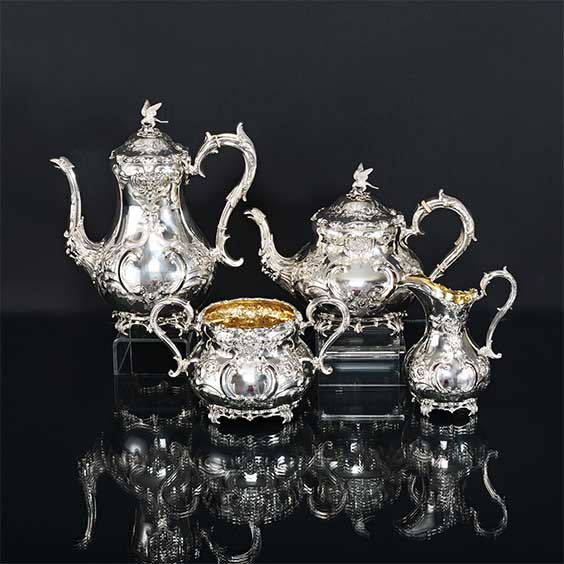
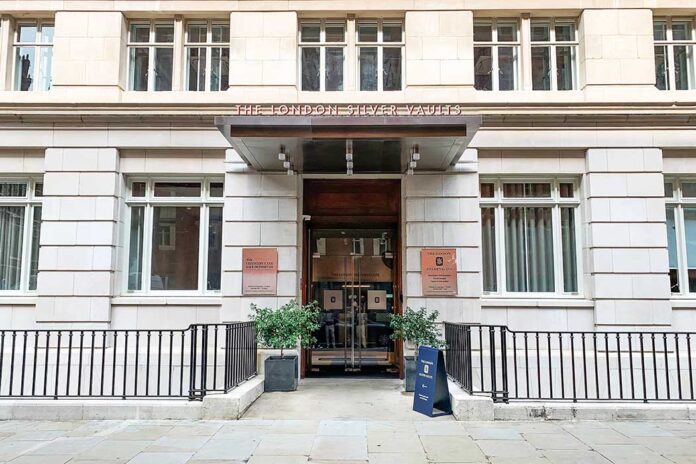
The way into The Chancery Lane Safe Deposit Company in Victorian times was through an elaborate archway at 61 and 62 Chancery Lane. In contrast to that impressive entrance, the very modest front door today is just around the corner on a quiet street called Southampton Buildings, although the official address is 53 to 64 Chancery Lane. The modern front door gives no hint of the valuable stash of wonderful gleaming silver teawares on show in the shops 40 feet below your feet. The Vaults are open to everyone, and the only requirement is that, before heading downstairs, all visitors must sign in at the front desk. Once you reach the bottom of the staircase, follow the finger pointers until you find yourself in the first corridor of shops. Each unit has steel-lined walls that are 3.9-feet thick and, when the shop is closed for business, all the valuable items are secured behind a heavy, solid, black iron door. Not all the vaults are open at all times; some of the traders may be away on a buying trip or taking part in an antiques fair out of London or abroad. And not all traders restrict themselves to silver; some sell jewellery, antique watches, items made of crystal, valuable stamps, antique costumes, or cutlery. The Silver Vaults’ website includes phone numbers and web addresses of the individual retailers, so it’s possible to check ahead to find out which traders will be there on a particular day. It’s important to allow plenty of time for a visit because there is just so much to see, and the individual silver specialists who ply their trade here are extremely knowledgeable about the items they stock and are very happy to talk about them. So, seize the opportunity to ask questions, seek guidance, and discuss the age and purpose of pieces that may be of interest. Some of the traders are absolutely passionate about tea and specialise in silver tea equipage from different periods, in different styles, and perhaps made by particularly important and famous silversmiths. And in other vaults, there are usually a few teawares on display, even if tea is not that company’s main interest, so if you have time to browse, it is well worth going into all the different vaults because you never know what you will find.
The following traders have cabinets filled with gorgeous teawares and are more than willing to discuss the items they have for sale.