
Charming Servers and Elegant Linens
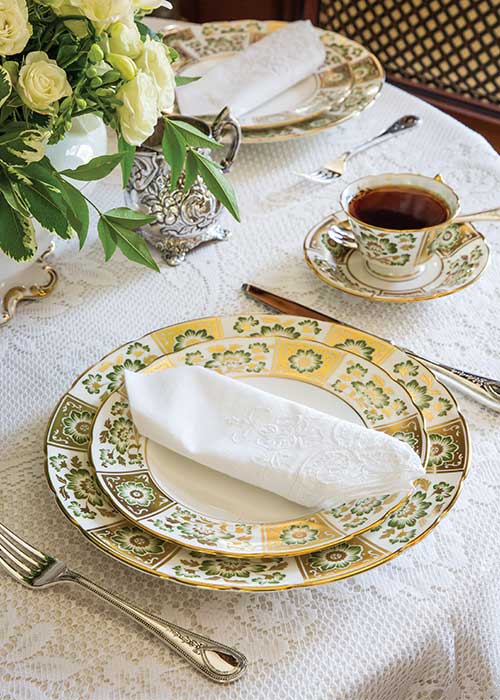
The decision of what flatware, tongs, tart and cake servers, napkins, tablecloths, and more to utilize for tea doesn’t have to be limited to the ubiquitous and boring supply at your local large retail store. Finding exquisite implements to aid in the process of moving foods from bowls and platters to plates, as well as complementary linens to create a delightful atmosphere can be quite a pleasurable mission. Antique stores, thrift shops, and even online china resellers are wonderful sources to find remarkable treasures worthy of ornamenting a table for tea. A pretty, eyelet tablecloth for a spring or summer fête can elevate a garden gathering, and crimson red serviettes will undoubtedly bring added cheer to a festive, Christmas-themed tea party.
Beautiful Blooms
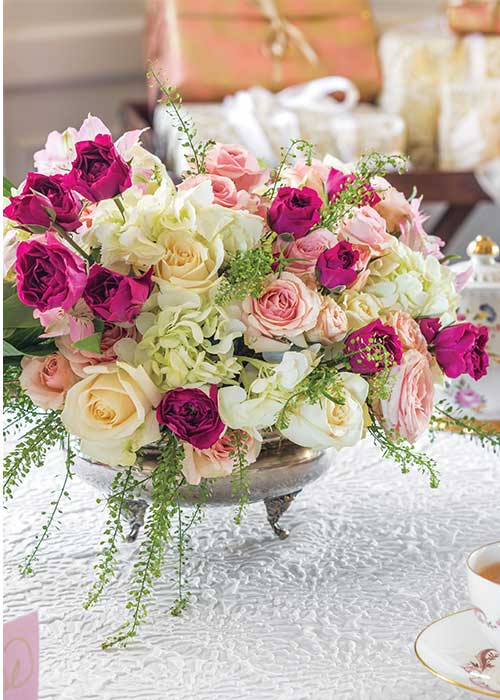
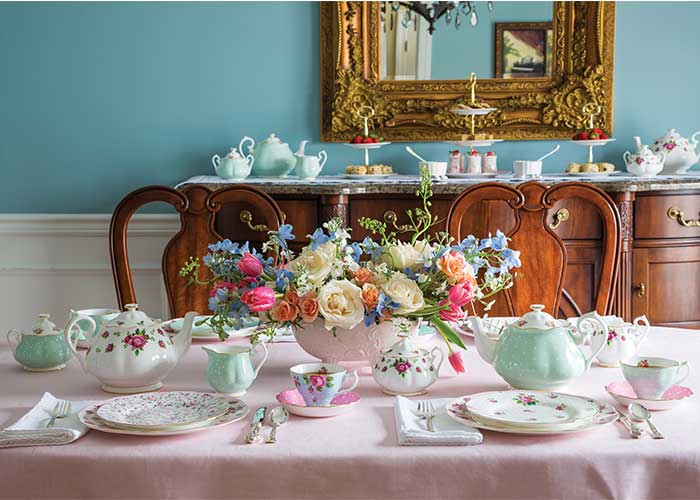
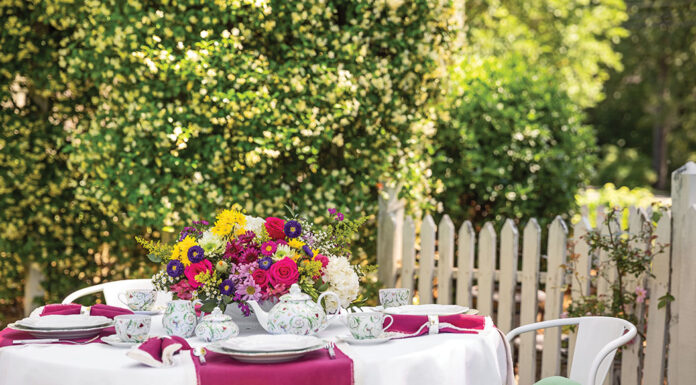
Fresh flowers are often the centerpiece of a dining table because they impart a natural sense of beauty and wonder to any occasion. TeaTime readers frequently ask us how we choose and put together our marvelous floral arrangements, and the creative process is actually quite simple and enjoyable—with color, variety, size, and texture being of utmost importance. When selecting flowers for tablescapes, Courtni suggests to first analyze the colors that stand out the most in the china pattern and to consider the current season. “If my china pattern is very colorful, I will typically choose two to three colors to be my main focus. If the china features a specific, seasonally appropriate flower, I will try to find that blossom or something similar to be my focal piece,” she explains. “I like to pick different types of seasonal foliage in varying shades of green to give the arrangement dimension, along with a focal flower and one complementary flower or line flower to add height.” For example, if a white rose is chosen to be the focal flower, then a ranunculus in an alluring shade would be a suitable secondary choice. Filler flowers (spray roses, wax flowers, Queen Anne’s lace, and the like) support the main focus and fill in the arrangement while additionally offering supplementary splendor.
“I put together my arrangements using the same order I used for selecting them. I start with my thickest greenery and arrange accordingly. Then, I add in my focal flowers, complementary flowers, and lastly, my filler flowers to cover any gaps,” Courtni discloses. “Floral arranging can be a little intimidating at first—it was for me, at least—but just have fun with it! The more you practice, the more naturally it will all come together.”
Lorna adds, “Try to keep the centerpiece to a height that doesn’t obstruct the view of the guests so they all feel at ease as they gather around the tea table to share great food and drink while enjoying meaningful conversation.”


Lovely photos
Beautiful presentation