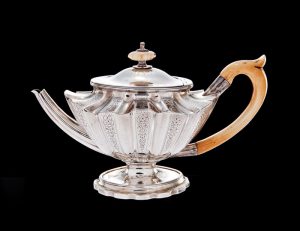
One of the first items Sethia purchased was a 1787 silver teapot in the shape of Aladdin’s lamp, made in London by William Plummer, whose work became very popular during the second half of the 18th century when wealthy British households all boasted fine collections of expensive tea wares.
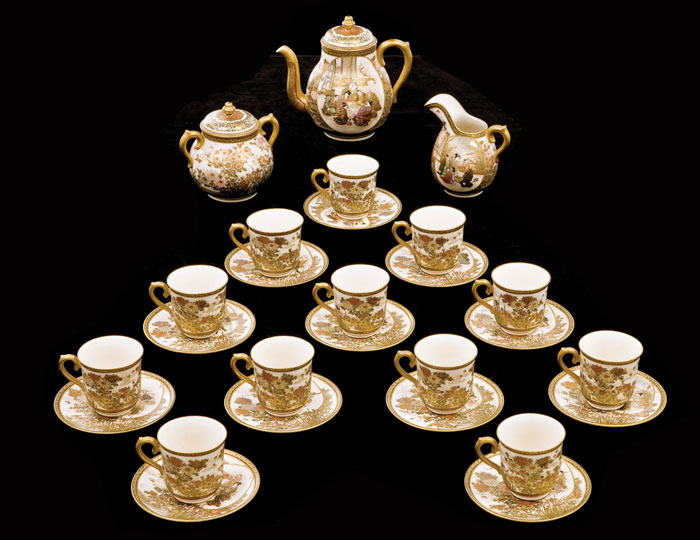
The purchase of this charming pot marked the beginning of Sethia’s ambition to create an important collection, and his priceless objects now include early Chinese ewers from the North Song dynasty (960–1127 AD); exquisite jade cups from the Ming period (1368–1644 AD); Chinese earthenware, silver, and porcelain pots from the 17th century; Satsuma wares from 19th-century Japan; 18th-century European porcelains and silverwares by such famous manufacturers as Meissen and Sèvres; teapots from India, Tibet, Russia, and Scandinavia; British teapots, tea services, and tea jars by Wedgwood, Coalport, and Royal Worcester; and prized 19th- and 20th-century pieces by Fabergé and Tiffany.