GERMANY
East Frisia is a coastal region in the northwest of Germany bordering the Netherlands. The local people’s long-standing love of tea dates back to the early 17th century, when they were heavily influenced by their neighbors, the Dutch, who were, at that time, the major importers of tea into Europe from China. Even when coffee became more popular in other parts of Germany, the East Frisians continued to drink tea and still today prepare it in their traditional way with strong black tea leaves, chunks of rock sugar, and thick cream. Consumption per capita in the region is extremely high—each year, the average East Frisian drinks an astonishing 1,270 cups of tea each—but the unique local ritual remains largely unknown outside the area. The most usual time of day to serve tea here is at 3 o’clock in the afternoon, but it is also popular as a mid-morning pick-me-up and a late evening comfort drink before retiring for the night.
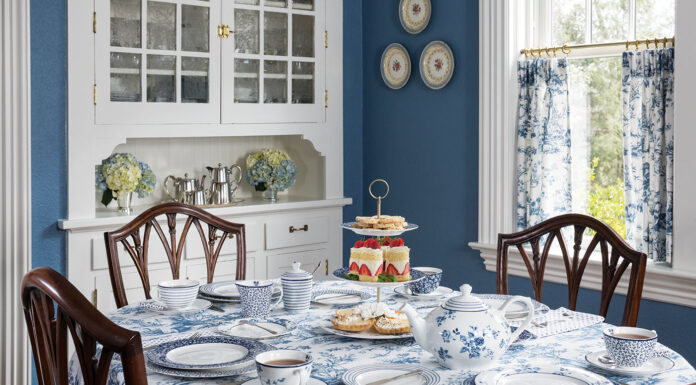
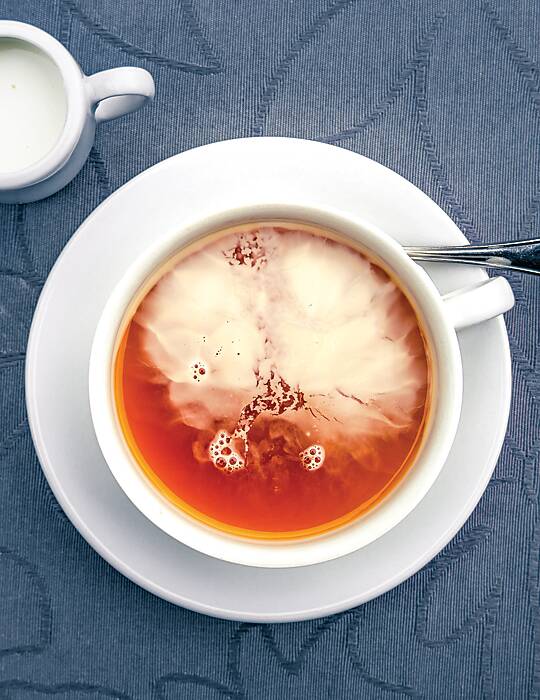
To prepare this unusual cup of tea, first the traditional teacups and saucers are readied. These are usually blue and white, very similar to designs that have always been so popular in Russia, but some households use a rose design in pink, green, and white. Other essential pieces of equipment are a teapot, sugar tongs, cream spoons, a packet of East Frisian tea (almost always a strong Assam blend), large chunks of rock sugar called kluntjes, and cream. Once the tea has been brewed, a kluntje is placed in the bottom of each cup, tea is poured over so that the sugar crackles and begins to melt slightly, and then cream is poured carefully, using the cream spoon, down the inside of the cup to form the middle layer between sugar and tea. Some of the cream rises gently and appears as little clouds of creamy white in the dark coppery tea. But do not stir! The idea is to leave the three layers unmixed so that, when you drink, your first taste is of pure tea, the second is of tea mixed with cream, and the third is of tea softened by cream and sweetened with sugar. The ritual pouring is traditionally carried out by the host or hostess, and it is quite normal to drink three cups of creamy, sugary tea at one sitting. To show that enough tea has been consumed, each guest either turns his or her cup upside down on the saucer or places the cream spoon inside the cup. Traditional foods served with the tea include slices of raisin bread with butter, sugary waffles, little dumplings, or any other favorite cake or tart.
- 10 grams (approximately
- 5 teaspoons) East Frisian loose-leaf tea*
- 800 milliliters (approximately 3⅓ cups) filtered water
- Rock sugar
- Thick cream
- Place loose-leaf tea in an infuser basket or in a paper filter bag, and place infuser basket or filter bag in a 4-cup teapot.
- In a tea kettle, bring water to a boil. Pour boiling water over tea leaves in teapot. Cover and let steep to desired strength, 3 to 5 minutes.
- While the tea is steeping, place a lump of rock sugar in each cup.
- When the tea is ready, remove infuser basket or filter bag. Pour tea into the cups so that each is two-thirds full.
- Using the cream spoon, carefully drizzle cream down the inside edge of the cups into the tea so that it settles as a middle layer between the sugar and the tea.