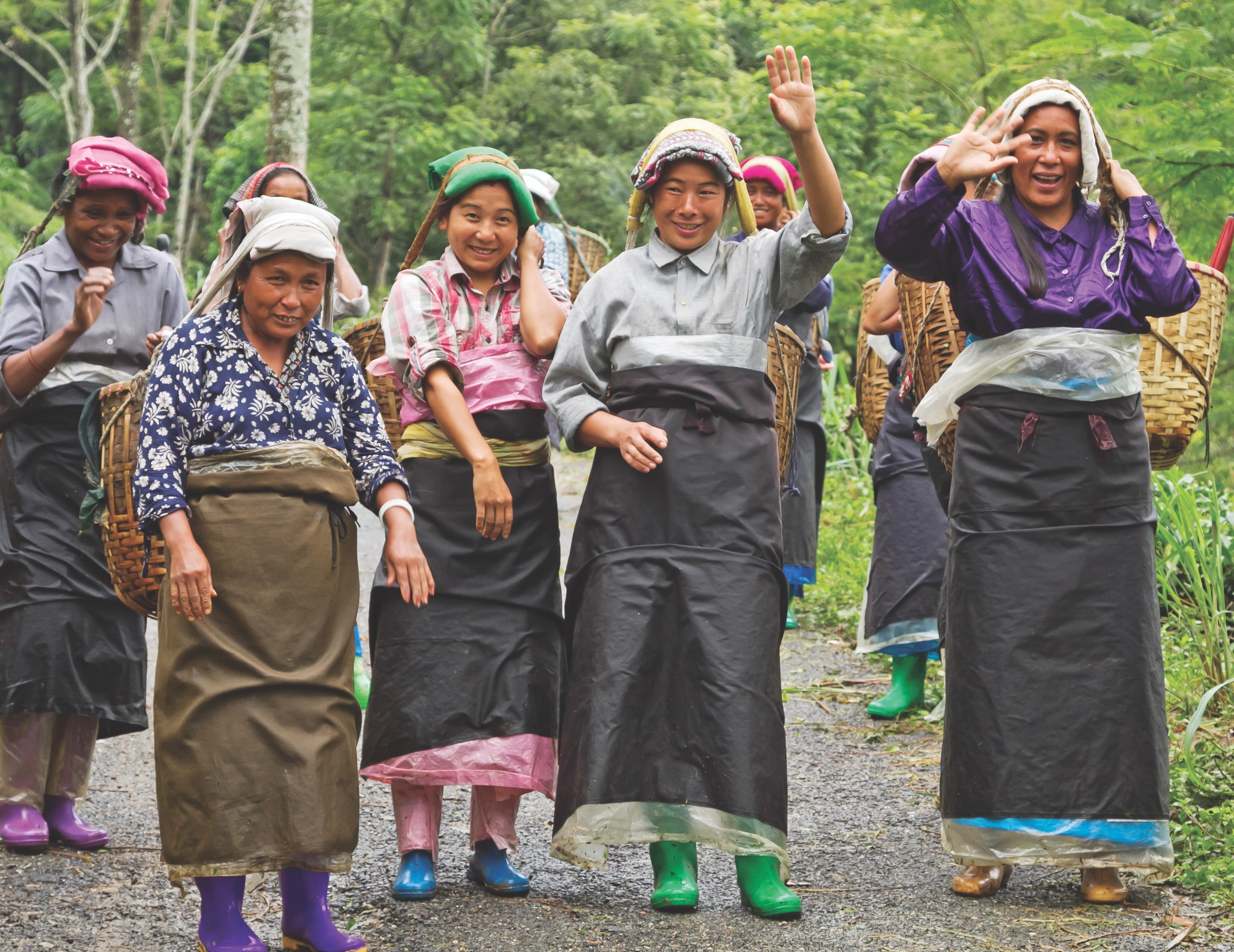
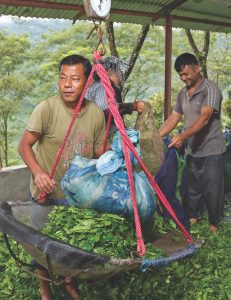
 In Darjeeling, tea is still harvested by hand, with two leaves and a bud being the standard. Mostly women do the plucking, and at progressive tea estates, such as Risheehat and Liza Hill, some serve as field supervisors, a role typically reserved for men. However, men do the weeding, composting, and pest control exclusively. Armed with a good education the tea estates provide and lured by the excitement of city life, younger generations are eschewing the manual labor in which their parents and ancestors engaged and are leaving the gardens in favor of jobs in the field of technology. Even so, the best-run estates continue to thrive as consumers worldwide discover the pleasure of drinking Darjeeling tea, with each of its most prized flushes (first, second, and autumnal) yielding infusions that give credence to its nickname “the world’s greatest tea.”
From TeaTime, March/April 2017