Text by Sharon McDonnell • Photography by John O’Hagan
Think outside the cup to entrées and more
Tea: It’s not just a beverage. You can cook or bake with it in meat, fish, pasta, soups, desserts, and salads, instead of just pairing it with foods. Steep tea in water or other liquids, add it dry in whole-leaf or ground form, smoke or brine it. Like wine, tea’s different flavors and styles complement foods in widely varying ways. A beloved food ingredient in tea-producing countries in Asia for centuries, it’s been discovered by mainstream chefs. Think outside the cup, and let your imagination run wild.
Cynthia Gold certainly did. The former tea sommelier at Boston Park Plaza Hotel & Towers and L’Espalier restaurant in Boston, now with In Pursuit of Tea, has cooked with tea for more than 20 years. She included more than 150 recipes in Culinary Tea (Running Press, 2010), from Green Tea-Lacquered Salmon to Spinach and Ricotta Scallop Rotollo with Ceylon Beurre Blanc to Seared Tuna with Tea Spice Crust. Tea can be used in so many different ways that it’s hard to categorize, she says. “It can be used to balance against sweetness, as a bridge between disparate flavors, to complement (or contrast against) flavors or aromatics, to change the mouth-feel, to add depth, brightness, or complexity,” notes Gold. “I never use it to scream ‘tea!’ And most of my recipes don’t end up tasting like tea. I suppose if I had to categorize it, I’d call it the ‘secret ingredient.’”
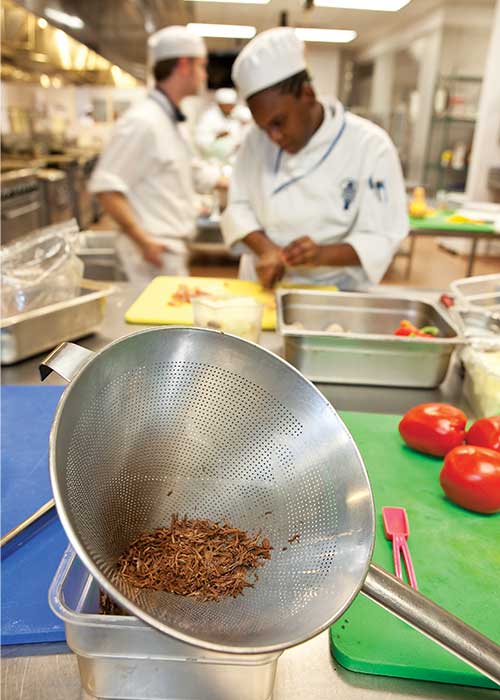
A pastry chef before that, she began experimenting with tea-infused cuisine, inspired by the teas on her menu and by a tea-cured gravlax recipe from her first partner in a café she once owned. A trip to the tea fields of China, where she experienced harvesting tea leaves, bringing them in from the field, withering them, and learning to wok-fire them, truly changed her life, she explains, turning her into a “tea obsessive.” As for matching specific tea types to food, “I love using . . . Lapsang Souchong with proteins where I want a smoky flavor, Japanese green teas with seafood or rice, and Darjeeling with fruity dishes.
In China, tea-smoked duck is a famous specialty of Sichuan Province. Tea-marbled eggs are hard- cooked eggs: tap the eggshells all over with a spoon, steep them in a mixture of tea, soy sauce, a cinnamon stick, star anise, and granulated sugar, and then peel them to find the whites stained with a crackle pattern that resembles streaked marble. Mooncakes, snacks served during China’s Mid-Autumn Festival, come in a green tea flavor, as well as traditional sweet red bean paste and pork-and-nut flavors.
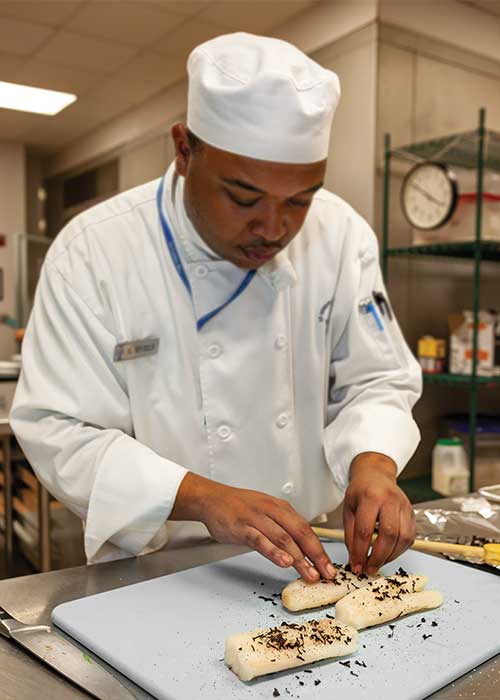
Tea leaf salad is the national dish of Myanmar (Burma). “Half of all tea consumed in Myanmar is eaten, not drunk,” says Desmond Tan, chef/owner of Burma Superstar in San Francisco and other Burmese restaurants in the Bay Area. Fermented (pickled) green tea leaves, romaine lettuce, toasted peanuts, sesame and sunflower seeds, fried garlic chips, dried shrimp, yellow split peas, jalapeño pepper, diced tomato, and fish sauce are the ingredients in his recipe for Tea Leaf Salad, called lahpet thoke, in Burma Superstar: Addictive Recipes from the Crossroads of Southeast Asia (Ten Speed Press, 2017), a cookbook he co-authored. Each ingredient is in a separate pile atop the lettuce when served; then, just mix them together.
“Tea-smoking techniques are thousands of years old in Chinese culture. It gives a more delicate, smoky flavor, not as acrid or bitter as wood smoke, and is easy to light up,” says Ming Tsai, host for 18 seasons of the public TV cooking show Simply Ming and host of East Meets West, a Food Network Emmy winner before that. “Water has no flavor. Tea enhances flavor. I like cooking with black tea for a bolder flavor, Lapsang Souchong for smokiness, green tea for a citrusy flavor in chicken or fish, and lychee for a fruity flavor. I do a Jasmine Tea Soufflé that’s absolutely delicious,” says Tsai, a James Beard Award winner. The Ohio-born chef has also created tea spice rubs in five different flavors, including onion/garlic, lemon zest, and lemongrass.
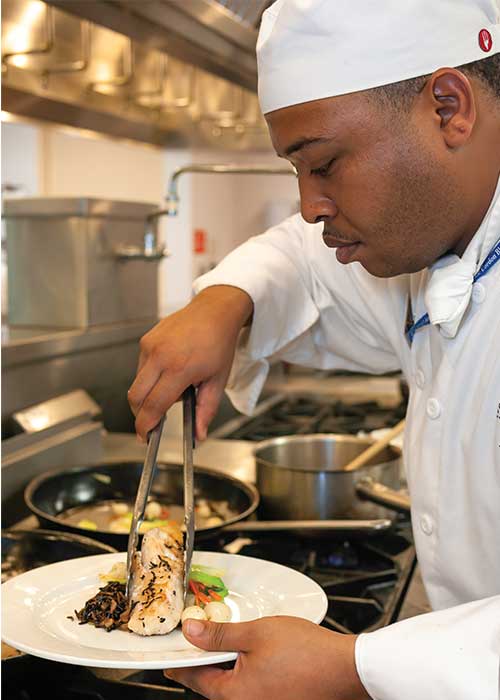
It may surprise many that some famous U.S. restaurants began cooking with tea decades ago, long before Tsai and Gold. Chez Panisse, the farm-to-table pioneer in Berkeley, California, that opened in 1971, served a fruit compote poached in Darjeeling tea and Sauternes, a sweet dessert wine. Aureole in New York City, helmed by chef/co-owner Charlie Palmer when it opened in 1988, served tea-smoked squab, which was smoked raw with tea first before roasting, unlike the Chinese way. Ironically, “The funny thing is I never particularly drink tea, but now, I use it for cooking,” Palmer remarked to The New York Times in 1989.
Similarly, chef/owner Daniel Patterson of Coi in San Francisco (now closed), who loves tea as an ingredient that adds something extra, confesses he doesn’t drink tea either. “Tea has a way of making the most mundane dishes feel exotic and new—for example, chicken soup infused with green tea,” he told The Times in 2006. He calls his Black Tea–braised Pork with Prunes and Orange Zest “southern France by way of China.” According to Patterson, desserts are “particularly partial to tea’s charms,” but as he and other chefs have discovered, savory uses for tea are infinite.
Why limit yourself to sipping tea when you could be supping it, too?
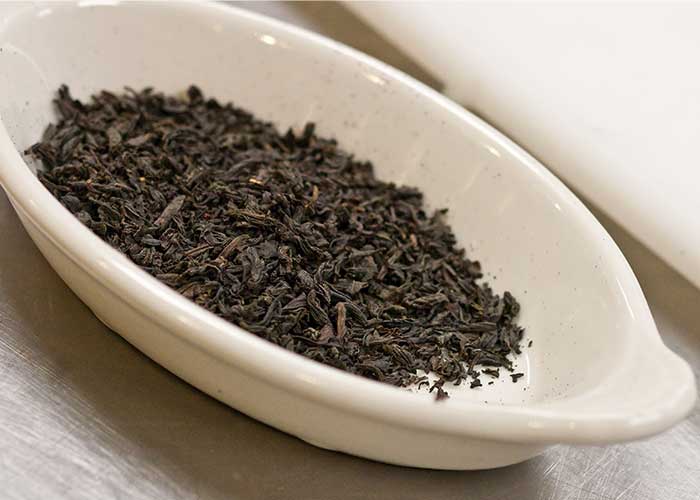 What is Lapsang Souchong?
A Chinese black tea from Fujian Province, Lapsang Souchong is heavily scented with pinewood smoke. When prepared as a beverage, it is often an acquired taste, but its smoky flavor makes it a favored ingredient in savory recipes.
Sharon McDonnell is a travel, food, and drink writer in San Francisco.