
During the last few decades of the 19th century, the North American tea story was running parallel to that in Britain. The Boston Journal, published on November 25, 1879, included a column about tea cozies, explaining that they were, “simply a wadded covering for your teapot,” and gave instructions on how to make one: “Some very handsome ones are made of remnants of heavy brocade, but linen is generally used, embroidered or not, according to taste, as these covers are washable. Make the covering large enough for your teapot and provide a ring at the top to lift it off with.” And the October 1892 edition of The Philadelphia Inquirer wrote that the tea cozy was enjoying, “a sudden and unexpected rise in public favor” among tea-party hosts and hostesses.
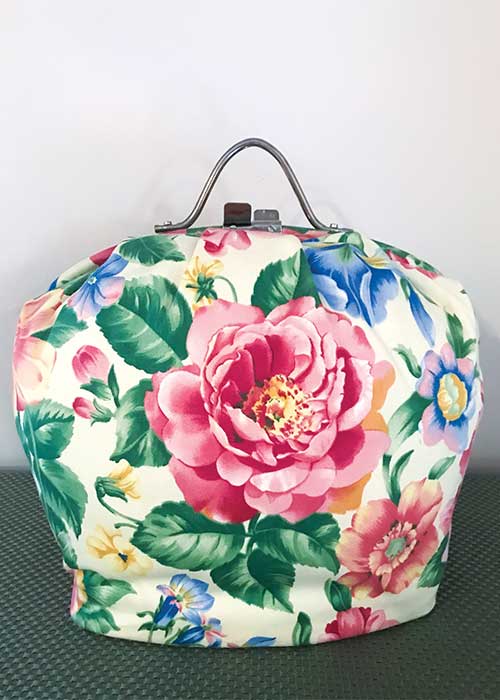
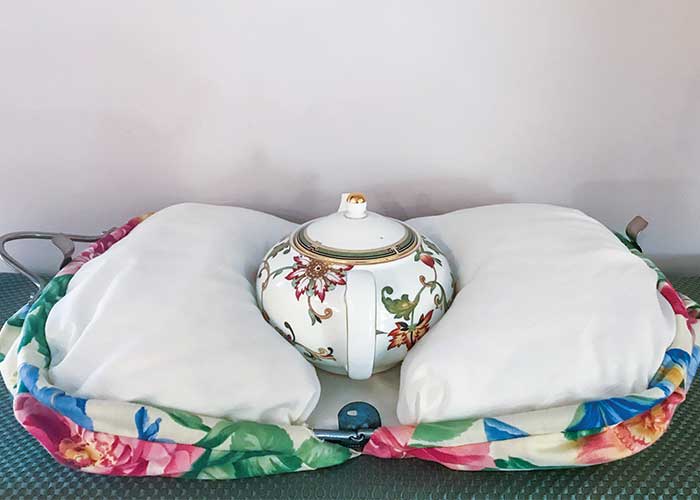
In Britain, the 19th December 1891 edition of Beauty and Fashion told readers, “A useful remembrance of the cheery season would be one of the teapots and cosies as used in China. The present consists of a mandarin or blue and white teapot, with a portable case of rattan cane, padded inside with cloth. Tea kept in these cozies does not lose its heat for hours.” The mention of rattan cane baskets refers to padded baskets that the Chinese used in the past for carrying or storing a valuable empty teapot—an idea that could be adapted to the role of snug cozy that keeps the tea hot. And perhaps this design also prompted the production of the sort of upside-down cozy that was rather like a sturdy and capacious handbag with strong handles and inside which a teapot full of hot tea could be easily carried from kitchen to drawing room or garden without cooling down.
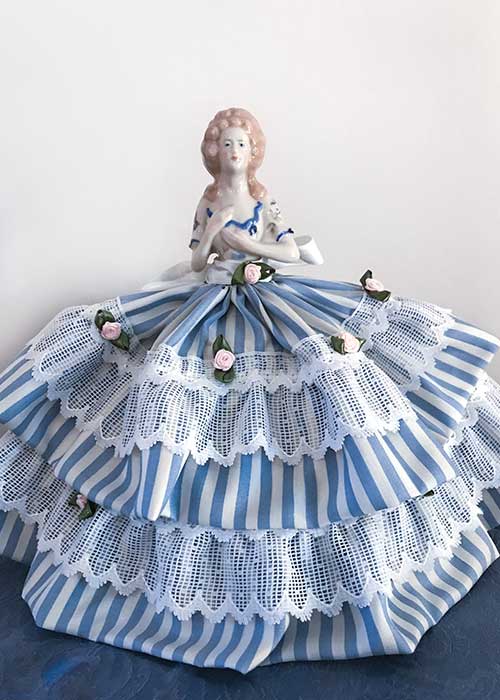
Perhaps the prettiest and most eye-catching of vintage tea cozies are the elegant crinoline ladies that cover a teapot with their billowing skirts. And even if intact crinoline-lady tea cozies are hard to find online or in markets, the porcelain dolls’ upper halves are often on display at antiques fairs. All that is necessary is for the new doll’s owner to knit, crochet, or sew a beautiful voluminous skirt and stitch it to the doll’s waistline. Also still popular is the 1930s “Cosiware” teapot (reproductions are also available today) that consists of a plain cream or white teapot and a shiny chrome jacket, lined with a layer of thick heat-proof felt, that pushes down and fits snuggly over the pot.
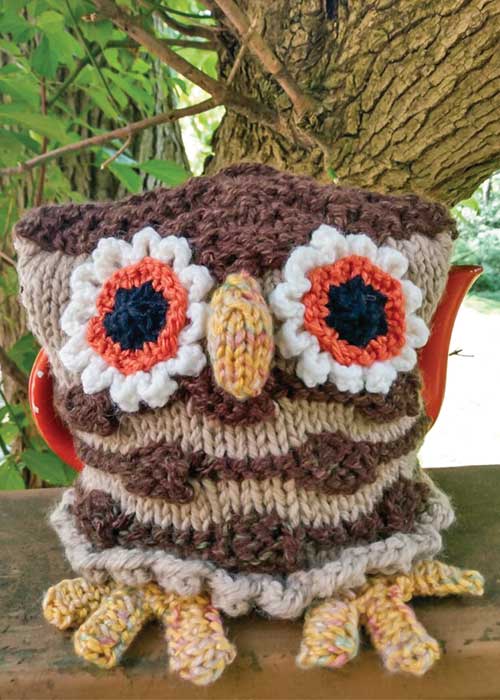
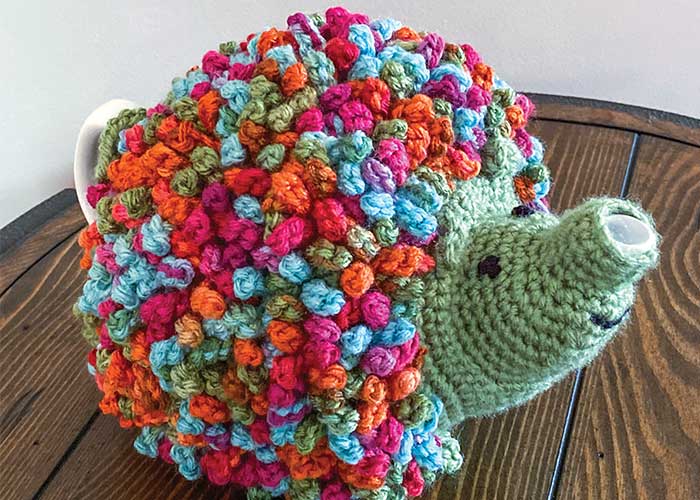
As long as a cozy keeps the pot and the tea warm, almost any theme is possible—knitted animal and bird shapes, vases of flowers, cartoon characters, hats with bobbles, country cottages, beehives, fairy cakes, etc. And today’s widely available, semi-circular domes that completely encase the pot also come in a wide variety of sizes, designs, colors, and themes. The choice is infinite, and if you made it yourself, it will always have an extra-special place on your tea table. And while admiring your cozy, remember that, in dictionary definitions, a cozy is often described as “a thick covering, like a hat, that is put on a teapot to keep the tea warm.” Alfred Adler, 19th-century Austrian doctor and psychotherapist, obviously understood the human psyche well and once said, “What person, confined in a small room with nothing but a tea-cozy, will not eventually put the tea-cozy on their head?”
Contributing Editor Jane Pettigrew, an international tea expert who has written many books on the subject, including her most recent, Jane Pettigrew’s World of Tea, is a recipient of the British Empire Medal. A former tearoom owner, she is a much-sought-after consultant to tea businesses and hotels, a conference speaker, and an award-winning tea educator. Although her travels have taken her around the globe, she resides in London.
Discover more seasonal recipes, table settings, and teatime inspiration by ordering your TeaTime subscription today!




Interesting article, Jane..
Love how little details like shape, color, and design can totally change the vibe and make people smile. Same idea applies to smiles themselves — small improvements can make a huge difference in confidence and appearance. Checking out https://newstardental.org/services/cosmetic-dentistry/dental-veneers/ is a simple way to brighten and transform a smile, giving that extra touch of charm just like a perfect tea cozy.