
Text by Katherine Ellis
Photography Courtesy of Museum of Royal Worcester
A time-honored legacy of remarkable porcelain
For 250 years, Royal Worcester’s impeccable porcelain pieces garnered unprecedented attention from china collectors and tea enthusiasts around the world. A pioneer in the industry and a role model, if you will, for similar companies to follow suit, this legendary brand paved the way in 1751 for beautiful craftsmanship to be the standard. Interestingly, it is the second oldest remaining English porcelain brand still in existence today, only following closely behind Royal Crown Derby, which was established in 1750.
Worcester Porcelain or The Worcester Tonquin Manufactory (the company’s original monikers) was created in response to the ever-growing demand for tea imported from China and the phenomenal rise of the beverage superseding beer in popularity. Up until this point in history, British porcelain had less than a sterling reputation, with most pieces not being able to handle the hot temperature of boiling water, quite literally cracking under any pressure. Fortunately for tea afficionados in the mid-18th century, the stability of English wares took a surprising turn when Dr. John Wall perfected the porcelain recipe. Stylish ladies—particularly wealthy women of the time—could now sip their beloved tea easily without the need to warm their teapots beforehand or initially pour milk into their teacups to prevent fracture. This innovative formula boosted the manufactory into great fame with Dr. Wall and William Davis, his business partner, at the helm.
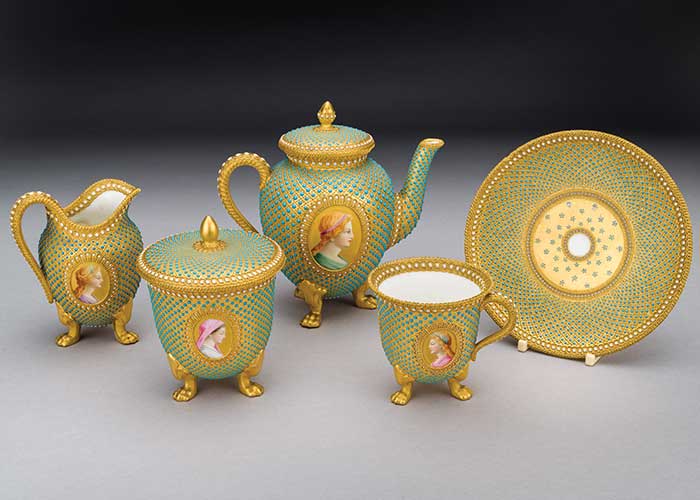
The largest portion of Worcester’s early inventory was centered around the art of taking tea, with teapots, milk jugs, saucers, and handle-less tea bowls at the height of fashion. A reliable marriage of excellent design combined with novel transfer-printing technology set the brand apart from the rest. Due to the rapid growth of the company’s prominence in culture, society began to take note of the famed factory, including royalty, which resulted in important commissions from King George III and, later, Queen Victoria. The word “Worcester” became synonymous with meticulous artistry, exceptional quality, and china worth cherishing. In 1788, Worcester Porcelain gained prestigious royal patronage, earning its first royal warrant and receiving its new esteemed identity as Royal Worcester Porcelain. By the 19th century, the brand was a powerhouse in global ceramics, shipping massive quantities of fine china across the world from the city of Worcester.
“Making a pot is a bit like baking a cake,” Sophie Heath, Director of the Museum of Royal Worcester, explains. “You start with a recipe. Ours featured Cornish clay, minerals found in the earth and in rocks (quartz and feldspar), and cow bones.” The three treasured ingredients are ground down, mixed together with water, poured into a mold, and baked in an enormous kiln to produce the gorgeous porcelain. Even for simple objects, such as a humble vase, 12 skilled people, performing 20 separate processes, were required: a thrower to make the main part of the vase; a molder to make molds for the handles; a caster to make the handles; an assembler to stick the handles to the vase; a fireman to fire the vase in the kiln; a painter to paint the object; a dipper to apply the clear glaze over the top; an additional fireman to fire the glaze; another painter to paint at least three layers of color, each layer requiring the fireman to fire the vase; a gilder to add the gold decoration; a third fireman for the final gold firing; and last but not least, a burnisher to polish the gold. At the apotheosis of the brand’s stardom, it is said that Dr. Wall considered the recipe to be so important that the investors in his new company were threatened with a hefty fine of £4,000 (roughly £500,000 today) if they divulged the secret.
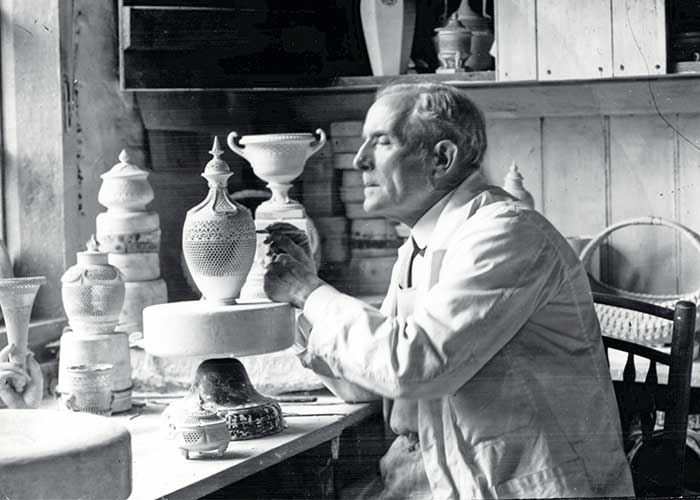
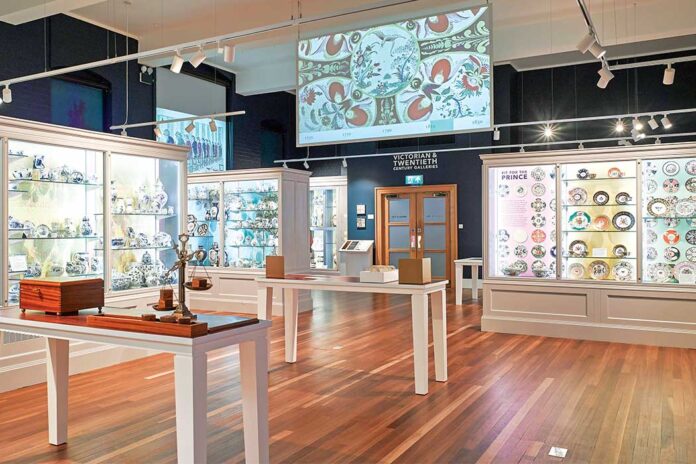
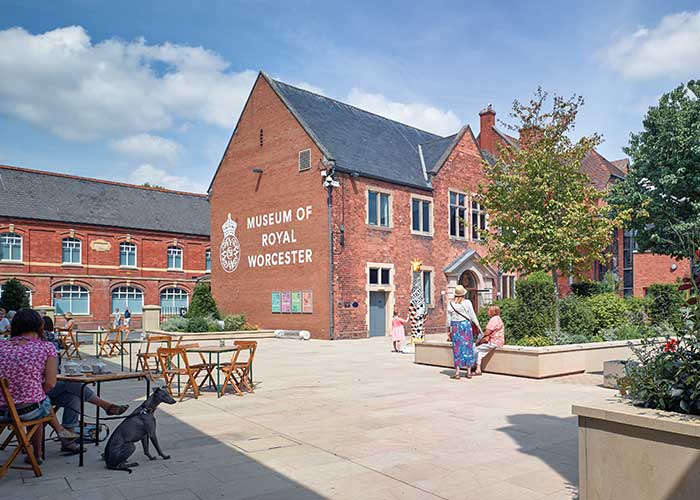
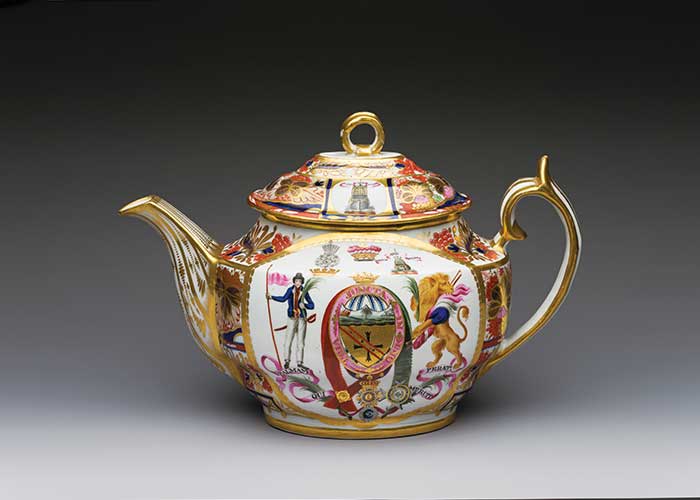
With an incredible legacy spanning multiple centuries, the former managing director of the factory, Charles Dyson Perrins, decided that the inspiring and beautiful heritage of the renowned porcelain company should be shared with everyone. In 1946, The Museum of Royal Worcester—an independent charity that connects admirers with the world’s largest collection of Royal Worcester porcelain—was founded next to the former site of the factory. Today, the museum offers self-led audio tours to discover the illustrious history, a Paint-Your-Own-Pottery Studio to try your hand at crafting your own creation, a Showstopper Trail that highlights 22 of the museum’s most coveted items, and afternoon tea served exclusively on Royal Worcester china. “We celebrate an exceptional heritage of local, regional, and national importance,” Sophie states. “The collection of 8,000-plus ceramic objects is built on the body of early Worcester gifted by the museum founder combined with the factory’s unique ‘Works collection’ of international exhibition pieces and special commissions. Iconic objects, from Admiral Lord Nelson’s breakfast teapot to famous Evesham-ware, are put in context by the archive of 20,000 records, including pattern and order books, 18th-and 19th-century artists’ drawings, apprenticeship records, minute books, photographs, transfer-printing copper plates, and social history objects.”
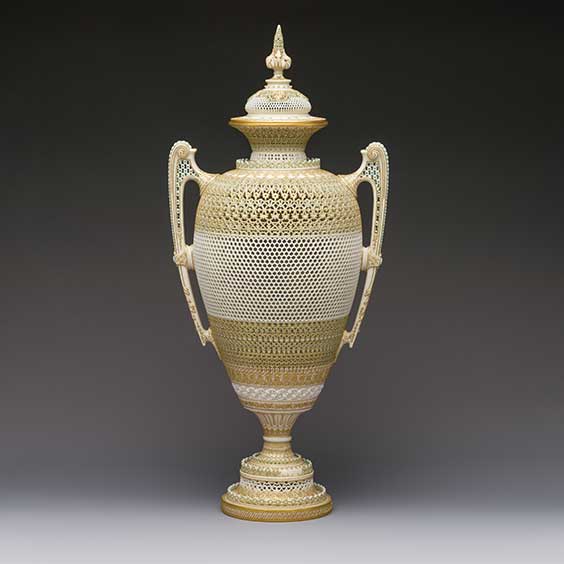
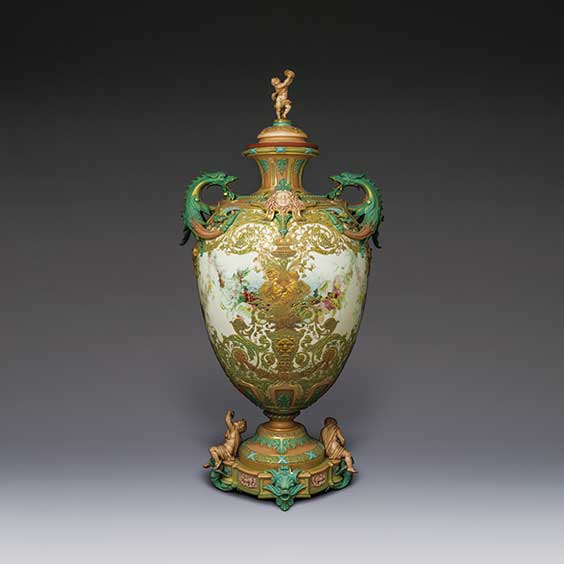
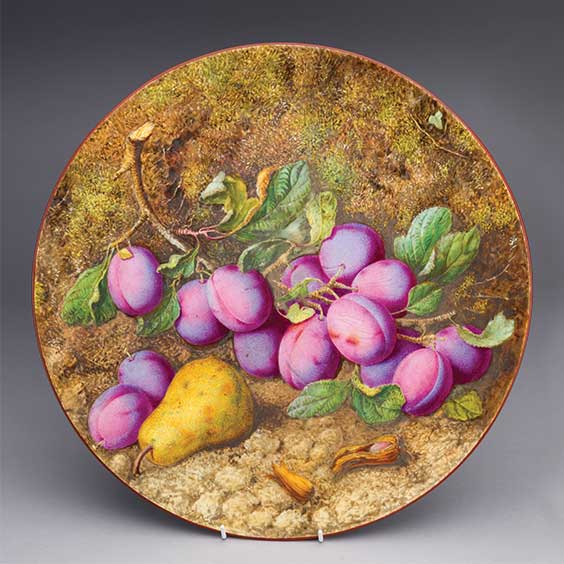
Recognized globally as an exemplar of pristine porcelain and holding the longest continuous royal warrant of any English ceramic firm up to its closing, it is evident that Royal Worcester significantly impacted the world of finer things, afternoon tea included. The brand’s name and intellectual property was purchased by the British company Portmeirion Pottery Group in 2009 after the Severn Street factory closed in 2008. Portmeirion, head- quartered in Stoke-on-Trent, England, still produces contemporary Royal Worcester products—including the popular Wrendale Designs, featuring charming, hand-painted illustrations of British wildlife—along with manufacturing items for homeware and fragrance brands such as Spode, Wax Lyrical, Pimpernel, and Nambé.
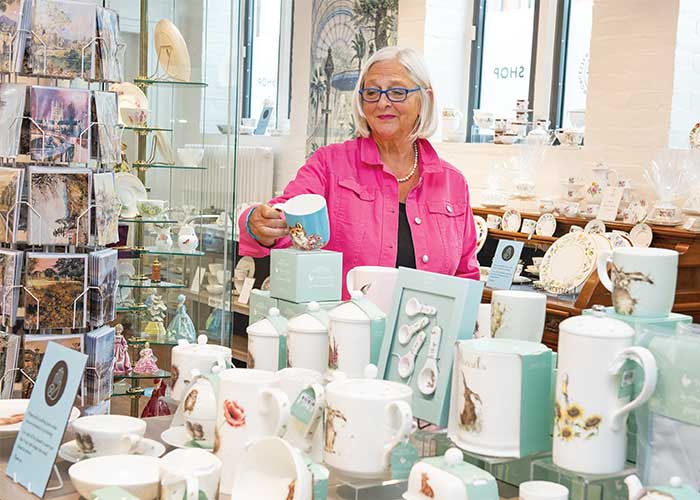
Though Royal Worcester has undeniably evolved over the years, as is natural with the trajectory of any prominent company, the rich ethos of the revolutionary brand is still alive today in the museum and with every exquisite piece of porcelain that has withstood the test of time. Without the creativity, courage, and brilliance of the aforementioned institution, we might still begin our teatimes by adding milk to the bottom of our teacups.
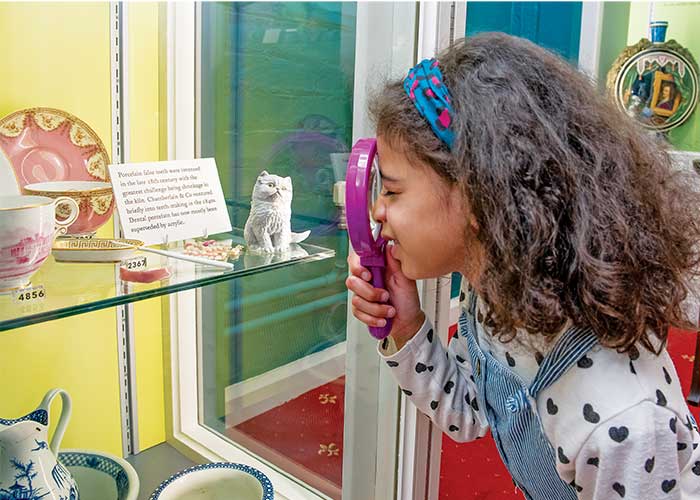
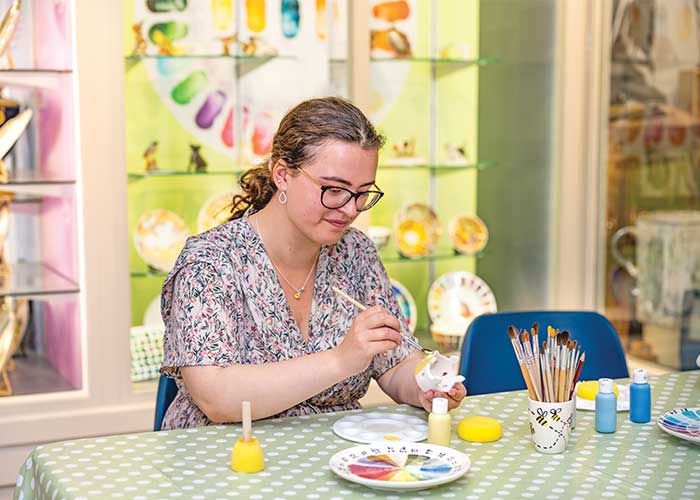
The Museum of Royal Worcester is open to the public Tuesday through Sunday from 10:00 a.m. to 5:00 p.m. For more information about the museum, go to museumofroyalworcester.org.


I have several figures of the days of the week and the months of the year. I would be pleased if you could tell me did you make a boy and girl for the days of the week and the months of the year? I was born on the Sabbath Day and have the little girl sitting on a sand dune at the seaside. Did you make a Sabbath Day girl holding a balloon in her right hand? If so I would be pleased to hear from you within 3 days as an auction house here in Hollywood, Florida has a Royal Worcester figurine of a Sabbath Day girl minus the balloon but doesn’t mention that it in their description!!!! Thank you for your answer to my question