

The true story of Robert Fortune
Text by Jane Pettigrew
“Fortune favors the brave!” (Latin proverb, “Audentes fortuna iuvat!”)
Eighteen thirty-three was a bad year for the British East India Company (EIC). The government in London removed its monopoly of the tea trade with China, and the Chinese emperor was very angry about the amount of opium the EIC was sending into China (30,000 chests in 1833). That meant that there was mounting urgency to develop the tea industry outside China to meet the growing demand for tea in Britain.
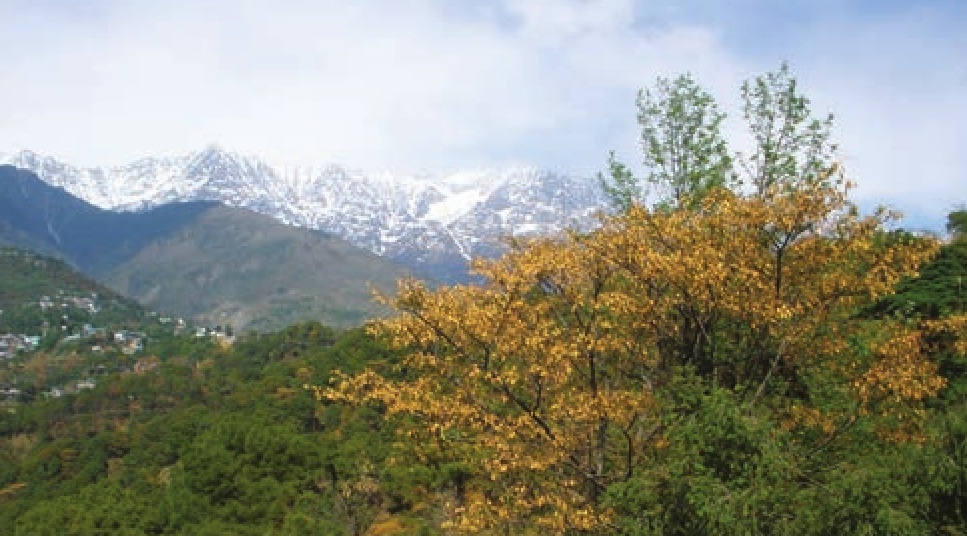
In 1839, the first black tea from Assam was sold in the London tea auction, and the first tea plants in Darjeeling went into the ground in 1841. Meanwhile, a young Scottish horticulturalist and botanist named Robert Fortune had started working for the Royal Horticultural Society in London and, in 1843, was commissioned by his employers to undertake an expedition into China in search of as many useful and ornamental plants as could be found there. Little did he know that, in 1848, he would be asked by the EIC to travel to China again to learn more about the cultivation and manufacture of black and green tea and to collect seeds and plants to expand tea growing in the foothills of the Himalayas in northwest India.
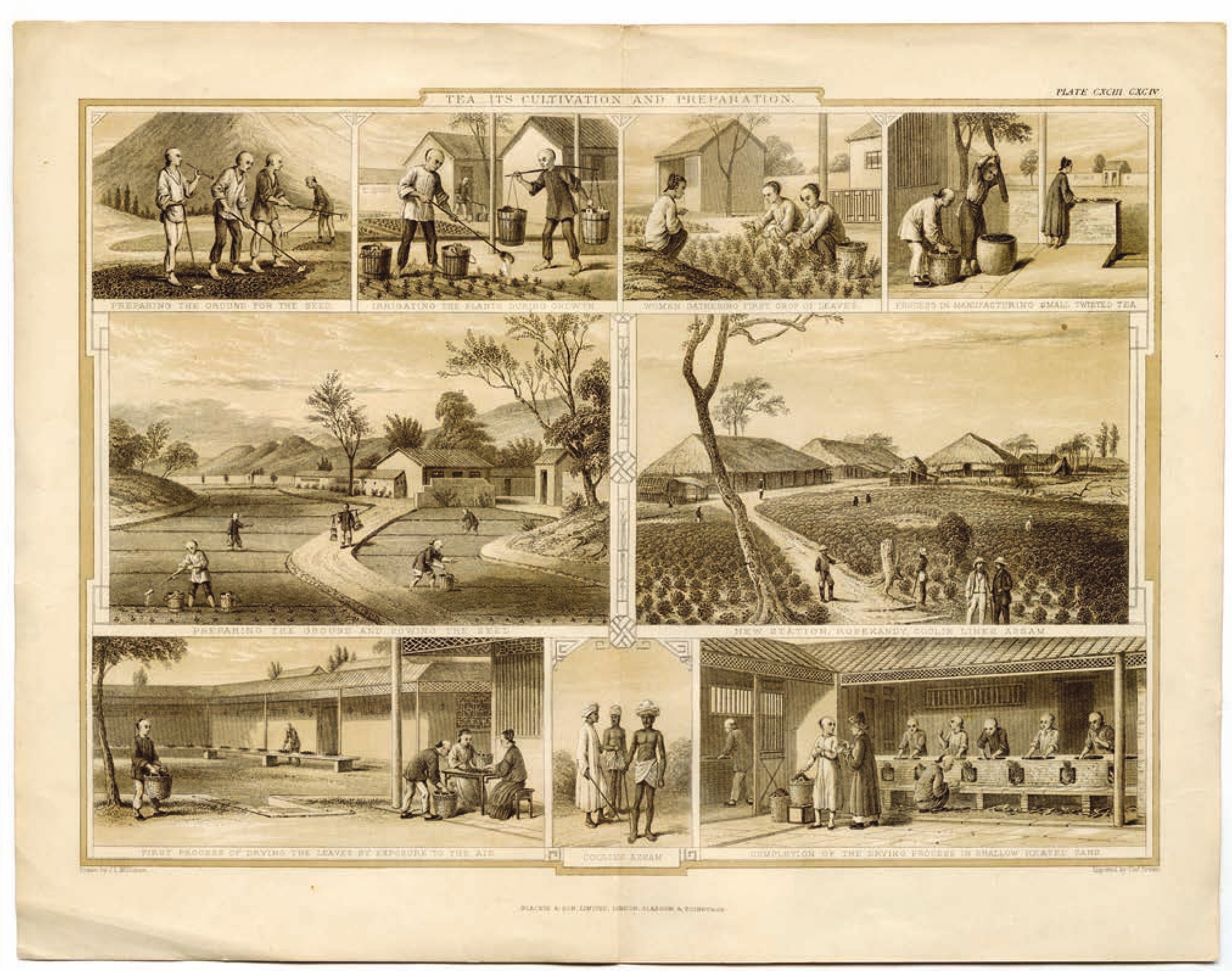
This was an excellent time to explore China, for the Treaty of Nanking, signed in 1842 at the end of the first of two Opium Wars with China, gave the British the right to trade in Fuzhou, the capital of Fujian Province, and in four newly opened Treaty Ports—Canton, Amoy, Shanghai, and Ningpo in Zhejiang Province. Although the British had been trading with China since the mid-17th century, they knew very little about the country’s interior, and these new coastal “treaty” cities offered good starting points for exploration. Despite the daunting and dangerous nature of the task, Robert spent three years traveling to remote areas, some of which were strictly forbidden to “barbarians.” He learned enough Mandarin to fool people he met and pretended that his strange accent was because he came from a very remote part of China. As he described in his book, Three Years’ Wanderings in The Northern Provinces of China, “I was, of course, traveling in the Chinese costume; my head was shaved, I had a splendid wig and tail . . . and upon the whole I believe I made a very fair Chinaman.”
From that first successful sojourn in China, Robert brought back 120 plant species, including tea plants, and also gathered information about the cultivation and processing of green and black tea. Returning to London in 1846, he was made curator of the Chelsea Physic Garden, a little-known herb garden on the north embankment of the Thames that today contains around 5,000 edible, useful, and medicinal plants. But Robert had very little time to settle into his new job because, on 17 May 1848, he received a letter from the EIC asking him to return to China, “for the purpose of obtaining plants and seeds of the best descriptions of tea from the most desirable localities and of conveying them under your own charge from thence to Calcutta and eventually to the Himalayas.”
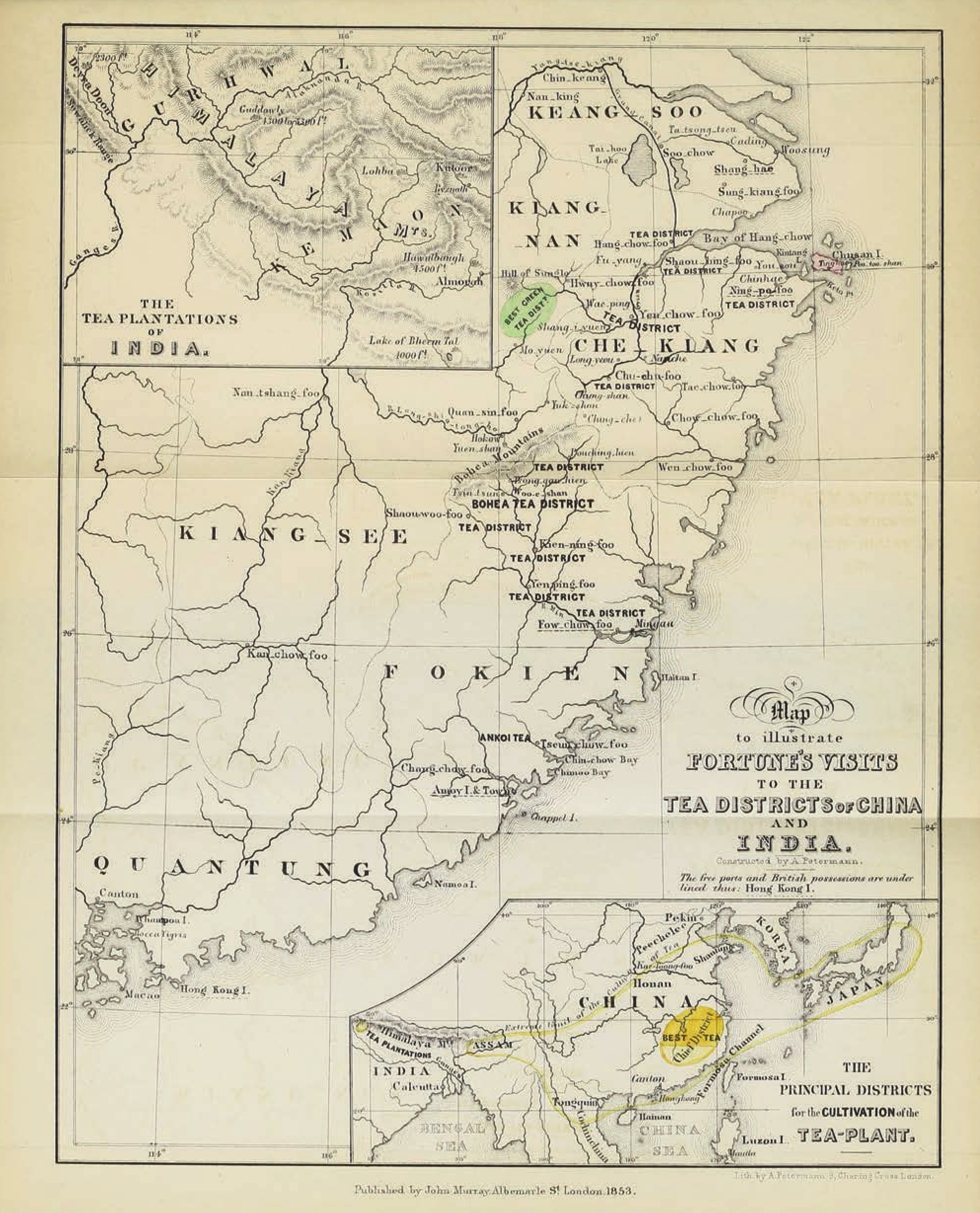
At the start of this second trip, he must have been more confident that he could travel without fear of being recognized to places that were strictly out of bounds. After arriving in Hong Kong on 14 August 1848, he traveled around the Chinese coast to Shanghai, then by river to Hangzhou, and onward in a westerly direction until, “The tea plant was now frequently seen in cultivation on the hill sides, this being the outskirt of the great green tea country to which I was bound.” Robert spent this first stage of his travels visiting famous green tea regions in Zhejiang and Anhui Provinces, focusing on the gathering and germination of seeds, cultivation, harvesting, and manufacture. He was shocked and fascinated in one location to watch green tea makers adding powdered Prussian blue, gypsum, and turmeric root to green tea destined for export “to make it look uniform and pretty.” Robert commented in his journal, “No wonder that the Chinese consider the natives of the west to be a race of ‘barbarians!’”
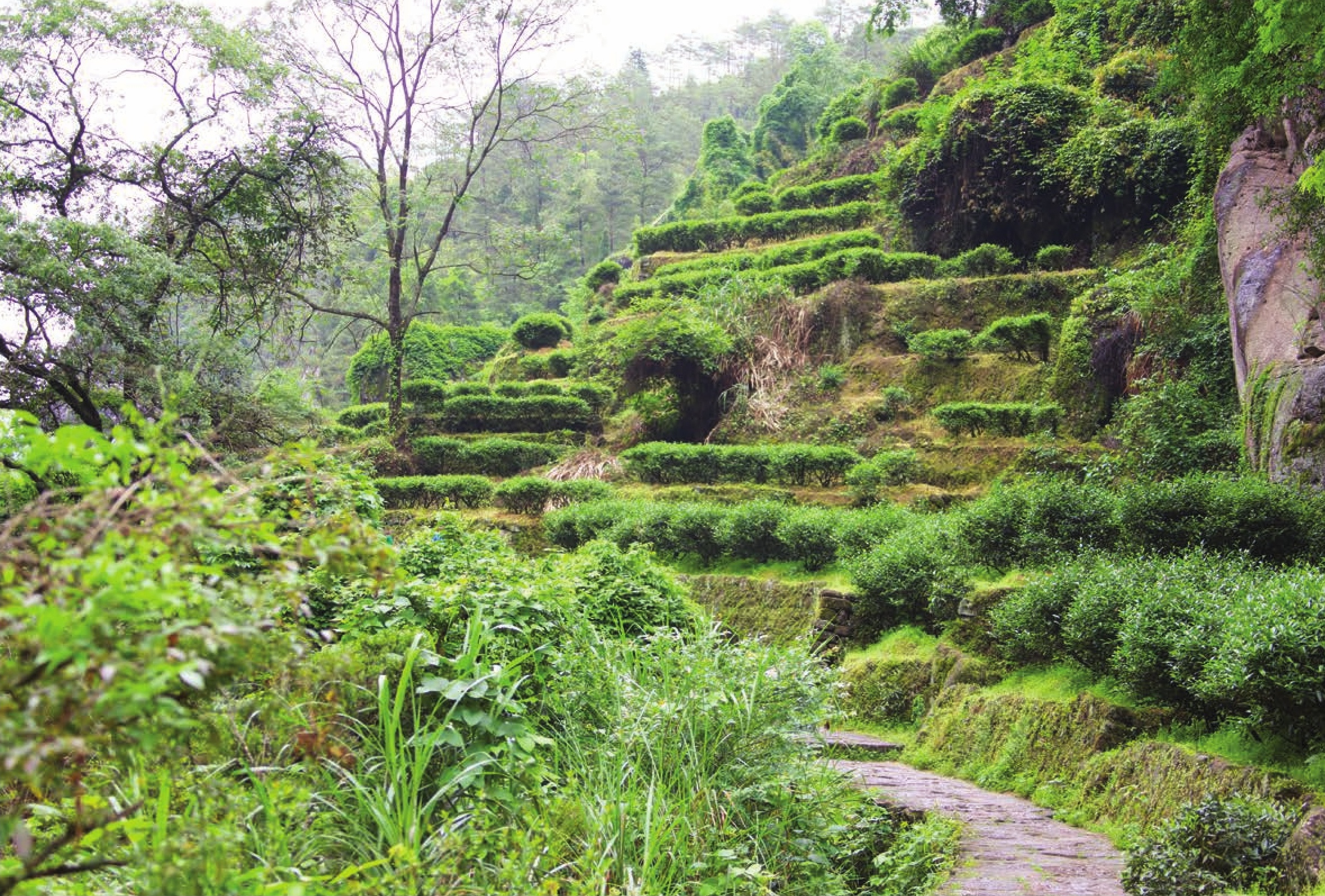
The second part of his visit was dedicated to black tea, which he referred to as bohea, a word that derived from Wuyi, the mountains in Fujian Province where the first-ever black tea, Lapsang Souchong, was and is still made. Bohea was used to mean “black tea” in the 17th and 18th centuries and is today found on old invoices and antique tea caddies. At this time, botanists were not completely sure if black and green teas were made from the same bush or from two separate plants— Thea bohea and Thea viridis. During his first visit, Robert began to suspect that the two types were indeed made from the same plants. During his second expedition, this was confirmed.
In his book about his travels, he told readers that, while in the Wuyi mountains, “I visited many of the tea farms and was successful in procuring about four hundred young plants.” Robert’s notes about the terroir of these mountains explained that the soil here contained “particles of rock,” and he wrote, “The success that has attended the cultivation of tea in this part of China may be traced to have had some connection to the peculiar formation and properties of these rocks. . . .” He was correct, and today we call Wuyi’s famous dark oolongs yan cha or “rock teas,” and we describe the teas’ flavor as having a yan yun character, meaning “the essence of the rocks.”
On both of his visits to China, Robert needed a safe way of shipping seeds and plants to India and London, and luckily, a new plant carrier had been invented in 1829 by Dr. Nathaniel Bagshaw Ward. Dr. Ward realized that inside a sealed environment containing seeds, plants, soil, and water, seeds germinate and plants thrive because, during the day, the plants use water and carbon dioxide to photosynthesize, and at night, they give off oxygen and water vapor. The recycling of air and water can continue until the Wardian case reaches its destination. In 1849, Robert shipped several cases filled with tea seeds, baby tea plants, and mulberry seeds to the Himalayas, and all arrived in good condition.
By 1851, Robert Fortune’s work in China was complete, and he headed back to Shanghai where he wrote, “I found some good tea manufacturers and lead box makers had been engaged, and everything had succeeded far beyond my most sanguine expectations. A large assortment of implements for the manufacture of tea had also arrived. Nothing therefore remained for me to do except to pack my plants and proceed on my voyage to India.” He packed 16 Wardian cases with 2,000 plants and 17,000 sprouting seeds and, on 16 February, set sail for Calcutta. From there, he traveled onward to Uttar Pradesh, where everything was “handed over to Dr. Jameson, Superintendent of the Botanical Gardens in the north-west provinces and of the Government tea plantations.” In total over three years, he had managed to smuggle 20,000 baby tea plants out of China to their new home in India.
And that is how Robert Fortune, plant hunter extraordinaire, managed to steal tea seeds and plants, implements, knowledge, and tea makers from under the noses of the Chinese, earning for himself the title “tea thief,” by which the Chinese refer to him to this day, and making it possible for the East India Company to develop new tea gardens in northwest India.
Contributing Editor Jane Pettigrew, an international tea expert who has written many books on the subject, including her most recent, Jane Pettigrew’s World of Tea, is a recipient of the British Empire Medal. A former tearoom owner, she is a much-sought-after consultant to tea businesses and hotels, a conference speaker, and an award-winning tea educator who is co-founder and director of studies of the UK Tea Academy. Although her travels have taken her around the globe, she resides in London.





Ceylon, experiments were being made in the Royal Botanic Gardens at Peradeniya, just outside Kandy. A small batch of tea-seeds, sent from Assam in India, was sown. A few months later, 205 tea seedlings were also planted to assess how well they would do in Cingalese soil. In May of the same year, a number of young plants were sent off to the hill-resort of Nuwara Eliya to test their ability to weather the climate there.6 The government of the island had commissioned a report to look at the economic potential of this crop, urged on no doubt by the fact that earlier in that same year the very first commercial crop of tea from Assam had been sold on the London markets, breaking the centuries-old Chinese monopoly.
Almost twenty years after Maurice’s death, a statement was made by his nephew, George,7 in a letter to The Times: “MylateuncleMrMauriceB.Wormsbroughtthefirsttea-plantsfromChinatoCeyloninSeptember 1841, and formed a nursery of them on his estate at Pusellawa (vide Sir J. Emerson Tennent’s Ceylon, Vol. 2 Chapter 7). Samples of the tea grown there were often sent by Mr M.B. Worms to friends in England and found to be excellent. Owing, however, to the objection of the importation of Chinese labour and to the then ignorance of the Cingalese as to the art of preparing tea, its cultivation remained for many years in abeyance.”8
Sixty years after Baron de Worms’ letter, Sir Thomas Villiers, in his Mercantile Lore, claimed that Maurice “brought [tea] cuttings [to Ceylon] from China and formed a small garden at Condegalle, Pussellawa, in September 1841. A Chinaman was imported as Teamaker, but the cost of tea made worked out at about £5 per lb”. 9
It made me wonder how much cultural exchange has been lost or altered due to such thefts over time. How do you think this spider solitaire free impacts our appreciation for tea today?