

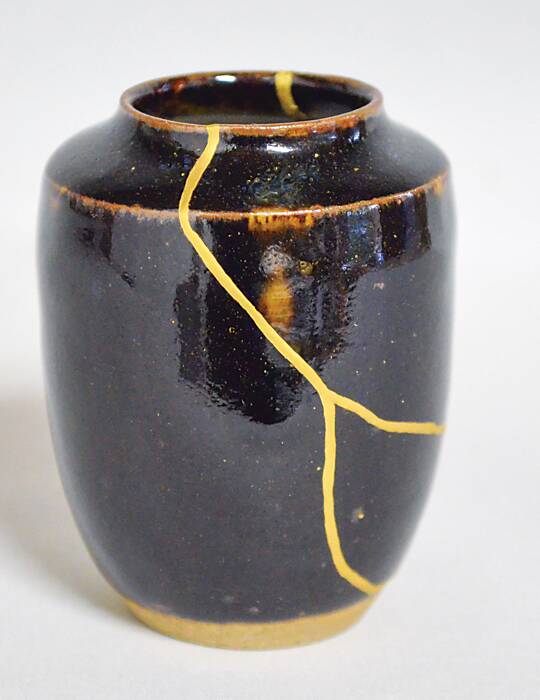
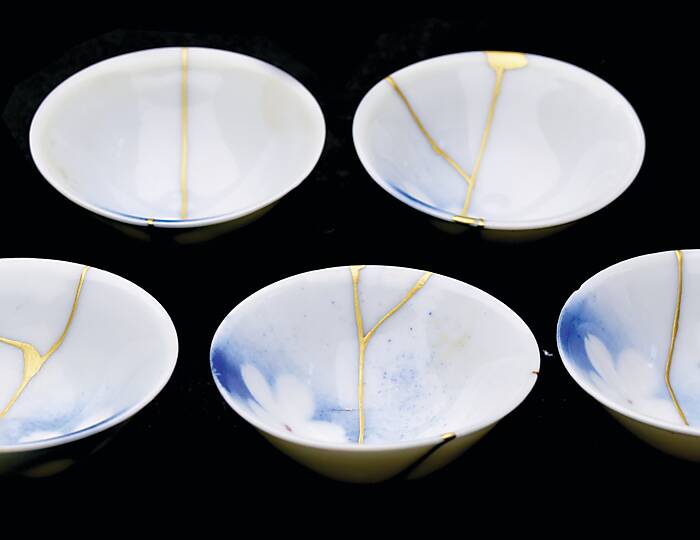
Kintsugi is a magical method of repair, but it is also a lesson for life. It teaches us to accept and embrace imperfections in ourselves, in others, and in the things that surround us in our everyday lives. It tells us not to hide and be ashamed of our flaws or the broken parts of ourselves or our lives—those damaged parts can be repaired and make us stronger. In her 2018 book Kintsugi Wellness: The Japanese Art of Nourishing Mind, Body and Spirit, Candice Kumai sums up the deep lesson of kintsugi. “It’s beautiful to think of this practice as a metaphor for your life, to see the broken, difficult or painful parts of you as radiating light, gold and beauty.”


Contributing Editor Jane Pettigrew, an international tea expert who has written many books on the subject, including her newest, Jane Pettigrew’s World of Tea, is a recipient of the British Empire Medal. A former tearoom owner, she is a conference speaker, an award-winning tea educator, and currently Director of Studies at The UK Tea Academy, an online tea-training body based in the United Kingdom that reaches out to students all around the world. Although her travels take her around the globe, she resides in London.
Discover more seasonal recipes, table settings, and teatime inspiration by ordering your TeaTime subscription today!