
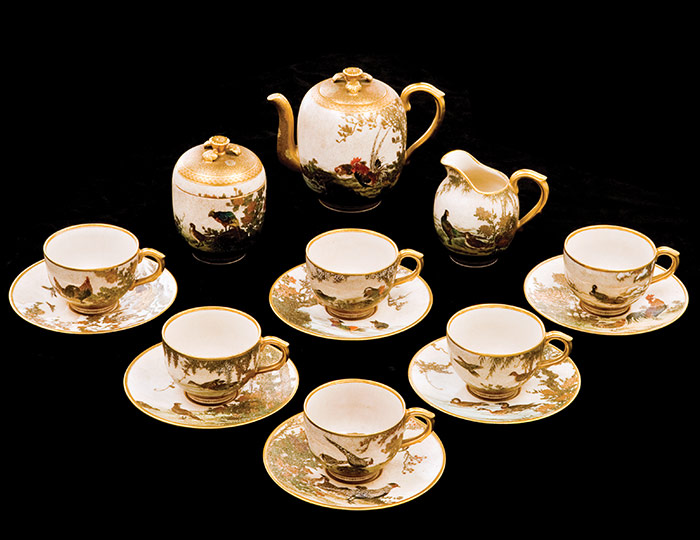
In 1639, Japan placed severe restrictions on the entry of foreigners to Japan, and Japanese nationals were forbidden, on penalty of death, to leave the country. This period of Sakoku (closed country) lasted until 1854, one year after U.S. Commander Matthew Perry sailed with a fleet of ships into Uraga harbor. He carried with him a letter from American President Millard Fillmore requesting that Japan’s ports be opened to foreign trade. The letter made it quite clear that if this did not happen by the time Commander Perry returned one year later, force would be used. So in 1854, the ports of Hakodate and Shimoda opened, and the Shogun government agreed to limited foreign trade and to the establishment of a permanent residence for the U.S. Ambassador in Japan. Between 1855 and 1858, trade treaties were signed with various European countries and with Russia. Imperial power was restored to Emperor Meiji (who ruled from 1868 to 1912 A.D.), and Japan was governed in a new spirit of civilization and enlightenment. The country was restructured and reorganized. Manufacturing was stepped up, and an increasing number of objects were made for export. Western customers ordered arts, ceramics, cloisonné enameled and lacquer wares with Western designs, and Japanese craftsmen were eager to make beautiful objects that pleased their foreign clients. They were also keen to show off their arts and crafts at the very successful World Fairs. At the Exposition Universelle in Paris in 1867, Saga prefecture in Kyushu exhibited several thousand pieces, including Satsuma porcelains, tea ceremony utensils, and lacquer wares.



Really enjoyed learning of the history of the Tea Wares of Japan. Just added your blog to my own watchlist… eager to see what’s to come! Love the photography of such a beautiful collection!
Really great writer i enjoyed reading this article very much..