

Although kaolin clay, essential for the manufacture of porcelain, had been discovered in Kyushu in southern Japan in 1616, the Japanese had never valued porcelain in the same way as their foreign customers. The Japanese transition from pottery to porcelain was delayed by the country’s dedication to chanoyu, which laid greater importance on the use of simple, rustic pottery bowls and vases. When the local potteries, mostly small family kilns, did start making porcelain, they were influenced largely by Chinese design and produced simple pieces such as tea bowls, storage jars, and dishes in blue-and-white glaze or in celadon, decorated with flowers, butterflies, crickets, birds, and landscapes. At first, the Japanese porcelains were not considered as fine as those that had previously come out of China, but with growing demand from the Dutch, the porcelain factories in the town of Arita in Kyushu, flourished in the second half of the 17th century and became famous for their overglaze enameled and underglaze blue-and-white wares.
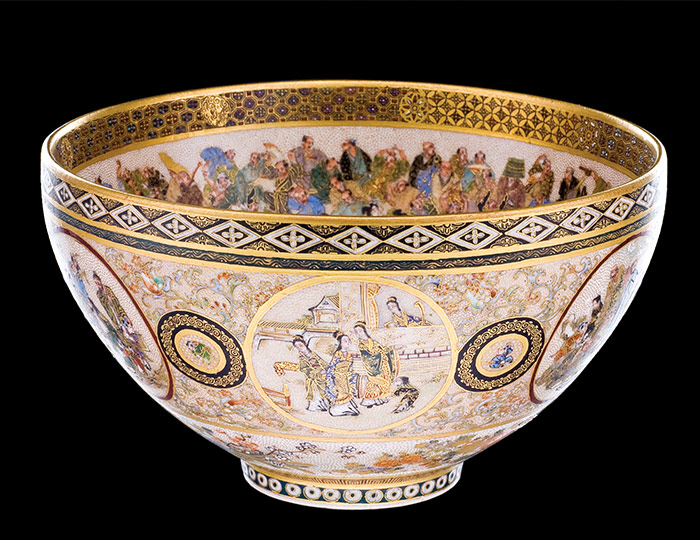
Sakaida Kizaiemon was one of the first potters to discover and perfect the art of enameling in the mid-17th century. When he presented the Lord of Nabeshima with an enameled ornament in the shape of a pair of persimmons (kaki), the aristocrat nicknamed him Kakiemon. The name stuck, was carried forward by his descendants, and became famous around the world as the name of the pottery. The name is sometimes used to encompass all porcelain wares from Arita, but the genuine pieces were and still are made by descendants of Sakaida Kakiemon. By the beginning of the 18th century, Kakiemon was in great demand and was being imported into Europe and China where the style was often copied. Kakiemon and other porcelains from Arita are often referred to as Imari wares since the town of Imari on the northwest coast of Kyushu became the shipment port for porcelains made at the nearby kilns.



Really enjoyed learning of the history of the Tea Wares of Japan. Just added your blog to my own watchlist… eager to see what’s to come! Love the photography of such a beautiful collection!
Really great writer i enjoyed reading this article very much..