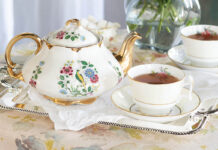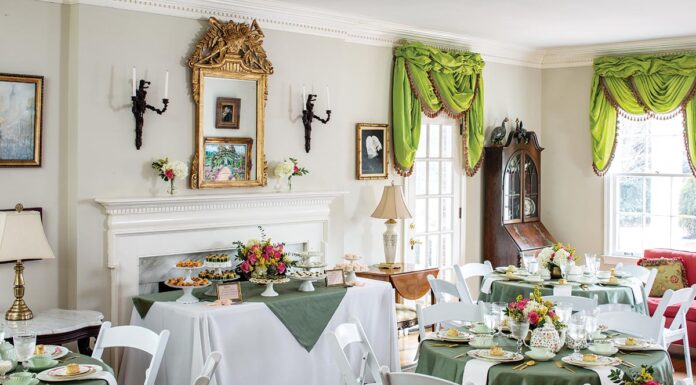

In their determination to copy fine Chinese porcelains, the European potteries developed an industry that continues today to produce exquisite table wares. Over the years, tea bowls became tea cups, waste bowls disappeared, matching tea sets and tiered cake stands appeared, while teapots, sugar bowls, and milk jugs stayed very much the same. The Chitra Collection includes some very fine examples of the way the European factories recognized the interest in tea in the 18th and 19th centuries and created pieces that enhanced the pleasure of tea drinking.
A Note About Color
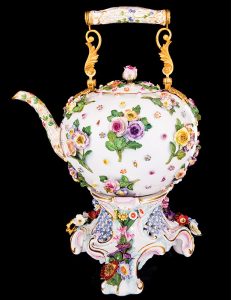
Whereas early European tea wares copied typical Chinese blue on white decorations and used the gentle colors of the famille verte and famille rose styles, new exciting colors came into use at the major European manufactories, particularly as the background for other images. Meissen used strong pink, claret, pea-green, dark blue, sky blue, and primrose or canary yellow as grounds; Sevres introduced yellow in 1745, royal blue in 1749, turquoise in 1752, light and dark green, pink, and violet in 1757, along with their dark blue, also called Mazarin Blue, bleu du roi, or gros bleu, was much admired; in England, apple green became almost uniquely used by the Worcester pottery.
Contributing Editor Jane Pettigrew, an international tea expert, who has written many books on the subject, is recipient of the British Empire Medal. A former tearoom owner, she is a much-sought-after consultant to tea businesses and hotels, a conference speaker, and an award-winning tea educator. Although her travels take her around the globe, she resides in London.
From TeaTime, July/August 2017
Discover more seasonal recipes, table settings, and teatime inspiration by ordering your TeaTime subscription today!