
By Bruce Richardson
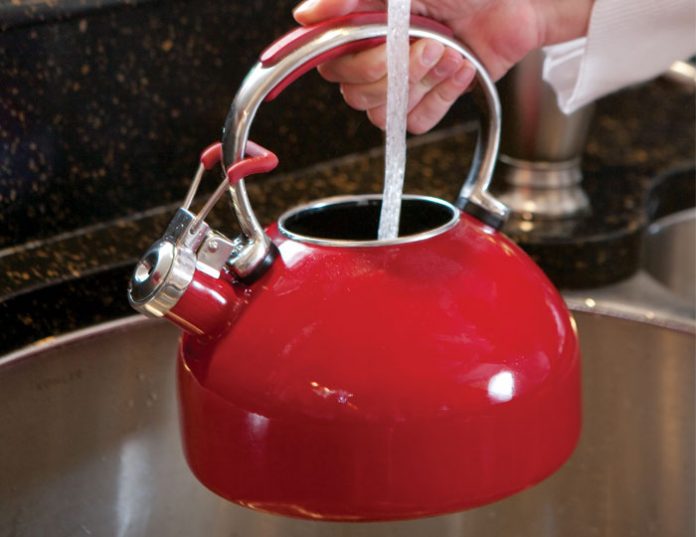
Water accounts for 98.5 percent of the volume in a cup of tea, so the quality of the water you use is equally as important as the quality of your tea. You could steep fantastic teas in poor water, and the result would always be less than perfect.
Students of tea have been aware of water’s importance in the art of making good tea since Lu Yu, author of Ch’a Ching, in A.D. 780 stumbled upon a glorious spring whose water was extremely clear and clean. He brewed tea with this spring water and found that the tea tasted unexpectedly better than usual. Even the early settlers of Manhattan had designated “tea-water pumps” to be used only for drawing water for making tea.
Most Americans are fortunate to have safe and affordable municipal water, but that rarely means tap water is best for brewing tea. How can you enhance the quality of your home tap water for steeping tea? Here are four initial observations you can make:
The look of the water. Is anything floating in the water, or is it off-color?
The smell of the water. Are there trace aromas of sulfur or chlorine?
The taste of the water. Can you taste any dominant minerals?
The visual signs of water hardness. Do you see heavy calcium buildup in your water kettle or around your faucets?
Unless you have extremely hard water, the easiest solution for most consumers is a one- or two-stage filter system. Simple countertop water filters will remove visible solids and chlorine and will improve the taste of most water. However, these do not substantially alter the mineral content of water known as “total dissolved solids,” or TDS. Mineral content can be removed by a reverse-osmosis system that gives you totally pure water. The downside is that reverse osmosis removes all the minerals, and that’s not the best water for making tea. Some mineral content is needed—just not too much or too little.
Here is the ideal tea-water analysis, if you have your water professionally analyzed:
- 80 ppm total hardness
- No chlorine or iron
- 150 ppm total dissolved solids (TDS)
- 40 ppm alkalinity
- 6–8 pH
Should spring water or bottled water be used for tea? Be aware that all waters are not created equally. Check the bottler’s Web site for an analysis statement, and then compare it with the ideal analysis shown above. Keep in mind that distilled water has no mineral content and is too “flat” for tea making.
Contributing Editor Bruce Richardson is the owner of Elmwood Inn Fine Teas and Benjamin Press. Follow his blog at theteamaestro.com.



AWESOME!!! Very good post.. Thanks for share..