Cliveden
Taplow SL6 0JF
+44 1628 668 561 • clivedenhouse.co.uk
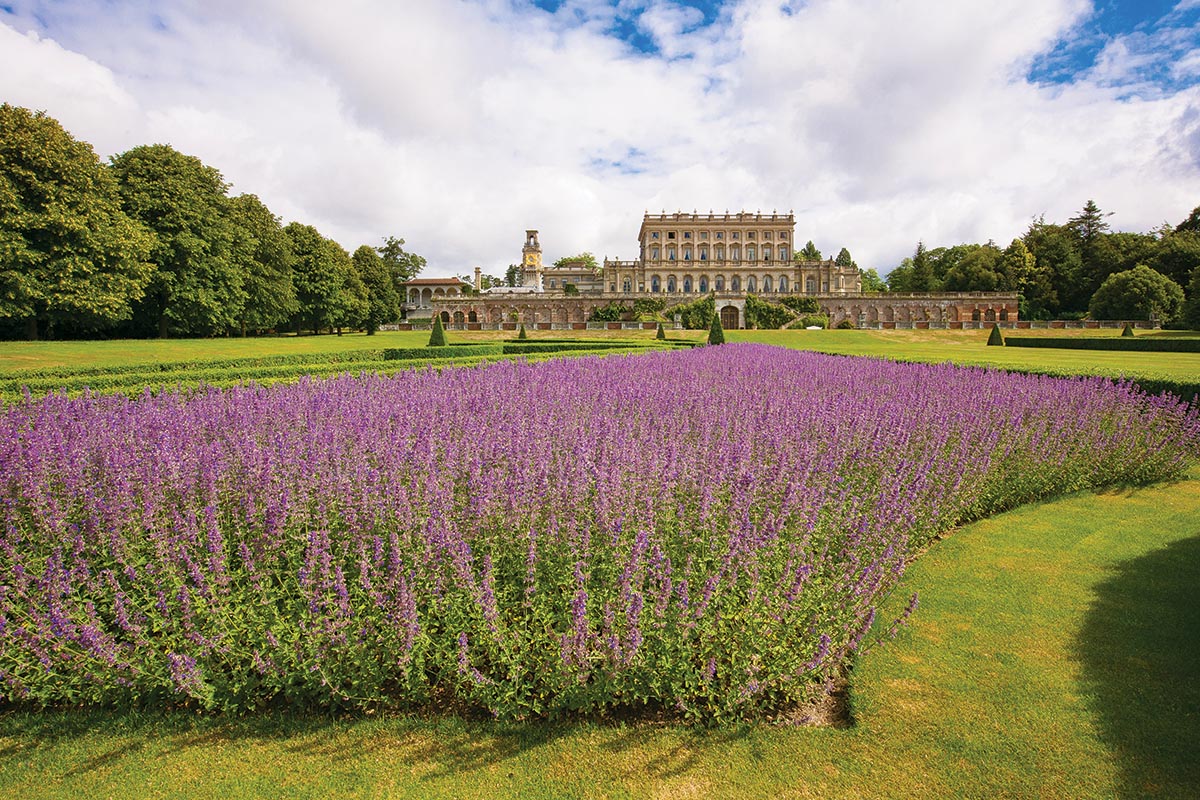
Cliveden House is another stately home that today belongs to the National Trust, but instead of being open to the public, it is leased from the Trust and is a very beautiful, luxury, five-star Relais & Châteaux hotel. The house dates back to 1666 and was built by the 2nd Duke of Buckingham as a hunting lodge. The grounds surrounding the house are so large that they spread over parts of three counties—Berkshire, Buckinghamshire, and Oxfordshire. The first house burnt down in 1795; a second house, built in 1824, was also destroyed by fire in 1849; and the third house was built in 1851 and is still standing. Over the years, the house has been home to a Prince of Wales, two dukes, an earl, and the last but one owner, Viscount Waldorf Astor (of Waldorf Astoria hotel fame). And in 1961, the house became famous nationally and internationally for the Profumo Affair, a cause célèbre that involved an English politician, a Russian spy, and two call girls.
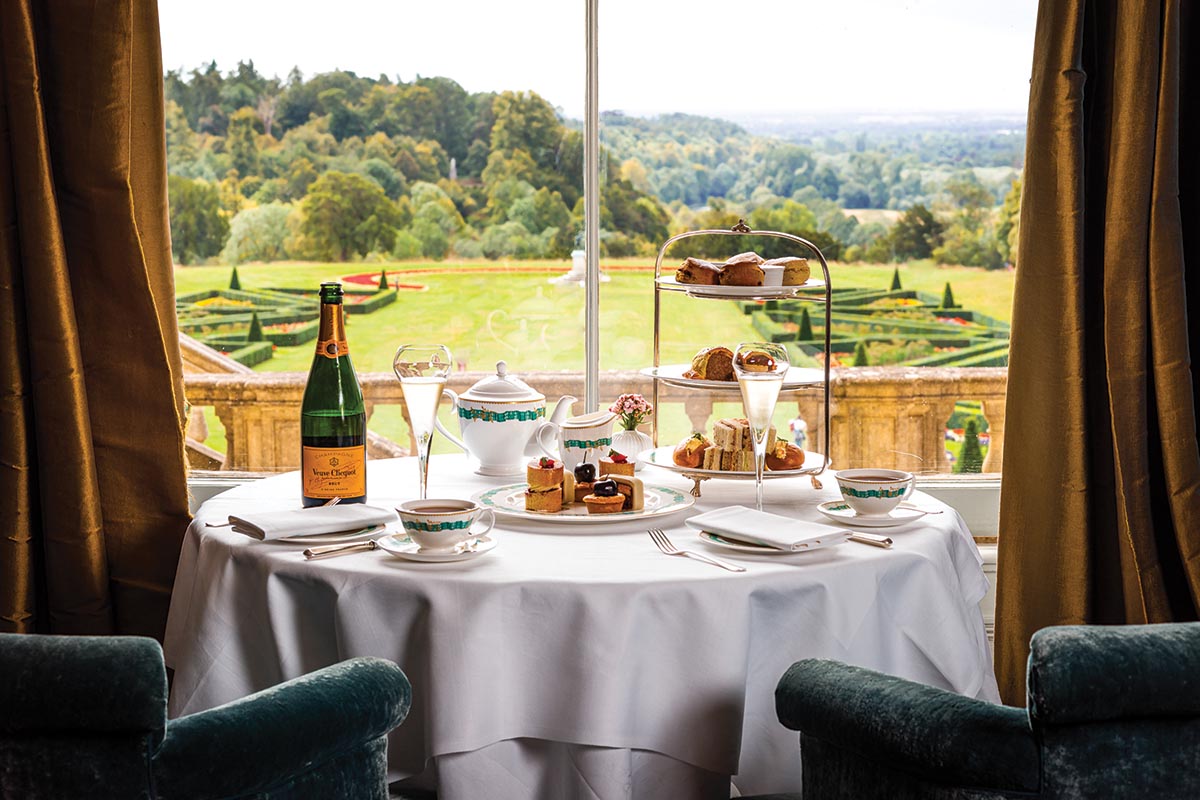
Today the scandals are very much in the past, and the hotel is all about elegance, luxury, fine dining, and beautiful afternoon teas. These are served either in the glorious French Dining Room, where crystal chandeliers glitter and the tall windows allow views over the vast parterre gardens and parkland at the back of the house, or in the Great Hall, a gorgeous gold and crimson lounge area where the gentle golden light from carefully placed table lamps creates an ambiance of extravagant comfort and indulgence. In January 2024, The Cliveden: Create Your Moment in History Afternoon Tea was devised by Executive Head Chef Chris Hannon, who took his inspiration from architectural elements and design features in the house and garden. The Golden Pickled Egg, a quail’s egg and pickled onion coated in 24-carat gold, was inspired by the gold mosaics on the walls and dome of the Octagon Temple that stands in the grounds. The Duke of Buckingham’s hunting lodge provoked the idea of the Estate Game Sausage Roll, and the French Dining Room inspired Hannon to create the Smoked Salmon and Crêpe Roulade. The last of these delicious creations is an onion tart with whipped, locally made Wigmore cheese, and then four sandwiches with traditional fillings complete the first part of this very special tea. The sweet treats that follow include scones, of course, a Frederick Prince of Wales Battenburg Cake, named for a prince who once lived here; a Rule Britannia Red Éclair; a Four Seasons Fruit Cake with figs, spiced orange, apple, and summer berries; and the Cliveden French Chocolate Cake.
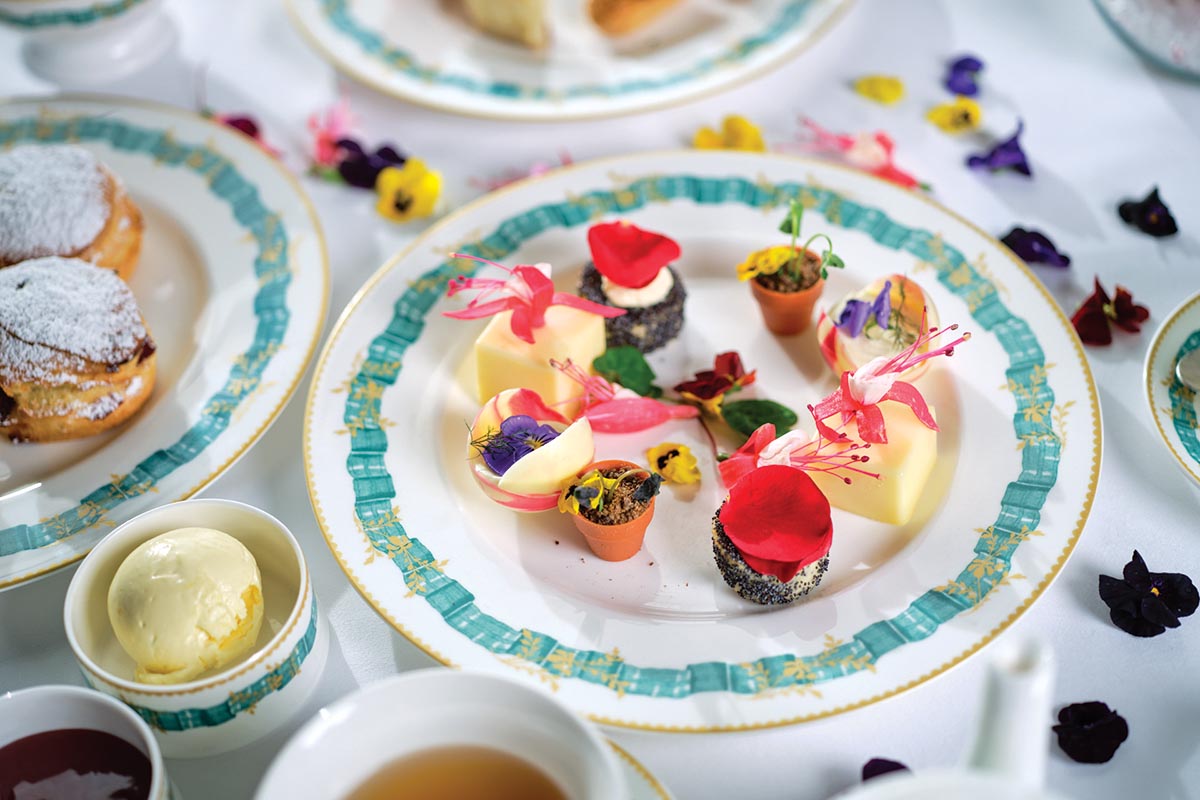
If a full afternoon tea is too much, the Conservatory Café offers the traditional National Trust menu of tea and other hot drinks, scones with jam and clotted cream, and a very good selection of cakes and tray bakes. Built in 1869, the conservatory is the only surviving historic glasshouse on the estate. A 1913 entry in the Gardener’s Chronicle tells us, “The long Orangery near the house is not used now as a conservatory, but still contains some of the large Orange trees . . .” In the 1960s, it was converted into the tearoom and is always busy with dog walkers and families who have brought their children to enjoy the enormous garden area. There is something for everyone on this vast estate, and many people claim this as their favorite National Trust property.