

While ceramic and china teapots remain staples at the tea table, teapots have also stayed in step with tea trends. Most notable is the unique charm of glass teapots, which provide a visual platform for the tea experience. Glass teapots allow easy visibility of color and volume, but their transparent makeup seems almost tailor-made for flowering or blooming teas. Water is boiled in a kettle and then poured into the glass teapot housing the hand-sewn bundle of tea, which blooms after being steeped for three to five minutes. Tea blossoms can be infused several times, and the bloom remains an aesthetic complement inside the glass teapot, transforming a would-be pitcher into an inimitable centerpiece.
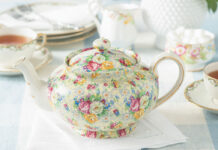
The evolution of the teapot is surprisingly slight, as its role remains simple and low-tech. For hundreds of years, variations were borne out of personal taste, and even in modern times, the selection and use of a teapot are determined largely by preference. Composition, size, style, and materials are all considerations in choosing a teapot, whether it be used tirelessly or displayed as a treasured keepsake.
Discover more seasonal recipes, table settings, and teatime inspiration by ordering your TeaTime subscription today!
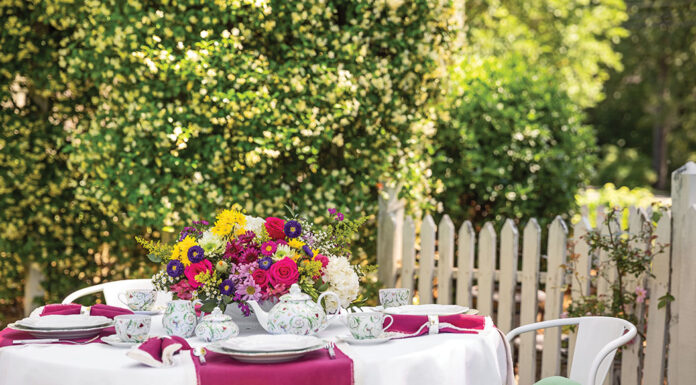


I have read many of your magazines and I have a subscription. I do not remember seeing any advice on whether a decorative porcelain teapot can be kept warm using a tea warmer (with a tea candle). Would the flame harm the teapot?
We recommend checking with your teapot’s manufacturer for information on tea warmers, as the best options vary from product to product.
Where can I purchase the tea pot floral shown in the tea time magazine for February?
We include a very detailed resource guide on page 63, which is included in the back of every issue. There you may find information on all of the products pictured in the magazine.
Tea & teaware has come a long way from that time. However, a tea tastes the best in a stoneware teapot.