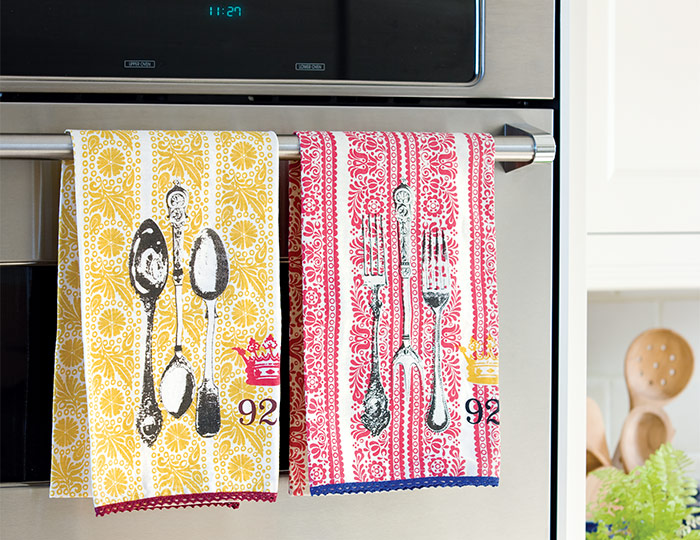
Tea towels earned their popularity through their hearty durability, becoming a workhorse in the kitchen. Some of the earliest came about through the repurposing of flour sacks. These inexpensive and often discarded scraps were given a second life, transformed by homemakers and domestic help into useful towels the size of modern hand towels. In more upscale homes, they were the go-to article for drying fragile crystal and china. The tea towel’s soft texture and smooth surface made it ideal for wiping away moisture, as it didn’t scratch or leave behind stubborn lint.
Reserved for clean dishes, silverware, and crystal, tea towels were kept spotlessly clean, also making them convenient covers for food. If they became damp, they were hung to dry and reused. And they were durable enough that they didn’t have to be handled with care, just handled. The Industrial Revolution led to the mass production of tea towels, so they became abundant and available. Their simple elegance evolved as homemakers embellished the fabric with embroidery, tatting, and other decorative techniques, injecting whimsy and personality into an otherwise uncomplicated, utilitarian fabric.