
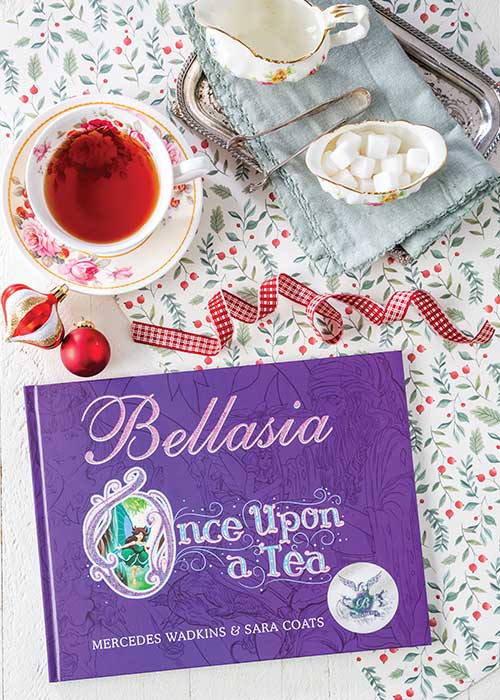
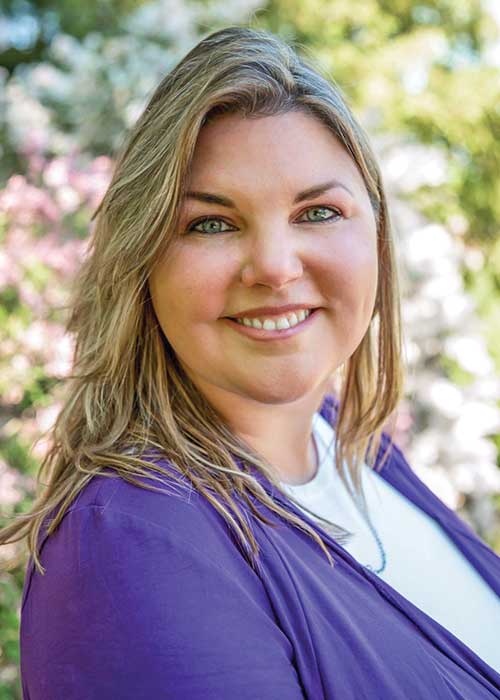
For Mercedes Wadkins of Sturgeon Bay, Wisconsin, her book, Once Upon a Tea, answered her daughter’s pleas. Isabella, who is adopted, was disappointed her beloved fairy tales didn’t have princesses who were adopted. If non-birth parents featured at all, they were very mean. So, she wrote a book about how the king and queen of the kingdom of Bellasia, sad because they are childless, find the most beautiful baby in a garden, with the help of generous fairies, Chamomile and Jasmine.
A helpful wizard instructs the fairies to obtain a silver teapot made by dragons, brew a special potion, pour it on a certain plant in a secret garden, and then take the queen to see it. The baby, named Isabella, becomes a kind princess who helps an injured baby dragon (who crashed into the castle moat while learning to fly) regain his fire-breathing ability through her magical powers. But on the day of the kingdom’s Harvest Ball, the plants and herbs that are collected for this beloved event dried out under the hot sun. The princess saves the day by stirring the dried plants in hot water in the teapot into a fragrant elixir that so delights her citizens that it’s served at future balls.
A magazine about adoption did a story on her book, congratulating Mercedes on the clever name, Bellasia, an anagram for Isabella. But it was unintentional brilliance: the anagram was news to her. “I’m a huge Disney fan. Fanstasia is my favorite Disney movie in the whole world. I just combined it with the end of my daughter’s name,” Mercedes explains.
She self-published her boldly colorful book, where glitter bedecks the cover, pages are purple, and icons next to page numbers—and borders on pages—signify one of three different realms: wizard (a winged unicorn), fairy, and dragon. She did everything herself, finding an illustrator in Canada, a cover designer in Oregon, and a printer in China. “It was a huge learning lesson,” says Mercedes, a stay-at-home mother who has no writing background. “If it wasn’t for Google, I couldn’t have done this,” she adds, noting she sells her book on Amazon and on her website, bellasiatea.com.
Shocked that kids’ tea parties generally don’t serve tea to children in the U.S., neither at home nor in tearooms, she also started a children’s tea company. “Tons of princess tea sets, tables, dresses, etc., but no princess tea,” she notes wonderingly. “Some serve fruit juice or soda to kids instead, but I wanted something not sugary.” Some serve nothing, so children daintily lift empty teacups to their lips. “My daughter loved tea parties, but she got tired of drinking air,” she says. Her caffeine-free, sugar-free teas come in tea bags in canisters whose colorful art depicts characters from her book, such as a blue dragon with a full moon. (Loose leaf is sold as well.) Mercedes, who cheerfully admits she knew little about tea when she began, credits tea expert Babette Donaldson as her mentor in launching her teas, which are sold locally in Door County gift shops, in gift shops from California to the Northeast, and online.
Babette, the author of four children’s tea books, explains how the tea party in her first book, Emma Lea’s First Tea Party, mirrors a tea party in her family. Raised in Texas, she grew up drinking iced sweet tea. Her grandmother owned a silver tea set, while her mother owned fragile porcelain teacups, like the grandmother in the book. When Babette was in her twenties, her grandmother invited her, her mother, aunts, cousins, and nieces to a tearoom in Pearland, Texas, then surrounded by pear trees.
“The tea wasn’t memorable, but the experience was. Four generations—it was the only time women and girls of our family ever gathered this way.” Her book is also about being sensitive to other people’s feelings. Thrilled when her grandmother invites her to a tea party with her mother and aunts, Emma Lea wears a party dress and a tiara. But when she arrives to find she’s not seated with the grown-ups at the big table with Grandma’s finest china, antique teacups, a lace tablecloth, and fresh flowers but at a small table by herself, she is deeply hurt. Sneaking away, she finds her grandfather in his pottery workshop, who confides he’s not invited to the women-only tea parties, either. Unbeknownst to both, Grandma is listening at the door. She sets two places for Emma Lea and Grandpa at the big table, starting a new family tradition, and gives the child an adult-size teapot as a gift.



Where do I order the tea books for children?
What a charming concept! This article from TeaTime Magazine highlights the wonderful world of children’s tea books. I love the idea of introducing little ones to the joy of tea time through engaging stories and illustrations. The article mentions a variety of themes, ebook writing service USA from princess adventures to family traditions. Do you have any favorites you’d recommend for parents looking to spark their child’s interest in tea parties?