Text by Jane Pettigrew
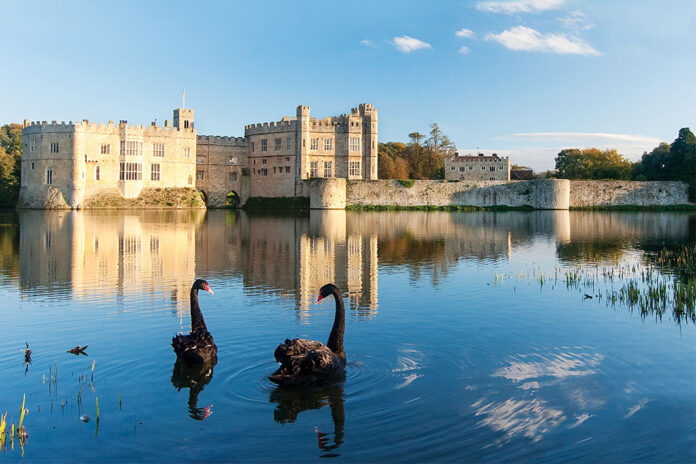
Photograph of Leeds Castle by William Bray, Courtesy of visitkent.co.uk
The Garden of England
The county of Kent is said to take its name from the Latin cantia or cantium, meaning “coastal district” or “corner land.” This region is indeed the southeastern corner of England, whose coastline of sandy beaches and dramatic white cliffs runs from the mouth of the Thames River to the county’s western border with Sussex on the south coast. Important seaside towns, with their rich maritime history of royal dockyards, smugglers, and Napoleonic sea defenses, are home today to ferries that travel daily between the English coast and northern Europe, and the tunnel that ploughs deep under the English Channel to carry people and goods to and from France.
Known as The Garden of England, Kent is a land of ridges and valleys, ancient woodlands and sweeping pastures, where royal families and the English aristocracy of the past chose to build their castles, manor houses, and stately homes. For here, not too far from the capital and its frenetic court life, days were somewhat gentler and quieter. Today, driving away from the main highways, visitors soon find picturesque villages with perfect cottage gardens; apple, pear, and cherry orchards; fields of hops for Kentish beers; and, between the trees, glimpses of tall cathedral spires, moated castles, and ancient Tudor homes. Kent also boasts many small tearooms tucked away down narrow alleys or on seafront promenades, or set amongst half-timbered shops on the main streets of historic towns and villages. The four included here—all very different—are amongst the very best the county offers.