
Blue Willow Teaspot
1200 10th Street • Berkeley, CA 94710
510-524-1933 • bluewillowtea.com
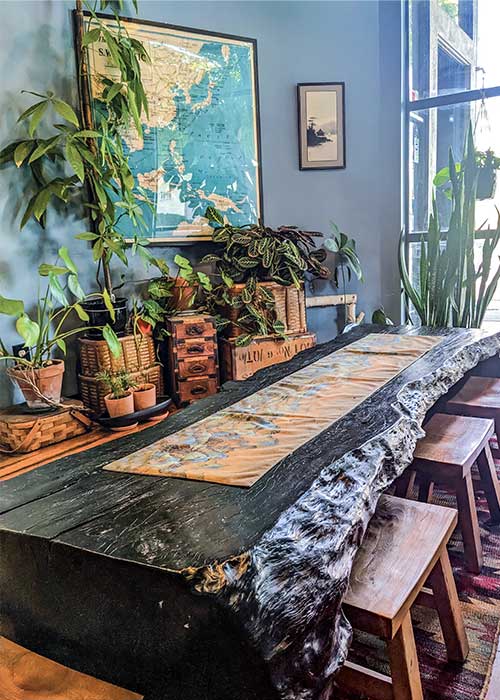
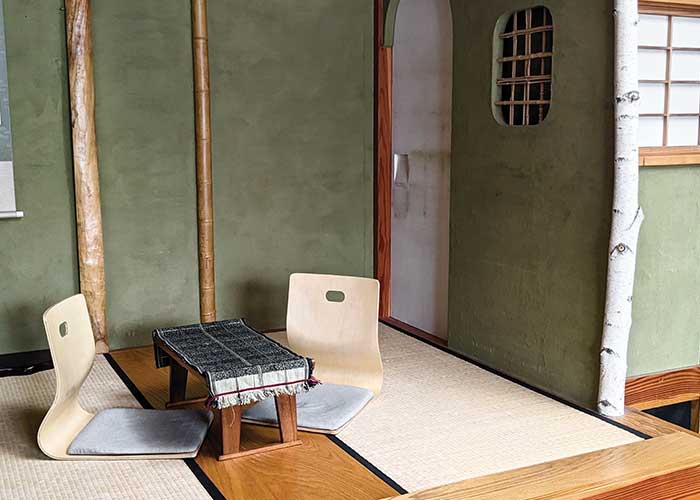
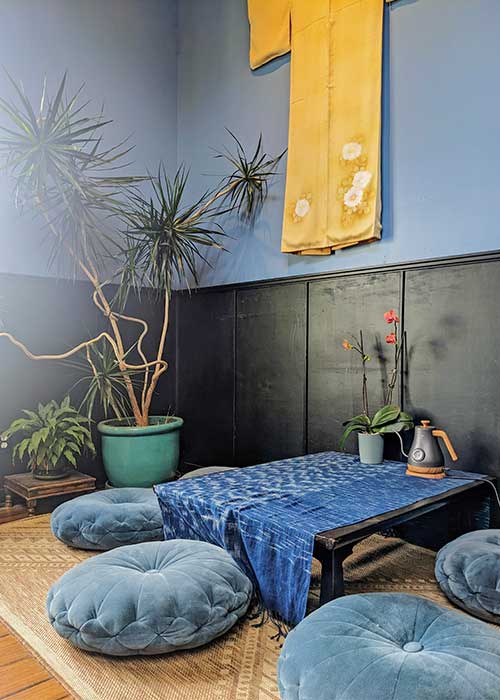
Ali Roth prizes authenticity, sustainability, and a strong do-it-yourself aesthetic in her stylish Asian-style tearoom, where a flowered kimono, Japanese landscape, and floral paintings adorn periwinkle-blue walls, skylights provide abundant natural light, and vividly colorful Asian tea tins line shelves. She laid the bamboo floor herself, after ripping out the original floor tiles, and built tables by gluing bamboo and plywood sheets atop bases made from salvaged wood. A large, polished slab of redwood that serves as one table cements a sense of place—since redwood forests abound in Northern California—while three Japanese-style seating areas allow customers to sit on cushions at low tables. One is a separate room where tea is served on a black walnut slab, surrounded by teaware in boxed wall cabinets.
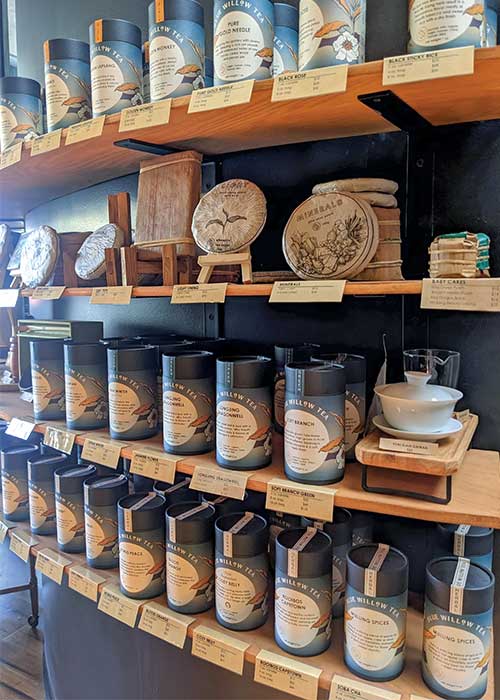
Tea is presented in vessels found in the region it’s from, like kyusu (a side-handled teapot from Japan), gaiwan (a three-part teapot with bowl, lid, and saucer), and gongfu from China and Taiwan. This is the place to find rare and unusual teas in a rotating selection of more than 50 single-origin kinds. Ali is the only US importer for many of the single-origin teas she serves, such as Awa Bancha from Japan’s Tokushima region, whose slightly sour taste is due to its unique fermentation process. Six flights of three teas each let customers sample this bounty: all green, all black, all oolong, a variety, and “golden,” which features Golden Eyebrow (named after its long, thin leaves resembling eyebrows), a caramel-colored tea with oak, chocolate, and plum notes from China.
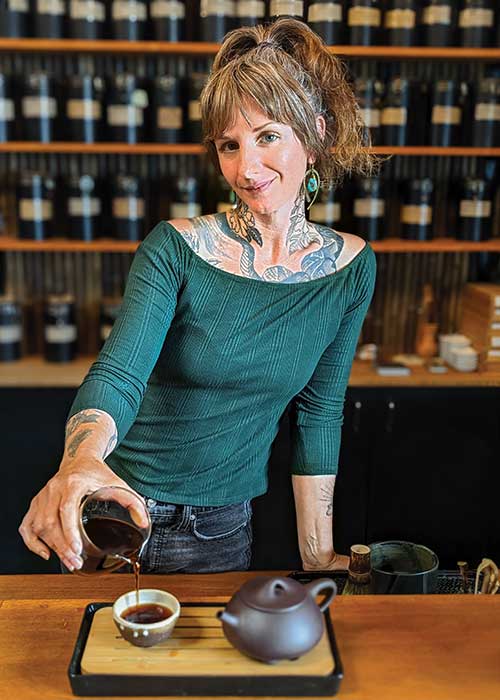
Ali is just 37, but almost half her life has revolved around tea. “I’ve been in tea 16 years now. It’s a never-ending rabbit hole—the more you learn, the more you find you don’t know. I want to do everything by hand, rolling and roasting the leaves,” Ali says. When she was 11, a trip to Japan with her mother, where she saw a tea ceremony, was a life-changing experience. While she wasn’t enamored with the taste, she found the ceremony “captivating.” She came home, started drinking a lot of tea, and got a job with a tea wholesaler, Blue Willow Tea Company, whose owner, Lynn Mallard, became her long-time mentor.
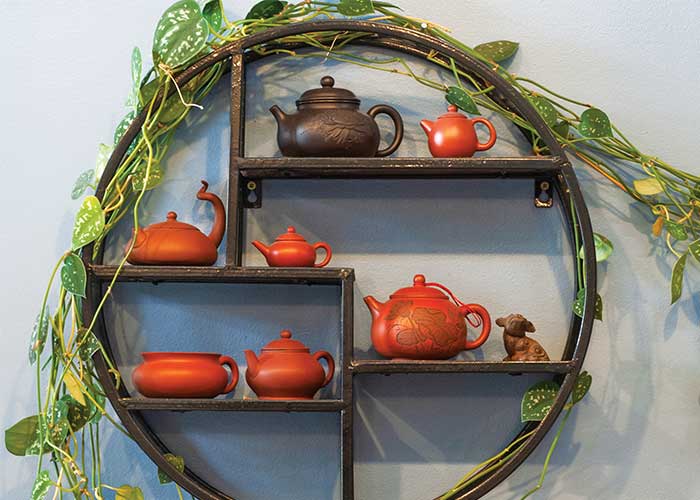
When Lynn retired, she sold the business to her enthusiastic young staffer. “Lynn was more into Western teas— our tastes were very different,” Ali remarks. In 2016, Ali opened a tearoom in its former warehouse, whose curved walls in the front room hint at its past as an architect’s office. Her teas and teaware—from Yixing teapots, Chinese clay vessels that absorb flavor and minerals from each brewing, to cast-iron teapots—are sold in this room.
The sweet and savory pastries available for purchase are from bakeries in Berkeley and Oakland, due to a kitchen not being in the space, and reflect the Bay Area’s strong Asian influence and penchant for plant-based foods. Tea cake and Rocky Road Bars come from a vegan bakery called The Butcher’s Son, Mochi and Ube Mochi Muffins come from Third Culture Bakery, and Okonomiyaki Danish, whose filling is mushroom, cabbage, and bonito flakes, are from Bake Sum.
A true do-it-yourselfer, Ali grows tea from seeds from China’s Yunnan province in a greenhouse in the backyard of her home in Oakland, owns a 20-acre farm in Mendocino County with her husband, and makes yearly buying trips to Asia (she speaks some Mandarin and Japanese.) Her son, age four, is already a “little tea connoisseur,” she smiles.
Why name it for a teaware pattern you don’t use? “I inherited the Blue Willow name and kept it because I love a good tragic ending,” states Ali. “The story of the pattern as illustrated on the china is a forbidden love story that ends with the death of the lovers and their reincarnation as birds. I find the story compelling and the imagery beautiful. We do display it, though,” explains Ali, whose extensive personal collection of Blue Willow dates back to the 1840s.
Blue Willow Teaspot is open daily from 11 a.m. to 6 p.m. Reservations are required on weekends.




nice