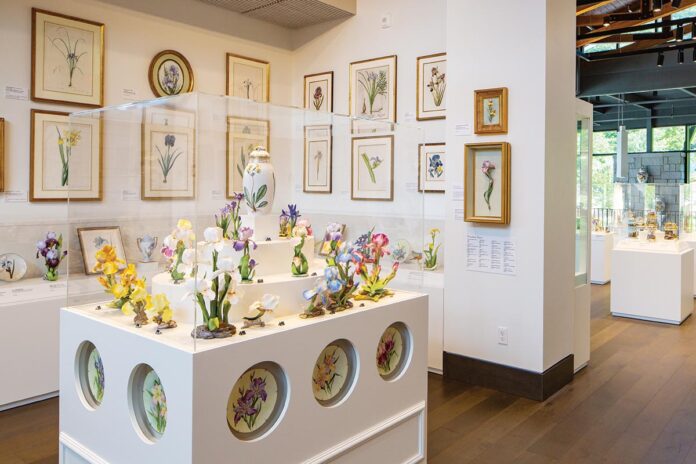
The Porcelain and Decorative Arts Museum at the State Botanical Garden of Georgia
Text by Lorna Reeves • Photography by John O’Hagan and Shannah Montgomery
For centuries, scenes of nature have been favorite subjects for creators of decorative arts. Tableware manufacturers, in particular, have made floral motifs the focus of many patterns, so it should come as no surprise that a botanical garden would be a fitting location for a museum dedicated to porcelain and decorative arts, especially a collection amassed over 45 years by avid gardener and tea lover Deen Day Sanders, who served as president of The Garden Club of Georgia, Inc., and National Garden Clubs, Inc., and was vice-president of the World Association of Flower Arrangers.
“Since the State Botanical Garden of Georgia’s inception, I have been involved because I have had interest in God’s natural world all of my life,” explains Deen. “Collecting porcelain is also a part of my history.”

Dr. Jennifer Cruse-Sanders learned about Deen’s desire to bequeath her impressive collection to the State Botanical Garden of Georgia—a unit of Public Service and Outreach at the University of Georgia, located in Athens—when she became its director in February 2017. “A few years before I started as director, Deen told the Board of Advisors that her intention was to leave a gift to the garden so her porcelain collection could be put on display, but the timing of it was indefinite until a few years ago, when she made the choice that she wanted to see it in her lifetime,” says Jennifer. “It has been very clear to me how well-suited the State Botanical Garden of Georgia is as a home for her porcelain and decorative arts collection.”
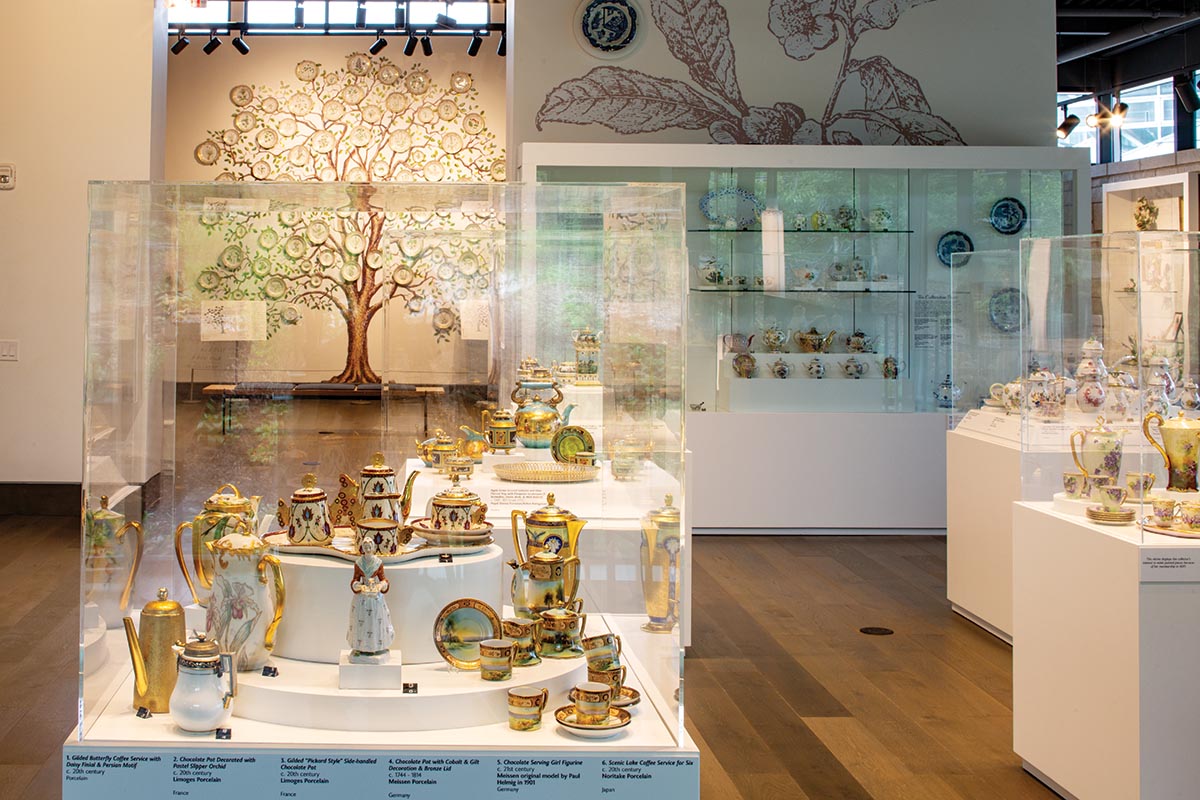
Jennifer explains that before petroleum, it was the desire to control trade routes for spices and botanical resources—such as tea, coffee, and chocolate—that drove the world economy and the age of exploration. “For an age, botanical gardens held all the discoveries from these explorations and shared them with the public, so it just seemed natural to create a museum that helps us tell those stories,” she says.
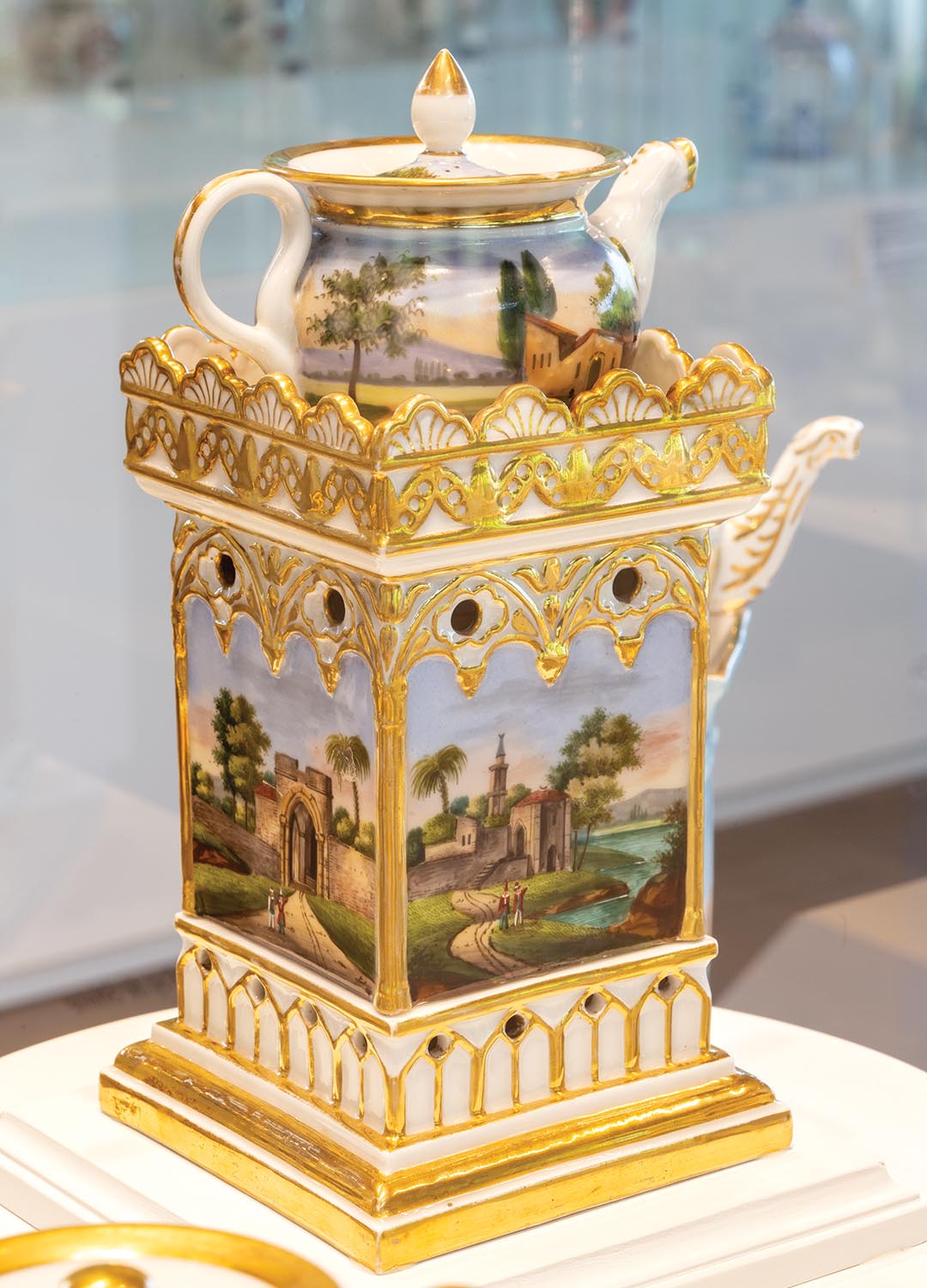
Tea, coffee, and chocolate pots were among the first types of items Deen Day Sanders began collecting. “My mother-in-law gave me my very first chocolate pot, which I used in my home for decorative purposes,” she recalls. Although Deen and her husband, Jim Sanders, enjoy drinking hot tea every day and she has hosted countless tea parties, especially for her garden club friends, most of the teawares she has acquired over the years were used to decorate her home, and so she chose not to use them functionally. And because gardening is a major part of her life, Deen says she gravitated toward collecting porcelain that showed flowers and butterflies.
Realizing early on that it would be difficult to do any kind of collecting alone, Deen enlisted the help of her friend Jenny White of Virginia White Interiors of Atlanta. The two ladies traveled together extensively studying and buying porcelain, as well as other decorative items.
“When people know you’re working on a collection, oftentimes you have the opportunity to find out about things or know about things that you might not otherwise know,” explains Jenny White. “We really worked hard to make a cohesive and beautiful home and build a collection that was very fine.”
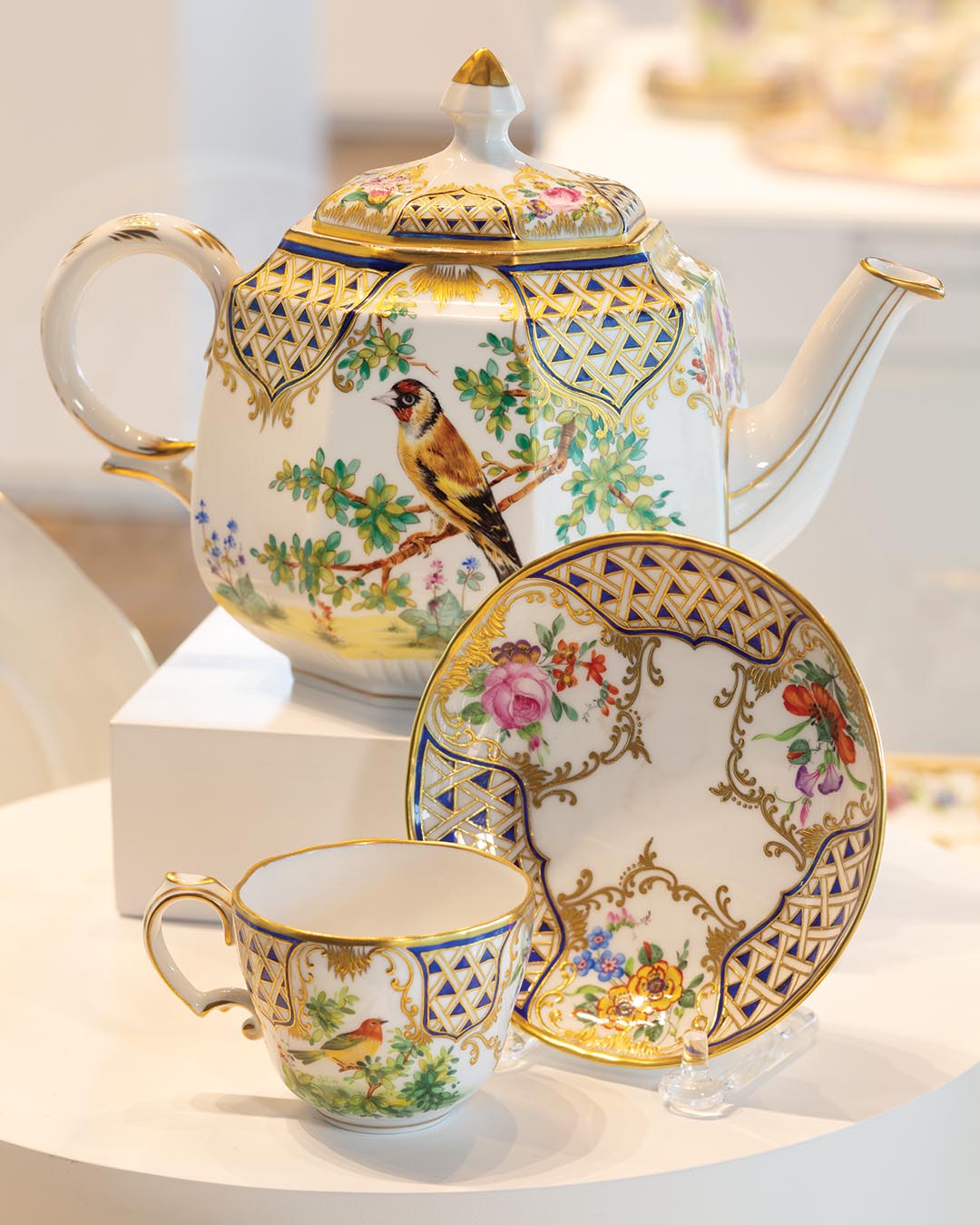
According to Jenny, over the last 10 years, as Deen began to think about what she would eventually do with her lovely home and its contents, she considered making it into a house museum. “Deen began to feel the greater good—where more people could see it and enjoy it—would be to think about building the museum [at the State Botanical Garden of Georgia at the University of Georgia in Athens],” Jenny says. “Once she came to that place, we didn’t look back. It just became a passion and an adventure that both of us collaborated on, talked about, and planned.” Jenny goes on to explain that originally, nothing was going to be given until Deen’s death. “The more she thought about it, one day, she got so excited and said, ‘I want to do it now, while I can enjoy it, while I can have some input in it, and while I can share it with others.’ ”
Going through Deen’s extensive porcelain collection to determine how much of it to include in the initial gift to the museum was an arduous process, but one both ladies enjoyed. Jenny laughs as she recalls the many months folding 6-foot-long tables were set up in almost every room in the Sanders home to hold hundreds of items during the selection process as she and Deen grouped them by theme. “Deen did not want to strip the house of everything. She enjoys her home, loves her home and being in her home, and wants to continue to collect,” shares Jenny. “So that meant that we began to really pick and choose.”
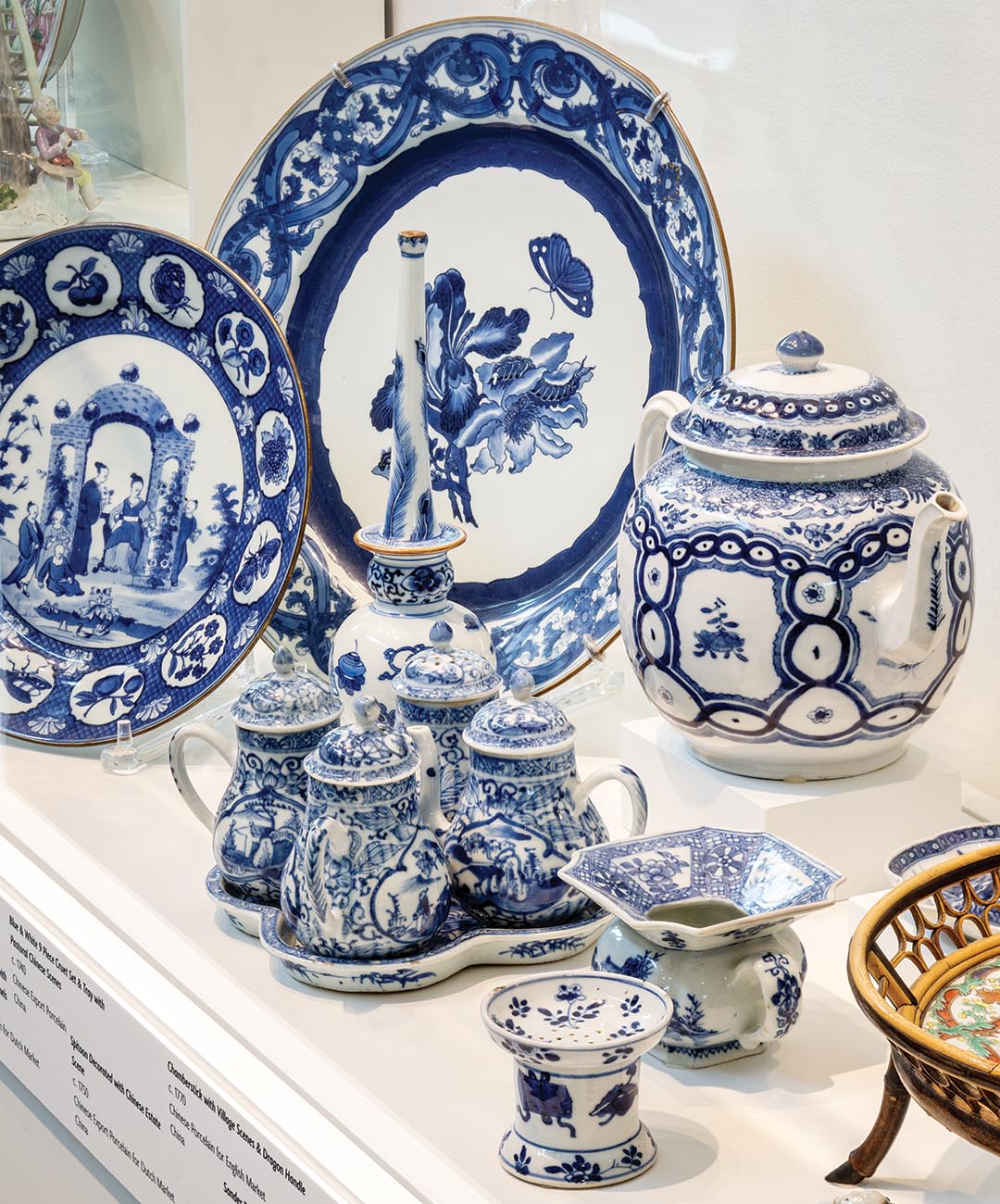
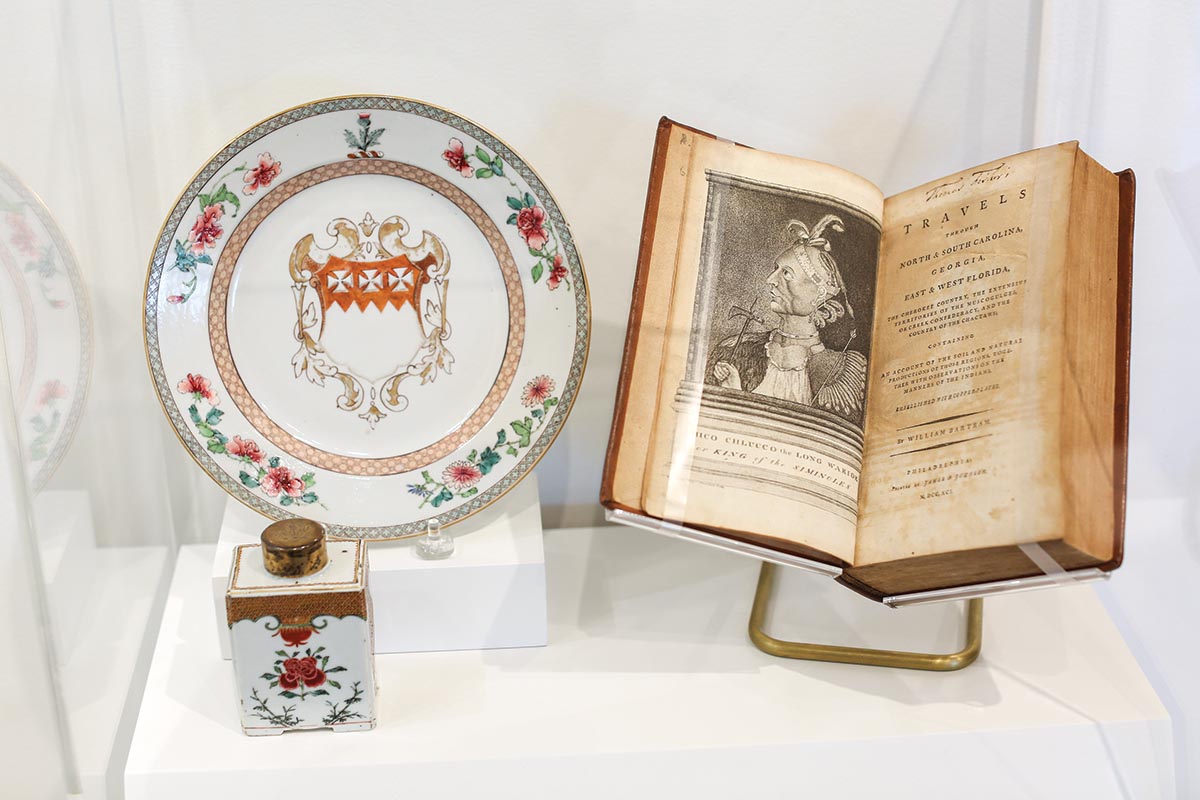
According to Jenny, the crown jewel of the collection and the inspiration for the museum’s design from the beginning were the Royal Copenhagen Flora Danica pieces. Jennifer Cruse-Sanders knew that these exquisite hand-painted porcelains would be in the museum, but she didn’t know the gift would also include an original full set of Flora Danica tomes she describes as “an encyclopedia of the flora, or plants, that grow in Denmark, which represents years and years of study, description, and also gorgeous scientific illustrations.” Deen was able to purchase these books from the de Belder Library in Europe.
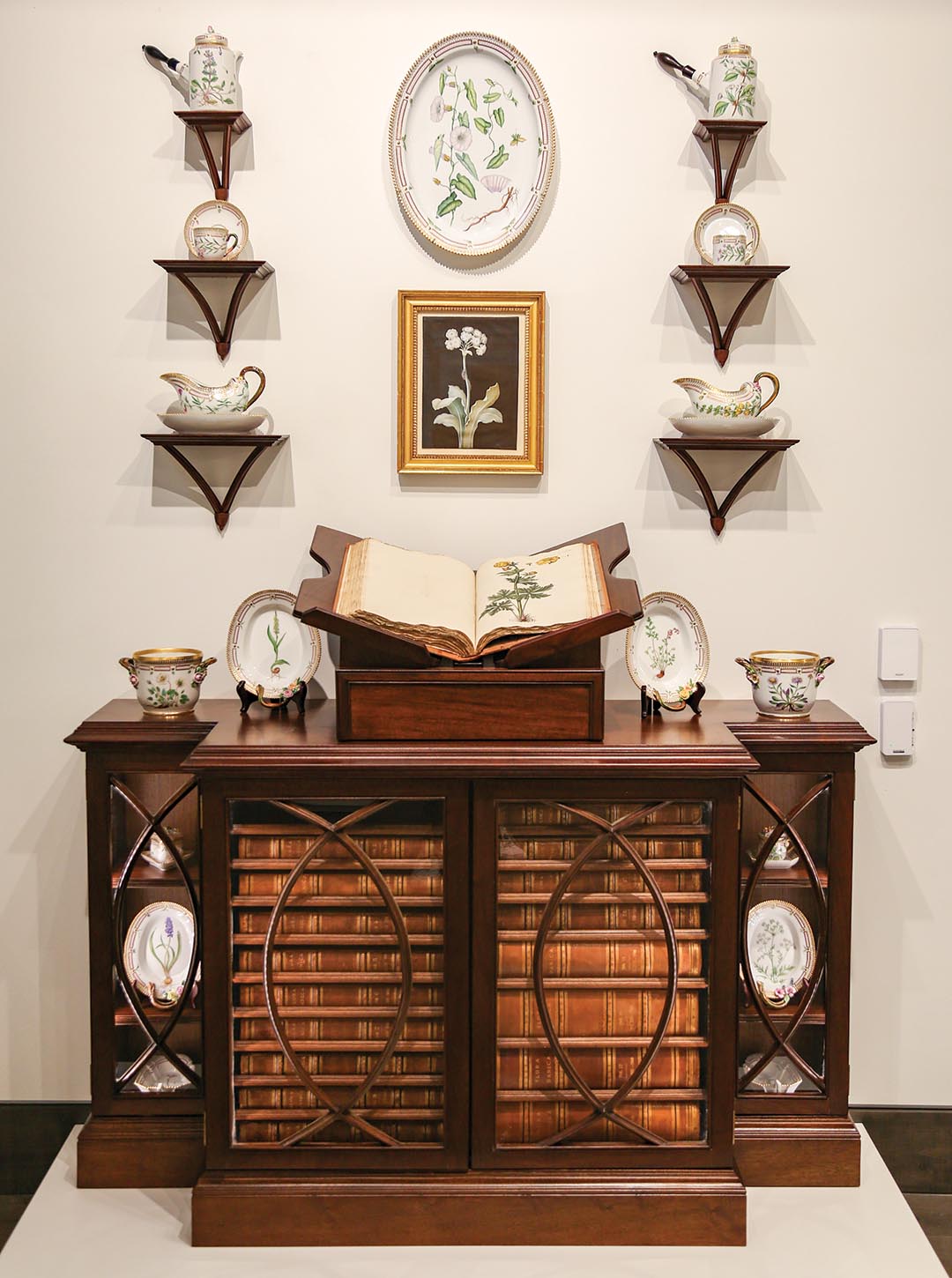
While coming up with ideas for exhibiting the books proved to be fairly easy for designer Jenny, finding a way to showcase the Flora Danica porcelain, especially the plates, was a bit more challenging, as each features an individual painting. The inspiration for what Deen calls the “Tree of Life” display came to Jenny while visiting The Burge Club in Mansfield, Georgia. “They have this gorgeous tree, and I drew a pencil sketch of it and instead of putting leaves on it, I filled it with plates,” she says. She then took pictures of the tree and sent them to artist Lynwood Hall, who did a small-scale painting of a tree. Jenny took the Flora Danica plates to a warehouse in Atlanta and unpacked and laid out each one as she wanted them arranged on the tree. That enabled Lynwood to provide the artwork for a graphics company to create a wallpaper of the tree design. Every plate was wired and then museum-secured to the tree one by one.
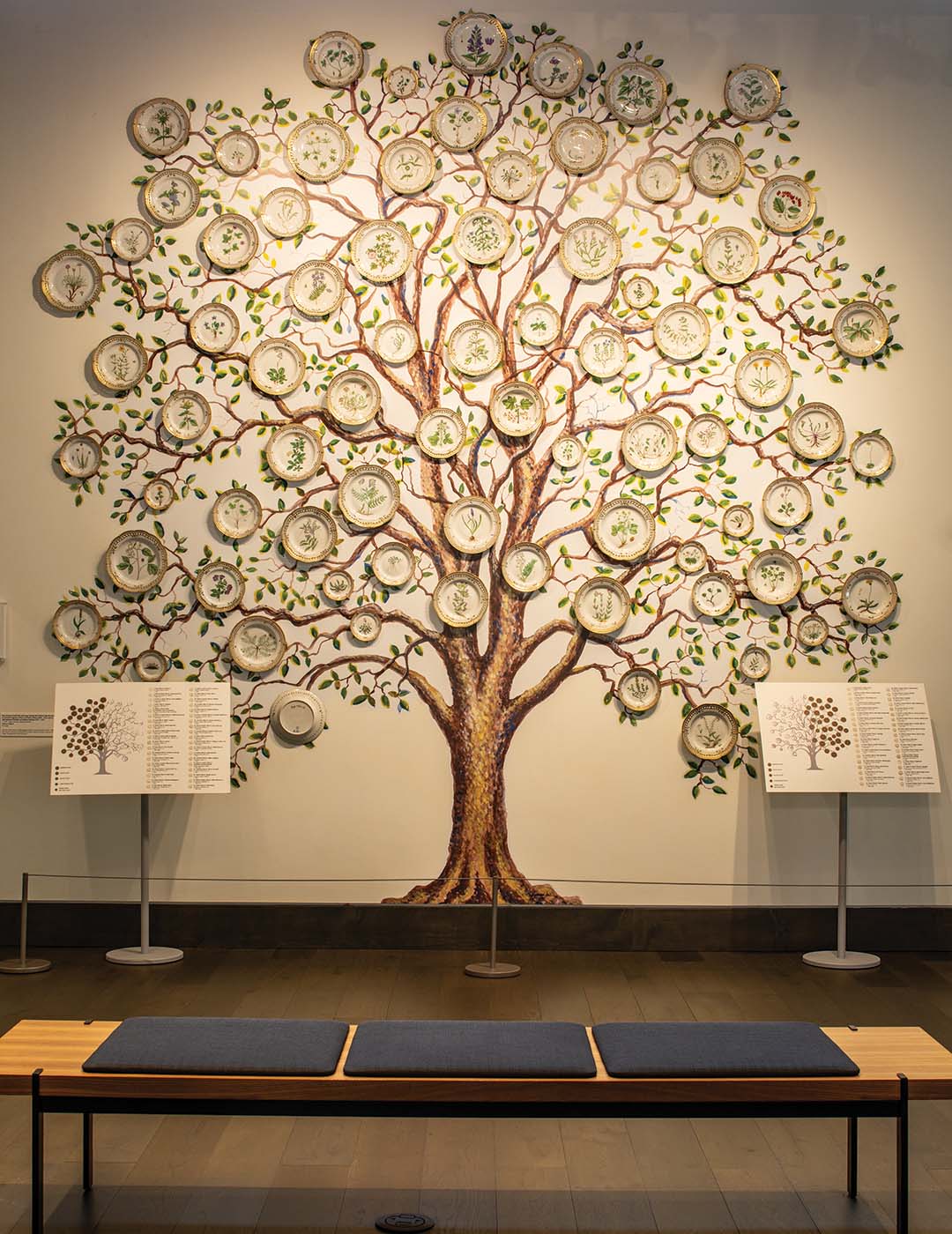
“When you come up the stairs and look immediately to your right, you see across the entire front gallery to the very back of the museum to the ‘Tree of Life’, and people just gasp,” says Jenny. “It really seems to draw people in. They all want to have their photograph made in front of it.”
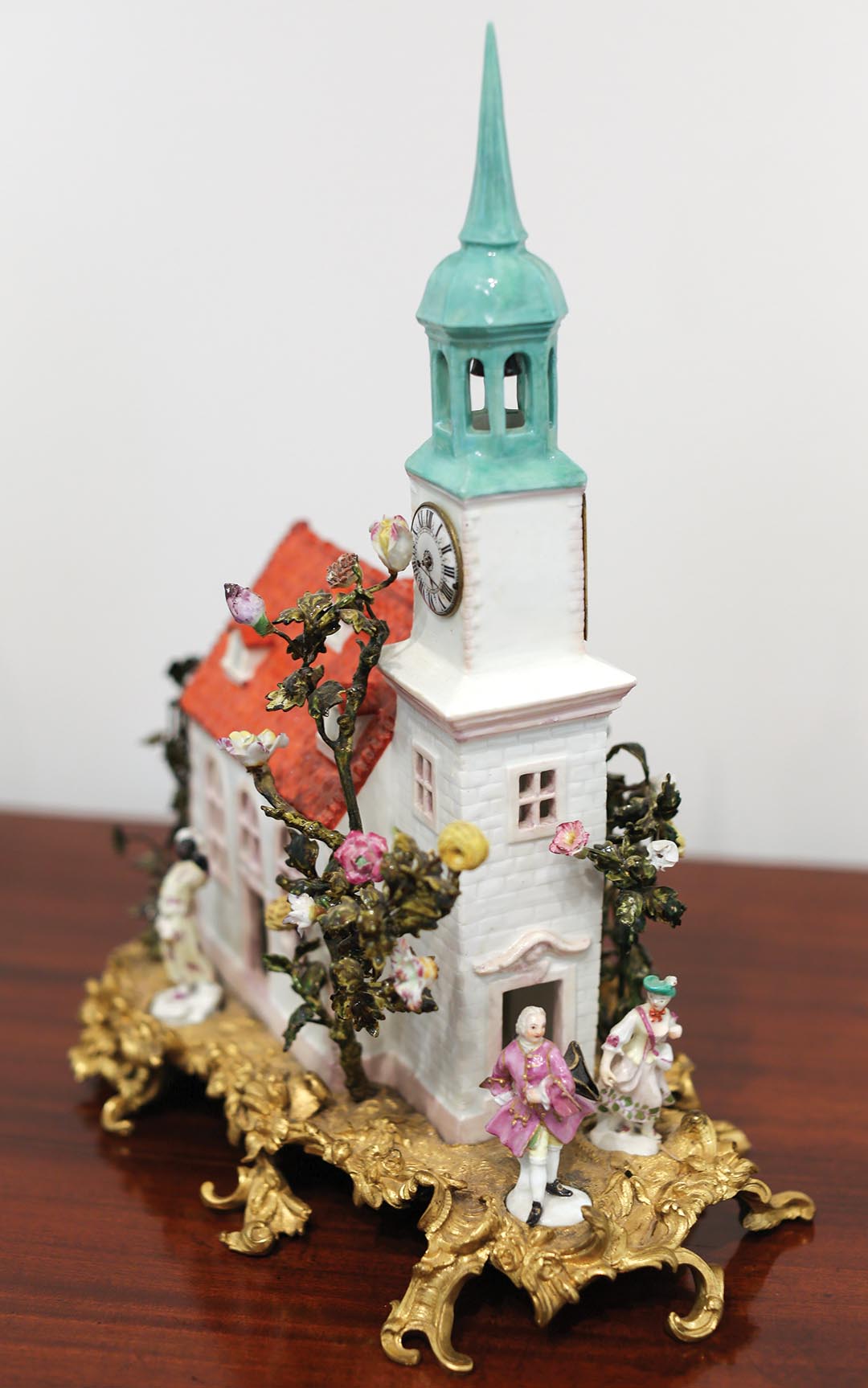
Although the Flora Danica might be the most eye-catching exhibit, Deen says her personal favorite item on display is a Meissen porcelain church, which is from 1748 and is most rare. It is displayed on a Sheraton serving table with a John Singer Sargent painting over it in a section of the museum known as the Georgia Room, Deen’s favorite section of the museum. Jenny and Jennifer are both quite keen on items manufactured by the short-lived Chelsea Porcelain Factory, which had connections to the Chelsea Physic Garden.
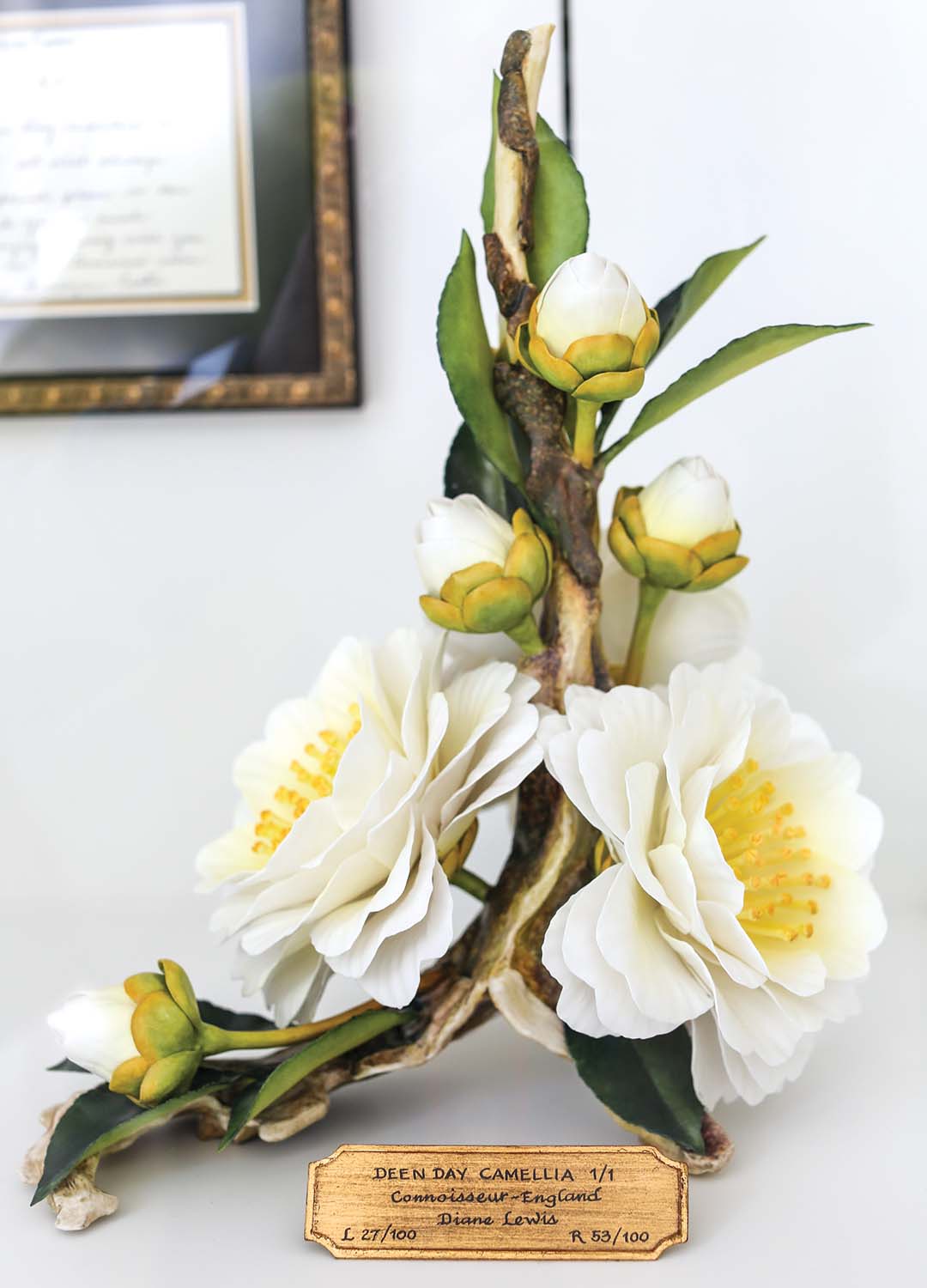
Porcelain flower sculptures are also plentiful and include the works of Diane Lewis, who was trained by Royal Worcester and worked on some of the flowers in the Dorothy Doughty collection of birds. Diane was known as the finest porcelain flower maker at the time she established her own company, Connoisseur of Malvern, LTD, of England. Deen met Diane’s son, Martyn Lewis, who was head of international sales for his mother’s company and handled marketing in the US. It was through the friendship with the family that Deen started collecting these exquisite floral porcelains.
“I believe that this museum [which opened in 2021] will be unique for its connections to the natural world and to the man-made world,” says Deen. “You will see nature in every porcelain piece that you observe. God gave it all to us to enjoy.”
Admission to the Porcelain and Decorative Arts Museum is free, as is entry to and parking at the State Botanical Garden of Georgia at the University of Georgia in Athens. The museum is open 9:00 a.m. to 4:30 p.m., Tuesday to Saturday, and from 11:30 to 4:30 p.m., Sunday. Docent-led tours are available by advance reservation for a small fee, but otherwise, visitors may explore the two-story, handicap-accessible facility on their own at no charge.